
Houston Leak Detection: How to Tell a Slab Leak From Rainwater, Drainage, or Foundation Moisture
Moisture near a Houston home’s foundation can be difficult to interpret. Damp flooring, darkened baseboards, wet soil beside the slab, musty odors, and an unexplained rise in water use may suggest a hidden plumbing leak—but heavy rain, humidity, poor drainage, and shifting clay soil can create similar symptoms.
The key is to treat what you see as an observation, not a diagnosis. A careful first look can help homeowners, landlords, apartment operators, and property managers decide whether the next call should be to a plumber, drainage professional, or foundation specialist. This guide explains the practical differences and when Houston leak detection is warranted.
Why Foundation Moisture and Plumbing Leaks Look Similar in Houston Homes
Many Houston-area houses are built on concrete slabs. Water supply lines and, in some homes, drain lines may run beneath or through that concrete. If one of those lines leaks, water can migrate under the slab and show up far from the actual pipe problem. The visible clue might be a warm floor section, flooring damage, moisture at a wall edge, or a persistently damp area near the foundation.
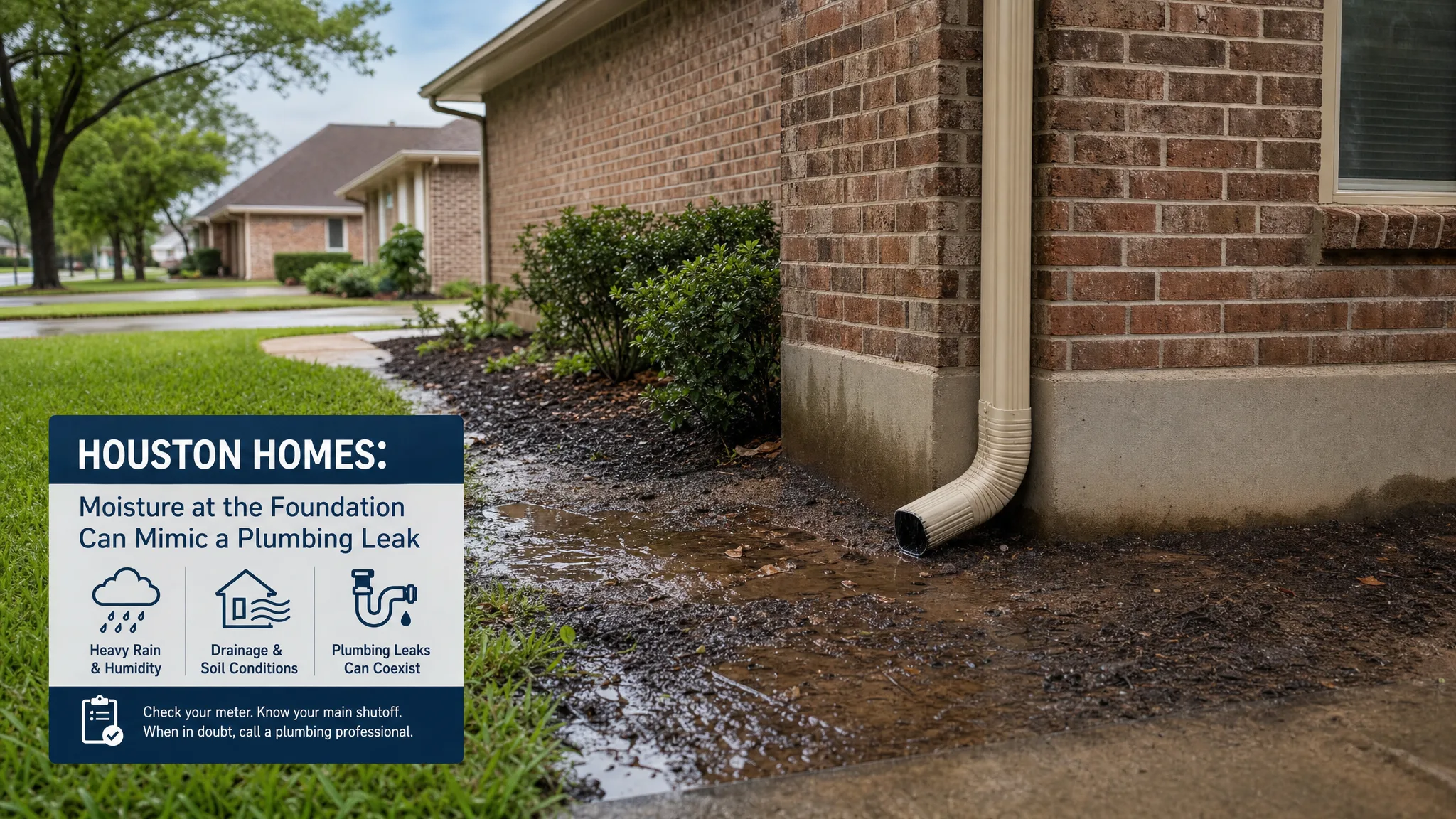
However, exterior water can take similar paths. Intense rain can saturate soil next to the home. Water from an overflowing gutter, a short downspout, a low spot in the yard, a leaking irrigation component, or a poorly directed condensate discharge may collect near the slab edge. Houston’s humid conditions can also make indoor condensation and slow drying more noticeable, particularly in closets, utility areas, and rooms with limited airflow.
Clay-rich soil adds another complication. Houston clay soil drainage conditions vary by neighborhood and property, but clay generally holds moisture longer than more freely draining soil. It can swell when wet and shrink during dry stretches. That movement may affect surface drainage patterns and contribute to changes around a foundation. It does not prove a foundation problem, and it does not prove a slab leak—but it is an important reason to avoid jumping to one conclusion based on a single wet area.
Rainwater, humidity, drainage problems, plumbing leaks, and foundation concerns can also coexist. A property might have gutters that discharge too close to the slab and a concealed supply-line leak. A plumber’s job is to evaluate plumbing-related evidence; a drainage or foundation professional may need to assess conditions outside that scope.
Houston Conditions That Can Put Moisture Near a Slab
Houston receives strong rain events that can quickly overwhelm a yard, street drainage, gutters, or downspouts. The Harris County Flood Control District provides local flood and drainage information that can help residents understand area conditions after major storms. Still, saturated ground after rain should not automatically be labeled a plumbing issue.
Heavy rain and roof runoff
If wet soil or water marks appear shortly after rainfall, inspect where roof runoff lands. Downspouts that discharge beside the home, disconnected extensions, overflowing gutters, and grading that slopes toward the slab can all leave moisture near exterior walls. Look for patterns: does the same side of the home become wet after every storm, or does the moisture remain even through an extended dry period?
High humidity and indoor condensation
High outdoor humidity can make cool interior surfaces sweat, especially where conditioned air meets warm, humid air. Condensation commonly develops around poorly insulated cold-water lines, air-conditioning components, metal vents, or areas with limited airflow. Condensation may leave dampness or a musty smell, but it usually does not create continuous water-meter movement or a sustained increase in water consumption.
Landscape irrigation and exterior fixtures
A leaking hose bibb, irrigation valve, sprinkler line, pool-fill system, or outdoor faucet can wet ground near a home and resemble water under a slab. This is particularly worth checking when the damp area sits close to landscaping or appears on a regular schedule. A plumbing leak diagnosis should account for these visible exterior water sources before anyone assumes the problem is beneath concrete.
Drainage and low-grade conditions
Surface water needs a path away from the home. When soil settles, edging changes the route of runoff, or landscaping beds hold water against the foundation, moisture can linger along the slab perimeter. Exterior drainage is generally not a plumbing repair, even though the result may look like a hidden pipe leak from inside the home.
Signs That Point More Strongly to a Plumbing or Slab Leak
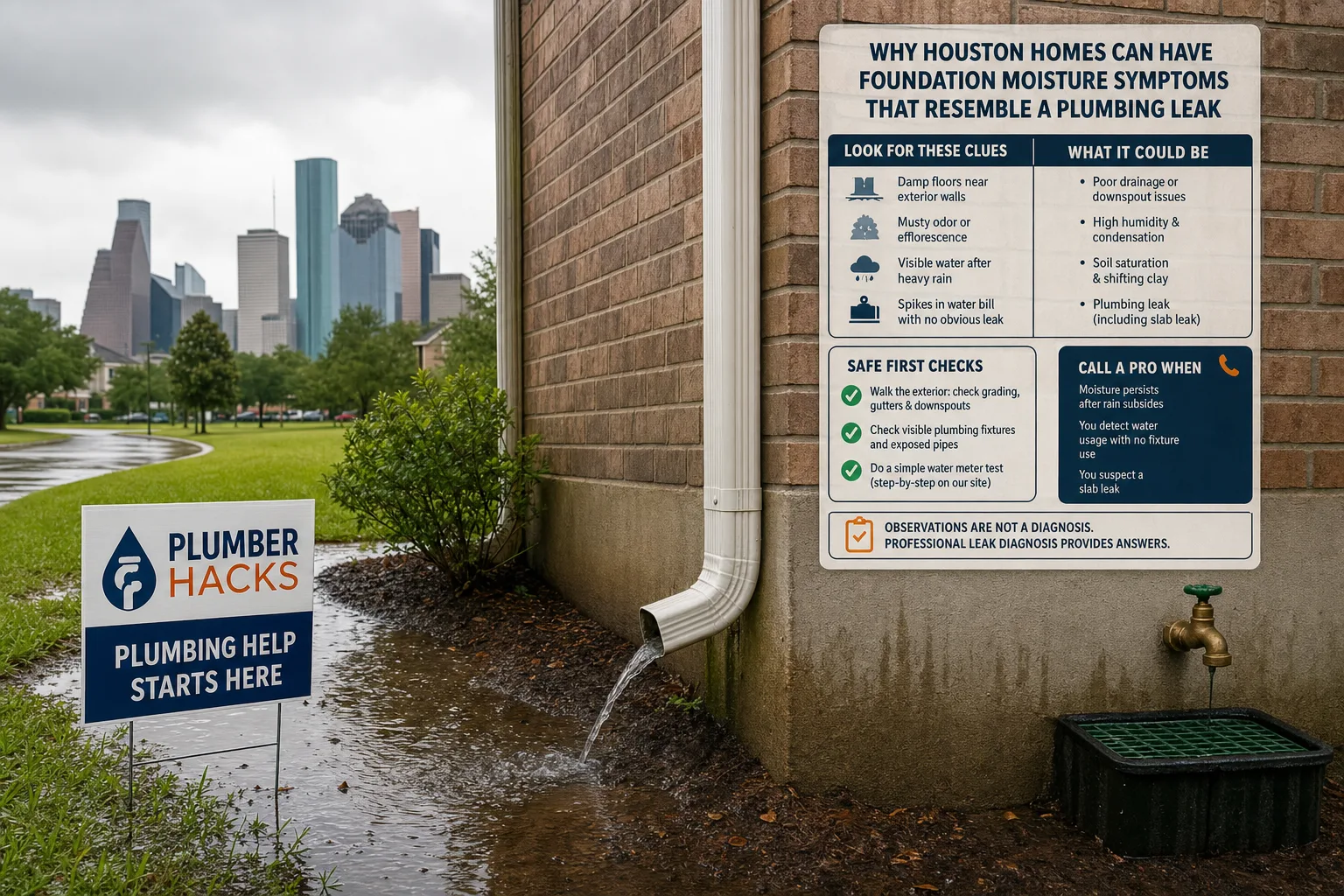
No single sign confirms a slab leak. A pattern of plumbing-related clues is more meaningful than one damp carpet edge or one warm spot. The following conditions merit professional leak testing, especially if they occur together.
Water use rises without a clear reason
A water bill that rises despite similar occupancy and routines can indicate continuous water loss. For rental properties and apartment buildings, compare recent readings and usage patterns to normal operations while considering tenant turnover, irrigation changes, vacant units, and seasonal use. A bill increase alone cannot identify where the water is going, but it is a reason to investigate.
The water meter moves when no water should be running
With all fixtures and water-using appliances off, movement at the meter’s leak indicator or low-flow register may suggest water is passing through the service line after the meter. That can be consistent with a concealed leak on the property’s plumbing system. It can also be caused by an ice maker, automatic water-treatment equipment, a running toilet, irrigation equipment, or another device that cycles automatically.
A meter check is useful screening information, not proof that a pipe beneath the slab has failed. It cannot tell you the leak location, the pipe type, whether the leak is in a wall, under flooring, outdoors, or at a fixture.
Warm flooring that persists
A localized warm area can be associated with a hot-water line leak beneath a slab. It is not always one. Sun exposure, heated appliances, ductwork, a nearby mechanical system, or changing room temperatures can affect floor temperature. A warm spot is more concerning when it stays present at different times of day, is accompanied by moisture or flooring damage, and occurs alongside unusual meter activity or reduced hot-water performance.
Flooring, baseboards, or walls show unexplained changes
Watch for flooring that cups, loosens, separates, or feels damp without an obvious spill. Baseboards may swell or discolor. Paint can blister at a low wall area. Carpet may stay damp despite dry weather and normal cleaning. These symptoms can result from plumbing water, exterior moisture, condensation, or an appliance leak, so their location and timing matter.
Sound, odor, or water-pressure changes
The sound of water moving when fixtures are off, a persistent musty odor, noticeably lower water pressure, or hot water that seems to run out unexpectedly may support a plumbing concern. These signs should be evaluated in context. For example, low pressure may come from a fixture-level issue, a valve condition, or a broader supply problem rather than a slab leak.
For a broader explanation of symptoms, testing, and repair approaches in concrete-slab homes, review our guide to slab leak signs, diagnosis, and repair choices.
Clues That May Point to Drainage, Rainwater, Humidity, or Foundation Moisture
Some clues lean more strongly toward an exterior or environmental moisture source. They still deserve attention, because repeated moisture near a home can damage finishes and create conditions that should be corrected.
- The moisture follows rainfall: The problem appears after storms, becomes worse with prolonged rain, and improves after dry weather.
- The water is concentrated on an exterior side: Wet soil, staining, or indoor dampness lines up with a roof valley, downspout, irrigation zone, patio edge, or visibly low part of the property.
- The meter remains still during an appropriate no-use check: This does not eliminate every plumbing issue, but it makes ongoing water loss through the metered plumbing system less likely at that moment.
- There is no change in water use or plumbing performance: No unusual bill, no persistent warm floor area, no fixture noise, and no pressure change may shift attention toward drainage or humidity.
- The issue is condensation-specific: Moisture is present on exposed cold piping, air-conditioning components, or surfaces affected by limited ventilation rather than inside flooring or at the slab edge.
Foundation movement symptoms, such as cracks or doors that bind, should not be blamed on a plumbing leak without evidence. Soil movement, drainage, structural factors, and normal material changes can all play a role. If a qualified plumbing evaluation does not find evidence of active plumbing leakage, a foundation specialist or drainage professional may be the better next call.
Safe First Checks Before Calling a Plumber
You do not need to dig beside the slab, remove flooring, drill into concrete, or open walls to gather helpful information. Invasive testing can create damage and may make it harder to interpret the original moisture pattern. Start with safe documentation and basic checks instead.
1. Record the timing and location
Make a simple log of when you first noticed the problem, which rooms or exterior areas are affected, recent rain dates, and whether the moisture changes after using hot water, laundry equipment, dishwashers, or irrigation. Take dated photos of stains, flooring changes, damp soil, and the meter reading. For multi-unit properties, identify the unit, floor level, and whether neighboring units have related symptoms.
2. Rule out obvious interior sources
Look under sinks, behind accessible toilets, around the water heater, at washing-machine hoses, beneath refrigerator water connections, and around air-conditioning equipment. Do not pull appliances out if doing so could damage a line or create an electrical hazard. If a visible pipe or supply line is actively leaking, shut off the closest accessible fixture valve if it works properly, or use the main shutoff if necessary.
3. Perform a careful meter observation
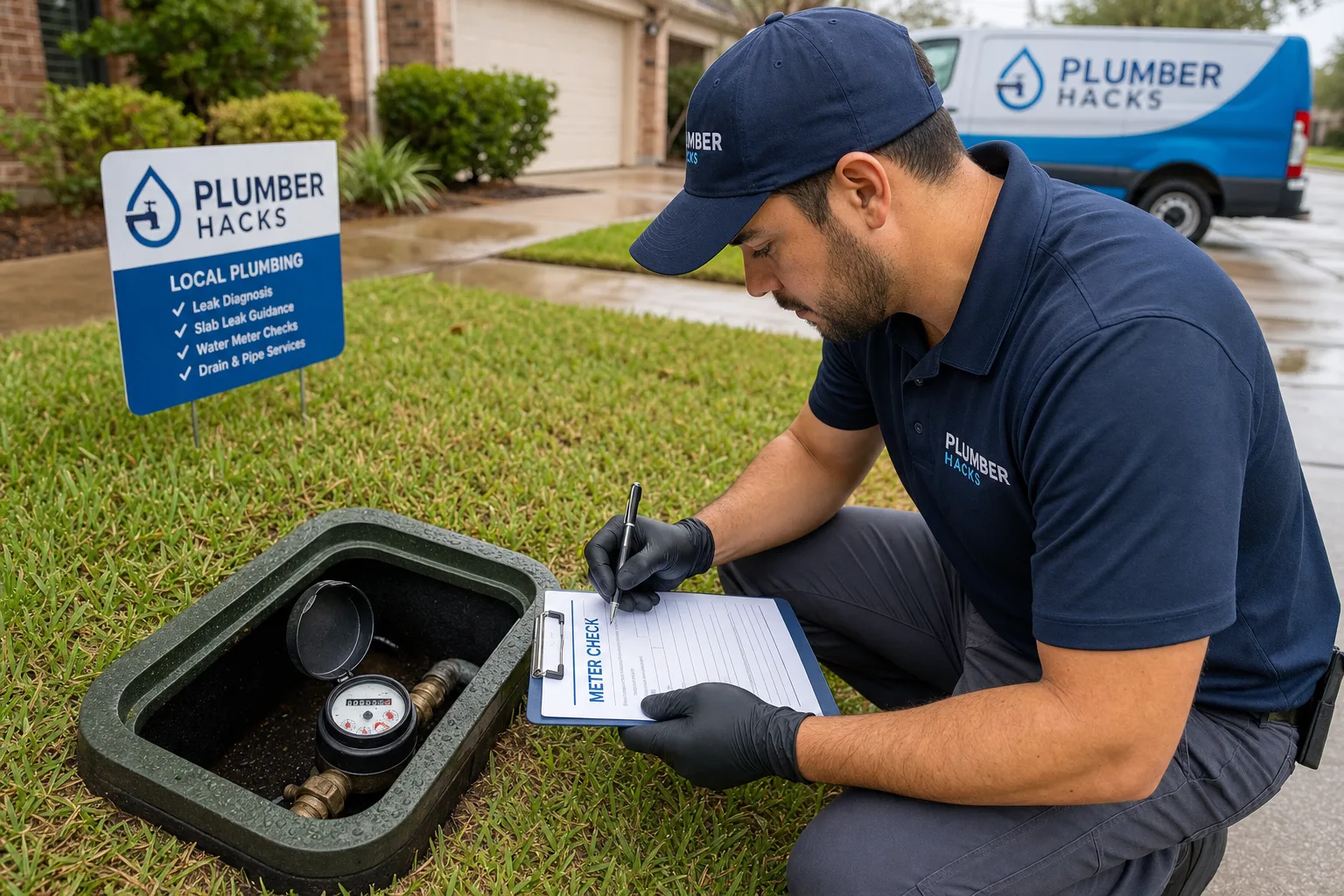
Choose a period when occupants can avoid water use. Turn off faucets and ensure washing machines, dishwashers, and irrigation are not scheduled to run. Note the meter reading and observe the leak indicator or low-flow display if your meter has one. Wait without using water, then check again.
If the meter changes, document it and arrange plumbing evaluation. Do not interpret the result as a confirmed slab leak. If the meter does not change but flooring is wet, a plumber may still need to evaluate fixtures, drains, intermittent leaks, or a moisture source that is not active during the test.
4. Check roof runoff and the immediate exterior
From a safe position on the ground, look for gutter overflow marks, downspouts emptying at the slab edge, standing water, saturated planting beds, and leaking exterior faucets. Never climb onto a roof or enter an unsafe crawl area to investigate. Note whether the affected exterior area is wet after dry weather as well as after rain.
5. Know where the main shutoff is before an emergency
Property owners should know the location of the building’s main water shutoff and make sure responsible occupants or onsite staff know it too. If water is actively entering the home, pooling rapidly, reaching electrical equipment, or coming through ceilings or walls, shut off water only if it is safe to do so and seek urgent plumbing help. Do not force a corroded or damaged valve; a failed valve can make the emergency worse.
For practical local next steps, see these Houston plumber resources for leak concerns.
What a Houston Leak Diagnosis Can and Cannot Confirm
A professional plumbing assessment begins by narrowing the source of water loss or moisture. The plumber may review meter behavior, visible plumbing, fixture operation, water pressure, accessible supply and drain piping, and the location and timing of symptoms. Depending on the situation, a leak inspection may include noninvasive methods intended to help identify likely areas for further evaluation.
The goal is not to guess based on one stain. It is to determine whether the evidence supports an active plumbing leak and whether it appears likely to involve a supply line, drain line, fixture connection, exterior line, or plumbing beneath the slab.
What plumbing diagnosis can help establish
- Whether there is evidence of ongoing water loss on the property plumbing system.
- Whether visible fixtures, valves, appliances, or accessible piping may be responsible.
- Whether meter behavior and symptom patterns support further hidden-leak investigation.
- Whether findings point toward a possible under-slab plumbing concern.
- Whether immediate isolation, repair, or additional specialty evaluation is appropriate.
What it may not establish on its own
- The full cause of chronic rainwater intrusion or surface drainage failures.
- Whether foundation cracks are structural or caused by soil movement.
- The source of every humidity or condensation issue.
- Whether groundwater or floodwater is entering around a foundation.
If plumbing evidence is weak but water consistently collects next to the home after rain, a drainage professional may be the appropriate first call. If there are significant structural concerns, a foundation specialist can evaluate those conditions. When symptoms overlap, beginning with a plumbing inspection can still be sensible if the meter shows unexplained movement, water use has risen, or there are clear signs of a concealed supply leak.
Only qualified plumbing professionals should perform regulated plumbing work. The Texas State Board of Plumbing Examiners is the state authority associated with plumbing licensing and regulation, and homeowners should verify that any contractor they hire is appropriate for the work being considered.
How Much Does Slab Leak Detection in Houston Usually Cost?
There is no responsible single price for slab leak detection in Houston because the scope varies widely. The cost may depend on the size and layout of the property, whether it is a single-family home or multi-unit building, access to the meter and plumbing, the number of affected areas, whether the leak appears intermittent, and what diagnostic steps are needed after the initial inspection.
Ask for clarity about what an inspection includes, what findings will be documented, and whether any recommended testing is noninvasive. It is also reasonable to ask what evidence supports a suspected slab leak versus another plumbing source. A thoughtful diagnosis before authorizing major access work can reduce the chance of removing flooring or breaking concrete for the wrong reason.
When the Issue Is Urgent and What to Do Next
Some possible leak symptoms can wait for a scheduled inspection; others require a faster response. Treat the situation as urgent when water is actively flowing or spreading, the meter indicates continuing water loss that you cannot account for, flooring is becoming rapidly wet, a ceiling or wall is saturated, or water is near electrical outlets, panels, or appliances. If safe, turn off the nearest functioning shutoff or the main water supply and arrange emergency plumbing help.
A sewage odor, sewage backup, or water that may be contaminated also deserves prompt attention. Keep people and pets away from affected areas, avoid using fixtures that may feed the backup, and do not attempt to clean or open plumbing components if sewage is present.
For non-emergency moisture concerns, avoid waiting until flooring damage spreads or a small pattern becomes a larger restoration project. Document the symptoms, note recent weather and water-meter behavior, and schedule a leak inspection. The purpose is to distinguish plumbing-related moisture from drainage, groundwater, humidity, or foundation concerns before authorizing repairs.
If you are also noticing reduced hot-water performance, mineral buildup may be a separate factor in your home’s plumbing system. Read what Houston homeowners should know about hard water and water heaters for related warning signs and maintenance considerations.
Frequently Asked Questions
How can I tell whether moisture near my Houston foundation is a slab leak or rainwater intrusion?
Start with timing and patterns. Moisture that appears primarily after rain and follows roof runoff, low grading, downspouts, or saturated landscaping may point toward exterior drainage. A higher water bill, unexplained meter movement during a no-use period, persistent warm flooring, or indoor moisture that continues through dry weather more strongly supports a plumbing inspection. Neither pattern confirms the cause by itself, and both conditions can exist together.
Will my water meter show a slab leak if the leak is under the concrete?
It may, particularly if an active leak is on the pressurized water supply system after the meter. But the meter does not identify the leak location or prove that water is under the slab. Intermittent leaks, drain-line issues, fixture leaks, appliances, and irrigation systems can complicate the result. Use meter observations as information for a plumber, not as a final diagnosis.
Is a warm spot on the floor always a hot-water slab leak?
No. A persistent warm spot can be a meaningful warning sign, especially when paired with rising water use or moisture damage, but sunlight, nearby appliances, ductwork, and other conditions can also change floor temperature. A plumber should evaluate persistent or expanding warm areas rather than relying on temperature alone.
Should I call a plumber or a foundation drainage specialist first?
Call a plumber first when there is active water loss, unexplained meter activity, a rising water bill, warm flooring, visible indoor moisture without a weather pattern, or suspected plumbing beneath the slab. Call a drainage professional first when water clearly collects outside after rain and there is no evidence of plumbing water loss. A foundation specialist is appropriate for structural or movement concerns after plumbing and drainage conditions have been considered.
How much does slab leak detection in Houston usually cost, and what affects the price?
Pricing depends on the property, access, symptom complexity, and diagnostic scope. A single wet area with straightforward meter findings is different from a large building with intermittent symptoms or multiple affected units. Request an estimate that explains the inspection scope and the basis for any additional testing or repair recommendation.
Conclusion: Get the Right Moisture Problem Diagnosed
Houston’s rain, humidity, drainage conditions, and clay-soil movement can make foundation-area moisture look like a slab leak. That is why a damp spot alone is not enough to diagnose remotely. Look for the full pattern: weather timing, exterior runoff, meter activity, water use, warm floors, visible damage, and accessible plumbing leaks.
For active water loss, a rising water bill, warm flooring, sewage odor, or a suspected slab leak, call a local plumber promptly for a focused diagnosis. If the issue is not urgent, schedule a leak inspection to determine whether the moisture is plumbing-related or more likely tied to drainage, groundwater, humidity, or foundation conditions before authorizing repairs.


