
Hiring a Local Plumber in Charlotte: What a Diagnostic Visit Should Include Before You Approve Repairs
A plumbing problem is easier to manage when you know what is being checked, what has actually been confirmed, and what still needs testing. Whether you own a Charlotte home, manage a rental, live in a condo, or are responsible for a commercial or multifamily property, a proper plumbing diagnostic visit should give you a clear basis for deciding what happens next.
The first visit is not always the repair itself. It is often the process of locating the source, determining the likely cause, checking how far the issue extends, and explaining the available repair paths. That distinction matters: an initial observation may point to a likely problem, but a confirmed repair scope may require access, testing, or inspection inside a drain line or wall.
What Is a Plumbing Diagnostic Visit?
A plumbing diagnostic visit is a focused assessment of a reported problem. The goal is to identify where water, wastewater, pressure loss, odor, poor drainage, or fixture trouble is coming from and to determine the safest practical next step.
For a Charlotte plumbing diagnosis and repair call, a plumber may begin by asking what happened, when it began, whether the issue is recurring, and which fixtures are affected. They may then inspect the visible plumbing, operate the fixture, look for moisture or drain symptoms, and decide whether additional testing is appropriate.
A legitimate diagnostic process generally separates these two stages:
- Initial assessment: The plumber observes the symptoms, checks accessible components, and develops a working explanation for the issue.
- Confirmed repair scope: The plumber obtains enough evidence to recommend particular work, materials, access steps, and pricing terms.
For example, a ceiling stain below an upstairs bathroom may indicate a leak, but the exact source could be a toilet seal, tub drain, shower valve, supply line, failed caulk allowing water outside the shower enclosure, or a pipe inside the floor assembly. A visible stain alone does not establish the correct repair. Testing the toilet, shower, tub drain, and nearby supply piping can narrow down the source before opening a ceiling or authorizing a larger repair.
Similarly, a kitchen sink that drains slowly might be a localized trap blockage, buildup farther down a branch line, a disposal-related obstruction, or a larger drain issue. If more than one fixture drains poorly or water rises in another fixture, the concern may be farther along in the system. If you are unsure whether the symptoms can wait, review whether a slow drain is an emergency in Charlotte before continuing to use affected fixtures.
What to Do Before the Charlotte Plumber Arrives
A few simple preparations can make a plumbing diagnostic visit Charlotte property owners more productive. You do not need to disassemble pipes, use harsh drain chemicals, or open walls yourself. In fact, those steps can create safety issues or make the original symptom harder to evaluate.
Control active water first
If water is actively leaking from a fixture supply line, toilet connection, appliance hose, or exposed pipe, shut off the nearest accessible fixture valve if it works and stops the flow. For a toilet, this is usually the small valve near the wall behind or beside the fixture. For a sink, fixture valves are often located beneath the cabinet.
If the source cannot be safely isolated, water is flowing rapidly, or a pipe has burst, turn off the property’s main water shutoff if you know where it is and can safely reach it. Then avoid using fixtures until the situation is assessed. For condo residents, notify building management promptly because the shutoff arrangement and responsibility for plumbing components can vary by building.
Do not handle standing water near electrical outlets, power strips, appliances, or damaged electrical equipment. If sewage is backing up through a tub, shower, floor drain, or toilet, keep people and pets away from the area, avoid running water or flushing toilets, and arrange professional drain or plumbing help.
Gather useful information and evidence
Photos and short videos taken before the area dries can be useful, especially for intermittent leaks, a toilet that overflows only sometimes, or a water heater puddle that appears after a heating cycle. Photograph the affected area from a distance and close up, but do not put yourself at risk to document it.
Have these details ready:
- When the issue first appeared and whether it is worsening or recurring.
- Which fixtures are affected and what happens when each one is used.
- Whether water appears only when a shower, washing machine, dishwasher, toilet, or other appliance runs.
- Any recent work, renovations, freezes, utility interruptions, or landscaping activity near the line.
- Photos of stains, pooling water, visible corrosion, damaged flooring, or drain backups.
- Water heater make, model, and approximate installation information if the problem involves hot water.
- Prior repair records, drain cleaning invoices, or known pipe replacement history when available.
Landlords and property managers should ask tenants not to keep testing a fixture that has overflowed or backed up. Instead, collect a clear description of what they saw and what they were using at the time. Provide the plumber with unit access instructions, tenant contact details when authorized, and any known history of repeats in the same stack, bathroom, or kitchen line.
Make reasonable access available
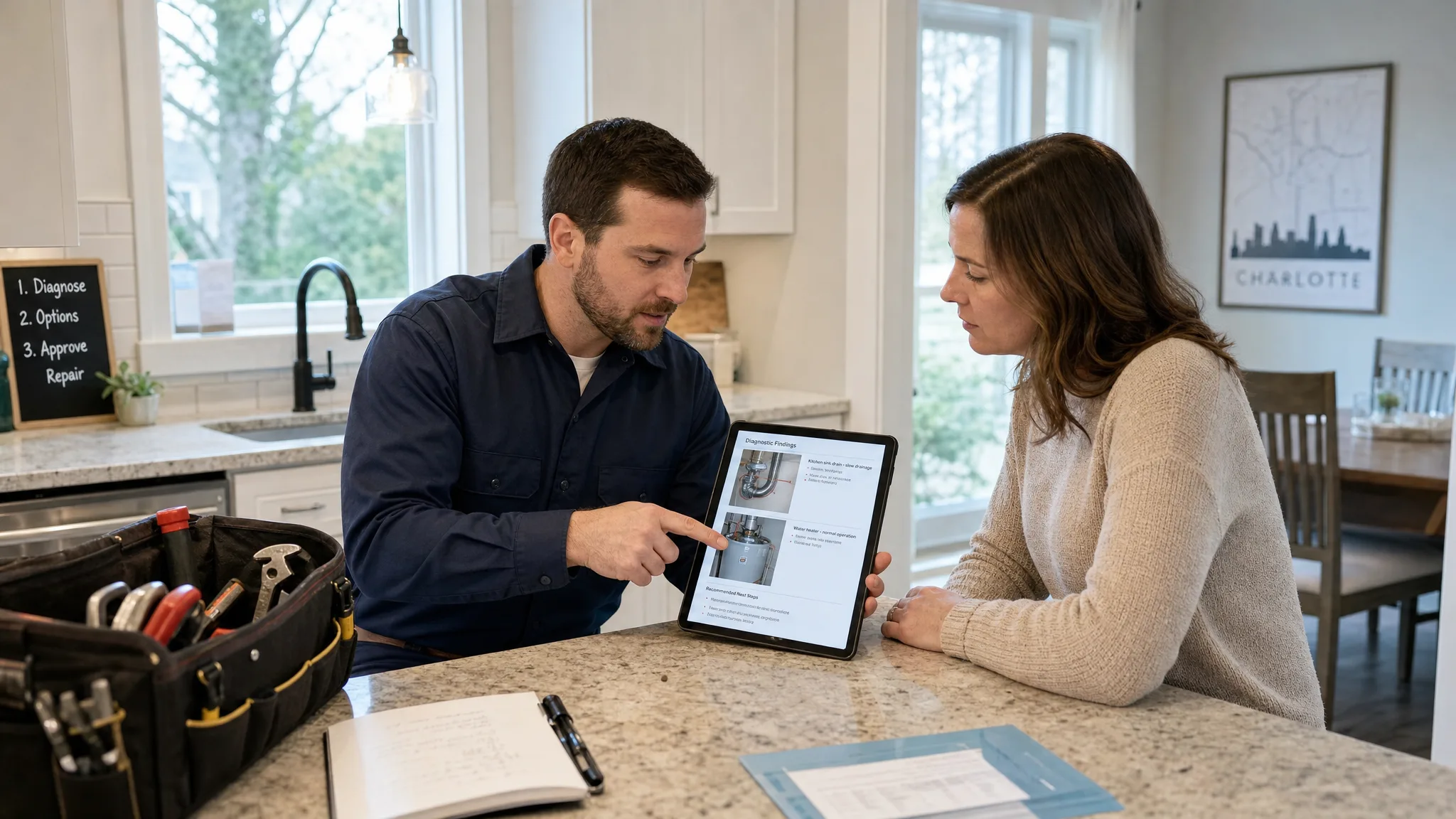
Clear items from beneath affected sinks, around toilets, near water heaters, and around laundry connections. Unlock utility rooms, crawlspace entries, gates, or maintenance closets if those areas may be relevant. For a suspected leak below a sink, moving household items out of the cabinet helps the plumber view valves, supply connections, traps, and drains without delay.
In a Charlotte condo or townhome, access can be more complicated. A leak may involve a common wall, neighboring unit, shared vertical drain stack, or a utility chase. Ask the association or management office about entry requirements and whether building maintenance needs to be involved before opening common-area access panels or shutting down a shared water line.
How a Plumber Identifies the Source of the Problem
Diagnosis starts with symptoms, but the plumbing professional should look for evidence that supports or rules out possible causes. The exact sequence depends on the complaint and the accessible plumbing. Not every plumber uses identical procedures, and the needed tests should fit the problem rather than follow a one-size-fits-all script.
Leak detection diagnosis
For a suspected water leak, the plumber may inspect exposed pipes, shutoff valves, supply hoses, fixture bases, drain assemblies, water heater connections, and visible signs of moisture. They may ask whether the water meter appears to move when all water use is off, inspect for damp materials, or test individual fixtures to see what creates the leak.
A drip beneath a bathroom sink could be from a pressurized supply connection, a drain joint that leaks only while the sink drains, or condensation. Those are different conditions with different repairs. A qualified recommendation should explain what was observed and, where possible, identify the condition that reproduced the symptom.
If the suspected leak is hidden behind drywall, under flooring, inside a ceiling, or in a slab, additional leak detection diagnosis may be needed. The diagnostic visit may establish a likely area without immediately proving the exact pipe or failed fitting. Ask what evidence supports the recommendation and what testing or access would turn the likely cause into a confirmed scope.
Drain and sewer problem diagnosis
For drainage complaints, the plumber may run controlled amounts of water, test individual fixtures, inspect a cleanout, and ask whether other drains gurgle, slow down, or back up. A single slow bathroom sink often calls for a different investigation than a toilet that causes water to rise in a nearby shower.
When the condition suggests a blockage deeper in the line, a drain camera inspection can be valuable after the line is opened or cleared enough for the camera to pass. Video can help show buildup, roots, damaged pipe, separated fittings, or other visible conditions. However, camera visibility can be limited by standing water, heavy blockage, pipe condition, or the camera’s ability to reach the relevant section. A camera finding should be explained in plain language, including where the condition appears to be and how it relates to the reported symptoms.
Water heater and fixture diagnosis
For water heater concerns, the inspection may include the area around the tank or unit, visible connections, temperature and pressure relief components, signs of leakage, ignition or electrical conditions as appropriate, and the pattern of hot-water loss. Never remove covers or attempt fuel-gas, electrical, or relief-valve work yourself.
For toilets, faucets, and showers, diagnosis may include checking shutoff valves, supply connections, fill and flush operation, drain response, seals, cartridges, and visible leaks. A plumber should distinguish between a contained fixture issue and signs that the trouble lies in the branch drain or a larger line.
Tests, Tools, and Access That May Be Needed
Some problems can be confirmed visually. Others require a controlled test or specialized tool. The need for further testing is not automatically a sign that anything is wrong with the visit; hidden leaks, intermittent drainage issues, and limited access can make a complete answer impossible at first glance.
Depending on the symptoms, diagnostic work may involve:
- Operating a fixture one at a time to reproduce a leak or drainage symptom.
- Checking exposed piping, appliance connections, shutoff valves, and drain traps.
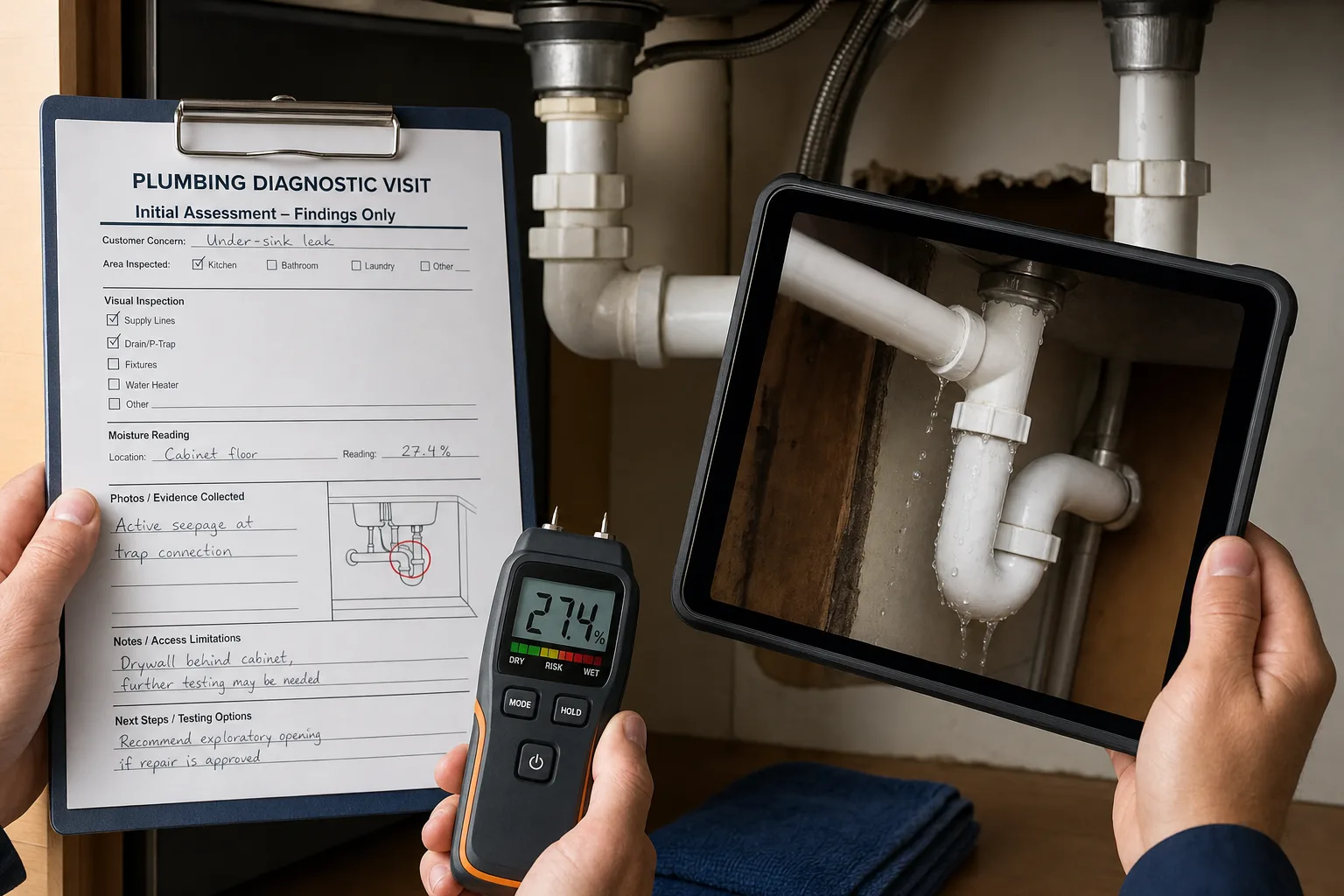
- Using moisture-detection tools in an accessible area to help identify affected material.
- Checking water flow or meter behavior when no intended water use is occurring.
- Opening an accessible cleanout and using drain-cleaning equipment where appropriate.
- Performing a drain camera inspection once the line can be viewed.
- Removing a toilet or opening a limited access point when necessary and authorized.
- Requesting access to an attic, crawlspace, utility chase, adjacent unit, or building maintenance area.
Before approving invasive work, ask what will be opened or removed, why it is necessary, whether there is a less invasive test, and who is responsible for restoring finishes. Plumbing repair may address the pipe, drain, or fixture itself, while drywall, paint, flooring, cabinetry, or mold-related restoration may be separate work. A clear answer helps avoid assuming that all repair-related tasks are included.
For questions about whether a water or sewer condition may be utility-side rather than private plumbing, consult Charlotte Water. The utility can provide current customer guidance, but a plumber may still be needed to inspect privately owned plumbing on your property. Responsibility can depend on the location of the problem and the service configuration, so avoid making assumptions based only on where a symptom appears.
What You Should Receive Before Approving the Repair
Before you authorize non-emergency work, request a clear explanation of the findings and the proposed repair. The documentation does not have to be lengthy to be useful, but it should let you understand what is known, what remains uncertain, and what you are being asked to approve.
Ask for findings and supporting evidence
Useful information may include photos of a visible leak, images from a drain camera inspection, a description of testing performed, the location of the suspected issue, and any limitations that prevented a final confirmation. If the plumber cannot yet confirm a hidden condition, the written recommendation should make that distinction clear rather than present an assumption as a settled fact.
Request options when more than one path is reasonable
A practical estimate may present options such as a targeted repair versus replacement of a deteriorated section, drain cleaning versus further camera inspection, or a repair that requires opening an access area versus additional noninvasive testing first. The best option depends on the current evidence, the condition of the plumbing, the likelihood of recurrence, property access, and your budget and risk tolerance.
Compare the exact scope, not just the total. For help reading competing proposals, see how to compare plumbing repair services in Charlotte.
Review authorization, exclusions, and warranty terms
Read what the estimate includes: labor, parts, diagnostic steps, access work, cleanup expectations, and whether permit handling is part of the proposal when required. Also ask about conditions that could require a change order, especially if the repair depends on what is found after opening a wall, removing a toilet, exposing a buried line, or clearing a blocked drain.
Request warranty details in writing. A warranty may apply differently to labor, supplied parts, a specific repair method, or a replacement fixture. It may also have exclusions related to existing system conditions. This guide to plumbing service warranties and guarantees in Charlotte can help you identify the questions worth asking before you approve work.
You can also verify current contractor licensing information through the North Carolina State Board of Examiners of Plumbing, Heating and Fire Sprinkler Contractors. Licensing verification is one useful step in provider evaluation; it does not replace reviewing the actual diagnosis, written scope, communication, and insurance information relevant to your project.
Why the Diagnosis, Scope, and Price Can Change
A repair price can change legitimately when new, material information becomes visible after authorized diagnostic or access work. Plumbing often runs behind finished surfaces, beneath floors, underground, or inside shared building areas. Until those components are tested or accessed, no one can see every condition affecting the job.
Examples include a pipe that looks like a simple pinhole leak but is found to have widespread corrosion, a drain blockage that prevents a camera from reaching the suspected area until cleaning occurs, or a toilet leak that reveals damaged subflooring once the fixture is removed. In each case, the original assessment may have been reasonable, but the final repair scope depends on what the testing reveals.
Ask the plumber to pause and explain the changed condition before proceeding with additional non-emergency work. A good discussion should cover:
- What new evidence was found.
- Why the original scope is no longer sufficient or appropriate.
- What additional work is recommended.
- What alternatives, if any, are available.
- How the added work changes the price, timing, and restoration needs.
This is especially important for rental properties. Owners may want a written update and photos before authorizing expanded work, while tenants need clear safety and access instructions. In a true emergency, mitigating active damage may need to come first, but documentation should still follow as soon as practical.
When to Approve Work Immediately and When to Ask Questions
Some conditions justify immediate action to limit damage or prevent unsafe exposure. Others allow time to compare written options. The key is to separate urgent damage control from work that can reasonably wait for a fuller decision.
Authorize urgent mitigation when damage is actively developing
Act quickly when there is active, uncontrolled water flow; a burst pipe; sewage backing up into living areas; an overflowing fixture that cannot be stopped; a substantial leak near electricity; or a condition that cannot be safely isolated. Shut off water when appropriate, stop using affected fixtures, protect people from contaminated water or electrical hazards, and seek a dependable local plumber or drain specialist.
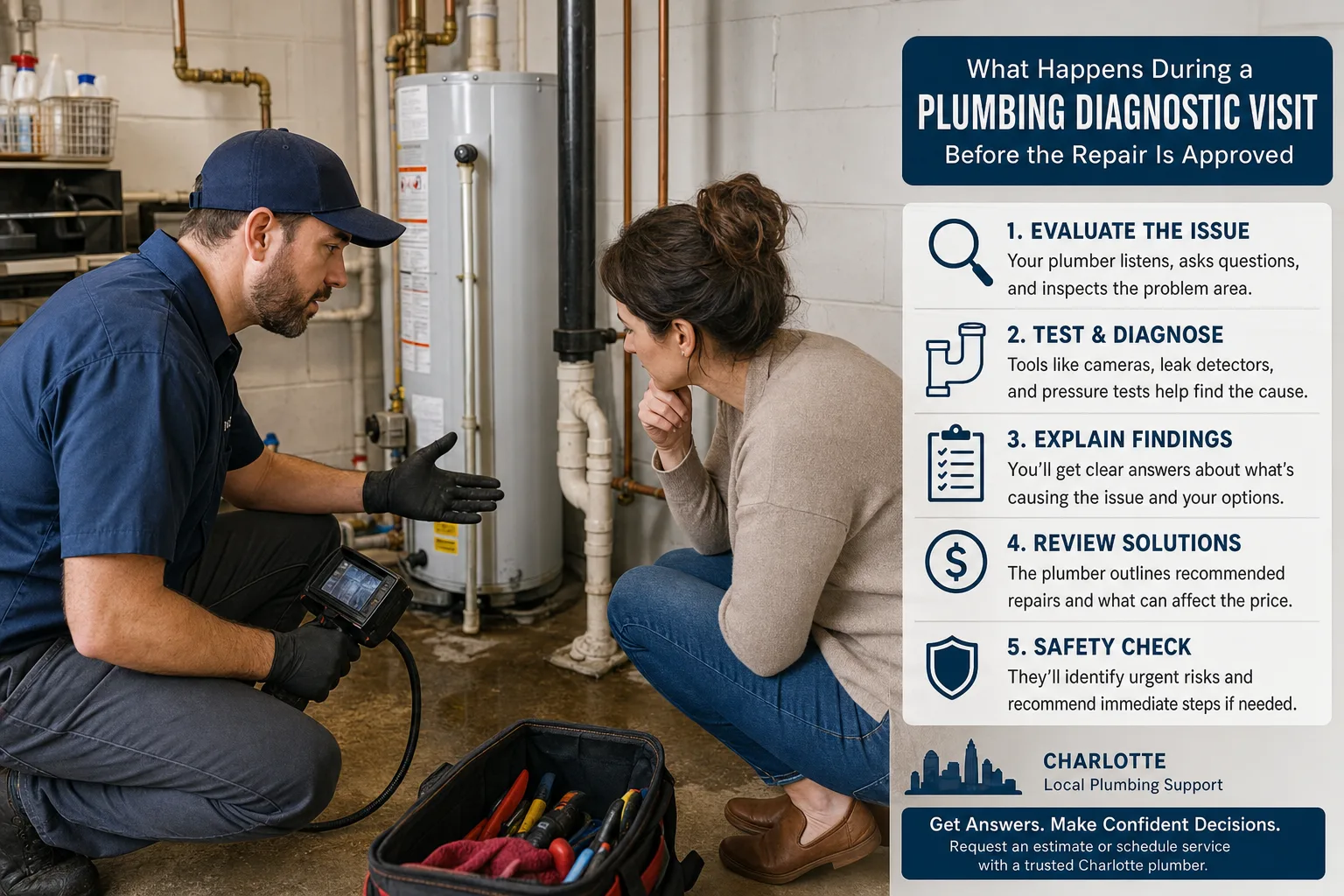
Emergency authorization can cover steps such as stopping flow, isolating the fixture or line, stabilizing a drain backup, or making an area safe. Ask the provider to explain what immediate work is needed now and what repair or restoration decisions can wait until the property is stable.
Ask questions when the condition is contained
If a slow drip is contained, a fixture still functions safely, or a drain is sluggish without sewage backup or multi-fixture symptoms, you may have time to review the findings and estimate. Questions to ask a plumber include:
- What did you observe, and what test supports the proposed repair?
- Is this a confirmed cause or the most likely cause pending additional testing?
- What repair is being recommended, and what does it include?
- What access will be needed, and who handles any finish repairs afterward?
- Could the scope change once the line, wall, floor, or fixture is opened?
- Are there repair and replacement options that fit the evidence?
- What warranty terms apply to the work and parts?
- Do you recommend a permit or coordination with the condo association, property manager, or Charlotte Water?
Frequently Asked Questions
Is a diagnostic fee separate from the plumbing repair cost in Charlotte?
It can be. Some plumbing providers treat diagnosis, testing, travel, or inspection as a separate charge, while others may apply some diagnostic cost toward approved repair work under their own terms. Do not assume either approach. Ask before booking how the diagnostic visit is billed, what work it includes, and whether any amount may be credited if you approve a repair.
How long does a plumbing diagnostic visit usually take?
The time varies with the symptom, accessibility, number of affected fixtures, and whether testing is needed. A visible supply leak may be evaluated more quickly than an intermittent ceiling leak or a drain issue that requires cleaning and camera inspection. Ask the provider how they expect to approach your particular concern, while understanding that hidden conditions can require additional time.
Will the plumber be able to give a repair price during the first visit?
Often, a plumber can provide a price when the cause and required repair are visible and confirmed. For hidden leaks, underground lines, recurring backups, or work requiring wall, floor, or fixture removal, the first visit may instead produce a diagnostic recommendation or a preliminary scope. The important point is knowing whether the estimate covers a confirmed repair or an investigation with possible added steps.
What should I ask before approving a plumbing repair estimate?
Ask what evidence supports the diagnosis, exactly what will be repaired or replaced, what access is included, what could change the scope, and what warranty terms apply. Request the findings, photos, options, and written repair proposal. If you are comparing providers, make sure each estimate addresses the same problem and level of repair rather than comparing totals alone.
When should I shut off the water and authorize emergency work right away?
Shut off water when there is an active leak that you cannot control at the fixture, a burst pipe, an overflow that will not stop, or significant water entering areas where it can damage the property or create an electrical hazard. Authorize urgent stabilization when sewage is backing up, water cannot be safely isolated, or delay is likely to increase damage. Once the immediate risk is controlled, request the documented findings and repair options for the next phase.
What Do You Need to See Before You Approve a Plumbing Repair?
Before you authorize work, ask for a clear distinction between the initial assessment and the confirmed repair scope. A plumbing diagnostic visit may identify the likely source of a leak, backup, low-pressure issue, or recurring drain problem, but hidden piping, underground lines, wall access, and severe clogs can require further testing before the full repair is known.
Use the plumber’s findings to get practical answers: What symptom was confirmed? What tests were performed? Is there photo or video evidence from a drain camera inspection, moisture test, pressure test, or leak detection diagnosis? What part of the system could not be inspected without opening a wall, excavating, or removing a fixture? A dependable plumber should be able to explain what is known, what remains uncertain, and why an estimate may change if concealed damage or access limitations are discovered.
Request the recommended options in writing before approving non-emergency work. Your documentation should identify the proposed repair, the expected labor and materials, any diagnostic fee or additional testing cost, permit considerations when applicable, and warranty terms. For larger repairs, Charlotte property owners may also want to confirm whether the work affects a private service line, a building system, or infrastructure that may involve Charlotte Water responsibilities. Ask whether the contractor is properly licensed for the scope of work and whether permits or inspections are required.
If you are comparing providers, bring the same questions, photos, and test results to each conversation. Our guide on how to compare plumbing repair services in Charlotte can help you evaluate scope, pricing, communication, and follow-up—not just the lowest number. It is also worth reviewing plumbing service warranties and guarantees in Charlotte before accepting a repair proposal.
Is the problem active or safely contained? If water is actively leaking, shut off the nearest fixture valve or the main water supply when you can do so safely, then seek prompt local help. If sewage is backing up, avoid using sinks, toilets, showers, washing machines, and dishwashers connected to the affected drain; keep people and pets away from contaminated water and contact a dependable drain specialist. If a fixture cannot be safely isolated, or water is approaching electrical equipment, emergency action is more important than waiting for additional quotes.
For a contained issue, use the diagnosis to ask the next useful question: “What evidence supports this repair, what could change the price, and what will I receive when the work is complete?” When you are ready for a direct local next step, find a plumber in Charlotte with your symptom history, photos, and written findings in hand.


