
Birmingham Plumbing Services: Is Heavy-Rain Standing Water a Yard Drainage Problem or a Sewer Issue?
After a hard Birmingham rain, water near the house can be unsettling. A soggy lawn, overflowing yard drain, damp crawlspace entrance, slow bathtub drain, or sewage-like odor may all appear related, but they do not always have the same cause. Some problems are ordinary surface runoff. Others point to a clogged private drain, a sewer-line restriction, or rainwater entering where it should not.
The useful first step is to observe the pattern without assuming the worst. This guide explains what Birmingham homeowners, landlords, condo residents, and multifamily property managers can safely check, when to limit indoor water use, and when sewer and drain diagnosis is the sensible next call.
Quick Answer: What to Check First After Heavy Rain
Start by determining where the water is collecting and what else is happening at the property. A shallow puddle at the low point of a yard is different from water rising through a drain, collecting around a sewer cleanout, or appearing in a tub when someone flushes a toilet.
Before moving anything or trying to clear a drain, look for these basic clues:
- Outdoor-only water: Water is on the lawn, driveway, patio, near a downspout outlet, or at a visible yard-drain grate. Indoor fixtures are draining normally and there is no wastewater odor. This more often suggests a surface-water, grading, gutter, or yard-drainage concern.
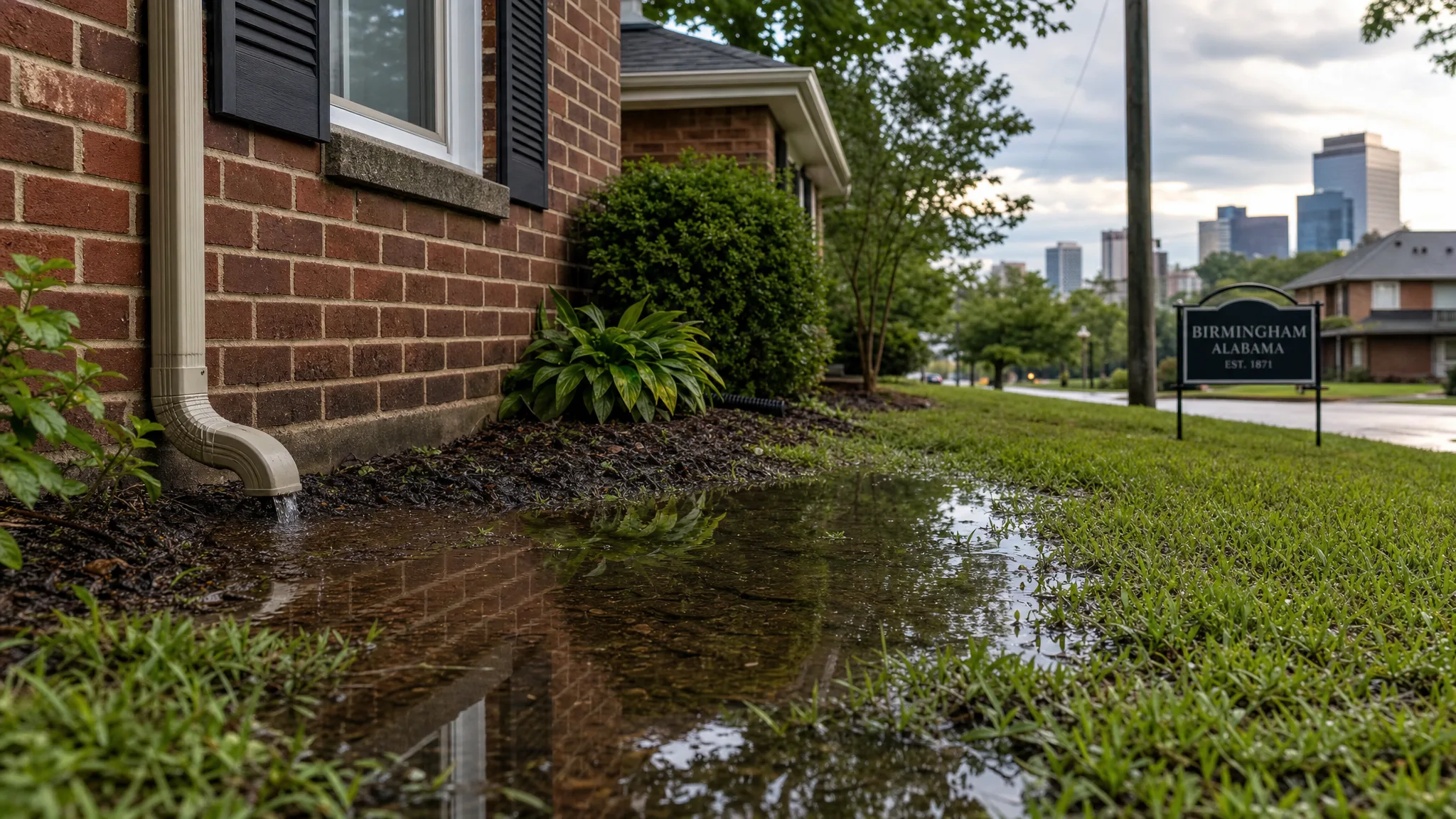
- Water near a downspout: A downspout may be disconnected, clogged, too short, or discharging into an area that already slopes toward the home. This can create standing water near the foundation without indicating a sewer failure.
- Multiple slow or gurgling fixtures: If a toilet bubbles, a shower drain slows, a tub holds water, or a lower-level drain reacts when another fixture is used, the issue may be in a shared branch drain or the main sewer line.
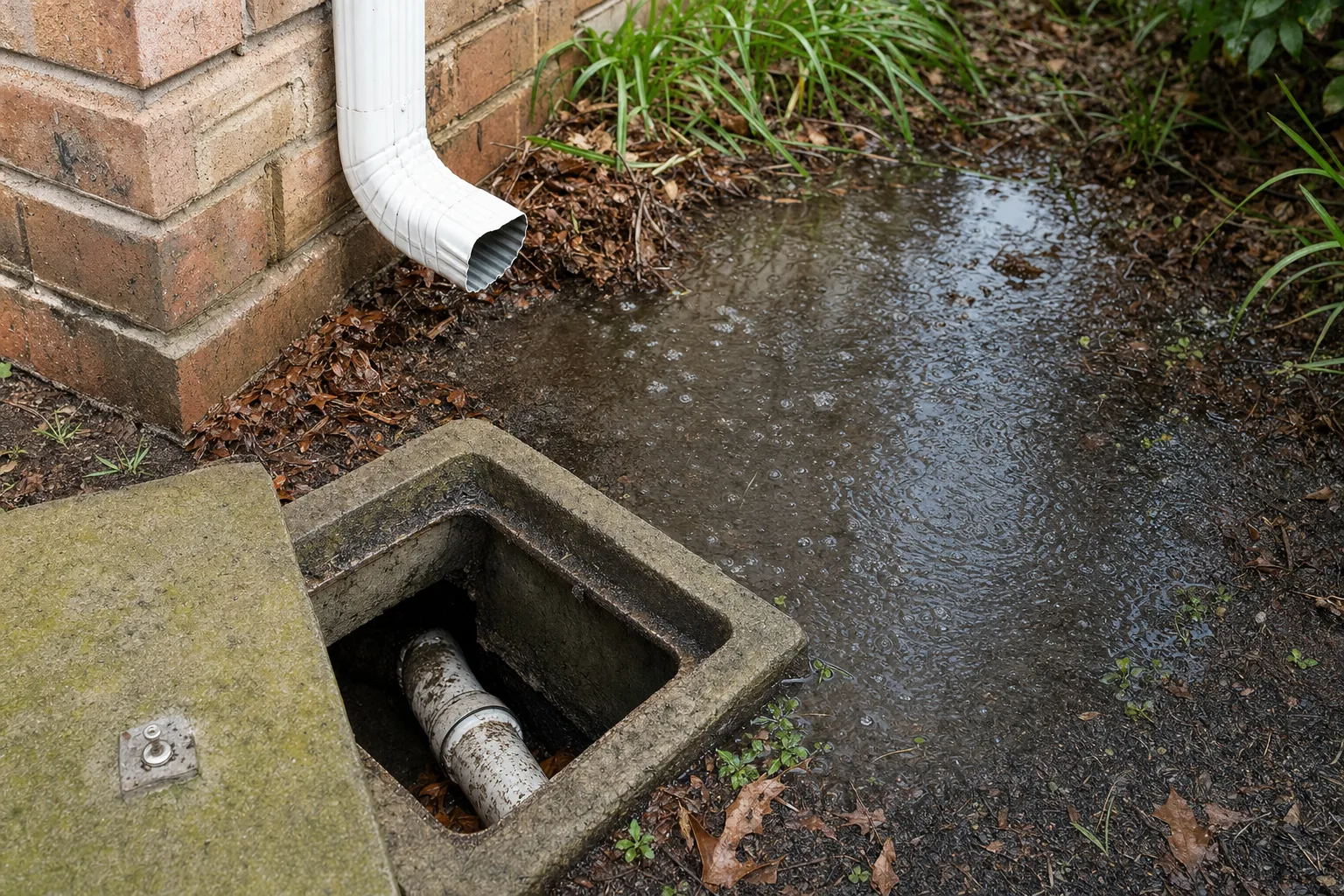
- Water or wastewater at a cleanout: A sewer cleanout is usually a capped access point along the building drain or sewer line. Water appearing around it during normal household use can be a warning sign. Do not remove or open a cleanout cap during active backup conditions.
- Water in one isolated fixture: One slow sink or a single toilet that clogs may be a local fixture or branch-drain problem. It still deserves attention if it repeats, but it is less conclusive than several fixtures reacting at once.
- Visible sewage, dark wastewater, or strong sewage odor: Treat this as a health and sanitation concern. Keep people and pets away, avoid using plumbing fixtures if they seem connected to the backup, and arrange qualified help.
For rental homes and multifamily properties, ask occupants for a simple timeline: when rain began, when water was first seen, which fixtures were used, whether more than one unit is affected, and whether the water looks like clean rainwater or wastewater. This information can help separate a site-drainage complaint from a plumbing diagnosis call.
First priorities if there may be a backup
If water is coming up through a floor drain, toilet, tub, shower, or cleanout area, avoid adding more water to the drainage system. Stop running the washing machine and dishwasher. Do not take showers, and avoid flushing toilets until a qualified plumber has advised that it is safe to resume use. In a building with shared plumbing, notify the property manager or maintenance contact promptly because use in another unit can affect a shared line.
If sewage is visible, do not walk through it unnecessarily. Keep children and pets away, avoid contact, and do not attempt to clean a major sewage backup before the source has been controlled. The U.S. Environmental Protection Agency provides general information on wastewater and sewage safety that can be helpful when contamination is present.
A rain-soaked yard alone is not automatically a plumbing emergency. But an outdoor drainage problem paired with indoor slow drains, gurgling, odor, or wastewater is a good reason to seek sewer and drain diagnosis rather than wait for the next storm.
Is the Water Coming From the Yard, a Downspout, or a Plumbing Drain?
Birmingham properties can have a mix of mature trees, sloping lots, older drain piping, crawlspaces, basement-level areas, paved parking, and closely placed buildings. Rainfall can expose weaknesses in any of these systems. The goal is not to diagnose pipe condition from the yard; it is to identify which system is most likely involved.
Signs of a surface-water or grading problem
Surface runoff is rainwater that travels across the roof, lawn, hardscape, driveway, or neighboring property rather than flowing into a plumbing drain. Common signs include:
- Water collects in the same low lawn area after most heavy rains.
- Rainwater runs off a roof edge or downspout directly toward the foundation.
- A patio, driveway, or sidewalk channels water toward the house.
- A visible yard-drain grate is covered with leaves, pine needles, mulch, mud, or lawn debris.
- There are no slow sinks, toilet changes, tub backups, or indoor drain odors.
- The water begins receding once rainfall stops, even though the ground remains damp.
A clogged yard drain after rain can make a lawn or driveway hold water, but it is not necessarily connected to the sanitary sewer serving toilets, sinks, and showers. Many yard drains carry stormwater separately. Their path and ownership can vary by property, so avoid assuming that clearing a visible grate solves a deeper drainage route or that a plumber is always the right first professional.
If the concern is primarily roof runoff, poor grade, landscape drainage, or a swale that does not move water away from the structure, a landscaper, drainage contractor, or foundation drainage specialist may be better suited to evaluate corrective work. For a blocked public street inlet, water entering from a roadway, or a concern tied to public infrastructure, check the appropriate City of Birmingham Public Works or stormwater reporting channel rather than attempting to address it yourself.
Signs of downspout drainage problems
Downspouts are one of the simplest places to look because the source is visible. During rainfall, watch from a safe, dry location. Is water flowing out at the bottom? Is it spilling from a gutter seam above? Is the downspout discharge pointed at a wall, crawlspace vent, paved area, or mulched bed that slopes back toward the home?
Possible downspout drainage problems include loose connections, crushed extensions, buried outlet blockage, roof debris, or discharge that simply ends too close to the foundation. These issues can lead to standing water near foundation walls and may contribute to damp soil, erosion, or water intrusion. They do not automatically mean the sanitary sewer is blocked.
Do not climb ladders in wet conditions or reach into a buried drain connection. A visual check from ground level and photographs after the storm are usually more useful and safer than a risky attempt to fix the issue during rain.
Signs the plumbing drainage system may be involved
A plumbing drain carries wastewater away from fixtures. A sewer line carries that wastewater from the building to the next part of the sewer system or, in some properties, to a private wastewater system. Rain does not have to enter a pipe directly to make a pre-existing restriction noticeable. Heavy rain, saturated ground, a compromised pipe, or a public-system event can coincide with a backup, but a professional diagnosis is needed to identify the actual cause.
Watch for patterns such as:
- A downstairs shower, tub, or floor drain fills when a toilet is flushed.
- A toilet gurgles when the washing machine drains.
- Several fixtures become slow at the same time.
- Wastewater appears at the lowest indoor drain point.
- A sewer smell occurs indoors or near a plumbing access point.
- The problem returns after several storms or after periods of heavy household water use.
These are stronger clues for a drain-line or sewer-line evaluation than a puddle in an otherwise normally functioning yard. If a toilet is the first obvious symptom, review the guidance on one toilet overflowing in a Birmingham home before using other fixtures. The key question is whether the overflow is isolated or part of a larger system backup.
Warning Signs That Point to a Sewer or Drain-Line Problem
Not every slow drain requires an urgent response, but certain conditions call for prompt attention because continued fixture use can increase the volume of a backup. The following warning signs are especially important after heavy rain.
Multiple fixtures react together
A kitchen sink that drains slowly by itself may have a local blockage. But if flushing a toilet causes a nearby tub to gurgle, or if the washing machine drain cycle causes water to rise in a shower, the problem is more likely beyond one fixture. Shared reaction is an important observation for a plumber because it helps narrow the likely area of the drainage system involved.
The lowest drain backs up first
Water usually appears first at the lowest available opening when a main drain or sewer is restricted. In a home, that may be a basement floor drain, a first-floor shower, a low tub, or another low-level fixture. In a multifamily building, it may occur in ground-floor or lower-level units while residents higher in the building are still able to run water.
That does not prove the cause, but it is a reason to stop sending more wastewater into the system. Let affected tenants know not to run appliances or use fixtures until the responsible maintenance team or qualified plumber has assessed the condition.
Wastewater is different from rainwater
Rainwater is usually relatively clear, though it can be muddy or carry leaves and soil. Wastewater may be cloudy, gray, dark, foul-smelling, or contain toilet paper or other debris. Do not rely on color alone, especially in a muddy yard, but a sewage odor or recognizable waste material should be treated as a potential sewer backup.
Do not use a garden hose to push suspected wastewater toward a street drain, neighboring lot, or stormwater inlet. Keep people away from the area and get professional guidance on source control and cleanup.
A cleanout area is overflowing or wet during fixture use
A sewer cleanout can provide plumbing access, but it is not a homeowner testing point during a backup. If water or wastewater is visibly escaping around an existing cap, or if the cleanout area becomes wet when plumbing fixtures are used, record the observation from a safe distance. Do not loosen, remove, or enter an unsafe cleanout. Pressure, standing wastewater, damaged caps, and unknown pipe conditions can create a mess and expose you to contamination.
Tell the plumber whether the water appeared only during rainfall, only when someone ran indoor water, or during both. That distinction is useful in sewer and drain diagnosis.
The issue repeats after storms
One isolated puddle after an unusually intense storm may be a site drainage issue. A recurring heavy rain drain backup, recurring sewer odor, or repeated slow fixtures after wet weather deserves a documented evaluation. Repetition matters because it suggests a pattern that should not be dismissed as a one-time inconvenience.
For homes with older trees, recurring restrictions can sometimes be associated with root intrusion or pipe defects, but those possibilities should not be assumed without proper inspection. A plumber may need to clear the line, inspect it with a camera where appropriate, and explain what was actually found.
Safe Checks Birmingham Homeowners Can Make Without Digging
You do not need to excavate a yard, open a cleanout, use harsh chemical drain cleaners, or run repeated “tests” with water to collect useful information. In fact, those actions can make conditions worse or obscure the original pattern.
Make a short observation log
Use a phone note or a simple written record. Include:
- The date and approximate time rain started and stopped.
- Where water first collected: yard, driveway, patio, downspout outlet, crawlspace entrance, basement area, or indoor fixture.
- Whether water was clear, muddy, foul-smelling, or contained debris.
- Which indoor fixtures were slow, gurgling, overflowing, or unaffected.
- Whether the condition changed when a toilet was flushed, a shower ran, or an appliance drained. Do not perform extra tests if a backup is already suspected.
- Whether neighboring units, common areas, or nearby homes appeared affected.
- Whether the problem has happened before, particularly after storms.
For a landlord or property manager, this log is more helpful than a general report that “the drains are bad.” Ask tenants to identify the fixture, room, floor, and sequence of events. In a condo, notify the association or building management according to the building’s procedures because a vertical stack, common line, or shared drain could affect more than one residence.
Take photographs and short video from safe locations
Photograph standing water near the foundation, downspout discharge, the visible yard-drain grate, and any water level in a tub or floor drain. A brief video showing gurgling can be useful if it can be captured without running more water into a suspected backup. Include a wide view that shows the relation between the water and the home, then a closer view of the drain, gutter outlet, or affected fixture.
A plumber does not need dramatic footage. Clear pictures taken before water recedes can help explain whether the concern began outside, appeared indoors, or involved both areas.
Check visible yard-drain grates carefully
If a yard drain has a surface grate that can be seen from above, look for obvious leaves, mulch, lawn clippings, sediment, or trash blocking the openings. Wearing gloves, you may remove loose debris sitting on top of the grate if you can do so without reaching into the drain or standing in contaminated water.
Do not pry up damaged grates, insert tools deep into unknown piping, or dig around buried drain lines. A grate that looks clear does not prove the underground pipe is open. Likewise, a blocked grate may explain a localized puddle but does not explain indoor wastewater backup by itself.

Walk the water path, not the pipe path
After the rain eases and the ground is safe to walk on, look for where runoff naturally travels. Does it move from a roof outlet toward the home? Is mulch washed away near a wall? Does water collect at a driveway edge? Does a neighboring slope direct water onto the property? These observations help identify a Birmingham yard drainage problem and can be useful for a landscape drainage contractor.
Do not attempt to identify buried sewer routes by probing, digging, or opening access points. Sewer and drain diagnosis is based on the plumbing layout, symptoms, accessible cleanouts, clearing results, and inspection tools used by a qualified professional.
Avoid quick fixes that create new problems
Do not pour chemical drain opener into a fixture that is backing up or nearly full. The product may not reach the blockage, can splash back, and can create a hazard for anyone who later services the drain. Do not use a pressure washer or high-pressure hose in a drain line without the proper equipment and training. Do not cover a drain or cleanout area in a way that hides active overflow.
When there is a possible sewer backup, the safest temporary action is often to stop adding water, isolate the area, document what you see, and request professional direction.
When a Yard Drainage Issue Can Affect the Foundation or Indoor Plumbing
Outdoor drainage and plumbing are separate systems, but they can influence the same building. Water that repeatedly remains near exterior walls can contribute to moisture problems in crawlspaces, basements, garages, or foundation-adjacent areas. It can also make an existing plumbing leak harder to distinguish from rain-related dampness.
Standing water near the foundation
Standing water near foundation walls deserves attention even when fixtures are draining normally. Look for water that remains against the house after rainfall, erosion near downspouts, damp crawlspace vents, water stains on lower walls, or recurring dampness in a below-grade area. The appropriate professional may be a drainage contractor, landscaper, foundation specialist, roofer, or plumber depending on the source.
A plumber is a strong fit when the moisture concern is accompanied by drain symptoms, unexplained water use, wastewater odor, visible leakage from plumbing, or evidence that a sanitary drain is involved. If rainwater is simply pooling because the yard slopes toward the building, landscape grading and drainage improvements may be the more direct solution.
Can a clogged yard drain cause water to enter the house?
It can, depending on the layout. A clogged yard drain can allow surface water to collect against a doorway, basement entry, garage threshold, patio, or foundation wall until it finds an opening. That is generally a stormwater-management problem, not a sanitary sewer backup. However, the result can still be indoor water damage and should be addressed before it recurs.
If the water enters through an exterior opening and indoor drains are working normally, begin with the exterior drainage path. If water rises from a floor drain, tub, shower, toilet, or other plumbing fixture, treat it as a likely plumbing-drain issue until a professional determines otherwise.
When public infrastructure may be involved
Water running down a public street, a blocked roadway inlet, or flooding that appears to originate from outside private property may involve a municipal stormwater system. In that situation, document the location and conditions and use the appropriate city reporting route. A private plumber generally cannot repair public street drainage infrastructure.
Likewise, a plumbing professional can diagnose a private building drain or sewer line but cannot assume responsibility for a public sewer issue without evidence. Asking for a diagnosis first helps property owners avoid commissioning work for the wrong system.
Rental and multifamily decision-making
For landlords and multifamily operators, provider choice often depends on the affected area:
- One apartment has one slow sink: A local fixture or branch drain may be the issue.
- Several lower-level units have backups: A shared building drain or sewer line should be considered, and fixture use may need to stop in affected areas.
- Water collects in common landscaping or parking areas only: Site drainage, catch basins, grading, or stormwater routing may be the primary concern.
- Wastewater is visible in a common area or inside units: Restrict access, notify occupants, and arrange a qualified plumbing response.
Good documentation also helps property managers communicate with owners, tenants, associations, insurers, maintenance teams, and the eventual contractor without overstating what has caused the problem.
What a Plumber May Check During Sewer and Drain Diagnosis
A qualified plumber’s job is not merely to make a slow drain disappear. For a recurring or storm-related concern, diagnosis should connect the observed symptoms to the appropriate part of the plumbing system and explain what the next step is likely to address.
Fixture pattern and building layout
The plumber may ask which fixtures are affected, which is lowest in the home, whether the issue occurs during rain, and whether the property has a basement, crawlspace, slab, or multiple units. They may ask when the house was built, whether drain work has been done before, and whether large trees are near suspected line routes. These questions help determine whether the issue appears isolated, shared, or likely farther downstream.
Accessible plumbing and drain points
Depending on the property and symptoms, a plumber may inspect accessible fixture drains, vents, drain piping, and available cleanouts. They may determine whether a line needs clearing or whether another approach is more appropriate. Do not expect every property to have the same access points; older homes, condos, and multifamily buildings can have different layouts and access limitations.
Drain clearing and camera inspection
When a restriction is suspected, a plumber may recommend drain cleaning or use equipment designed to clear the line. If symptoms recur, if the line cannot be cleared normally, or if the cause needs confirmation, a camera inspection may be recommended. A camera can help identify conditions such as blockage, root intrusion, pipe damage, offset sections, or standing water within a line when the equipment can access the relevant pipe.
A camera finding should be explained in practical terms: where the condition is, whether it is in the private line, whether clearing is expected to help, and whether repair or further evaluation is being recommended. If the evidence instead points to exterior runoff or a non-plumbing drainage system, a helpful plumber should say so rather than treating every wet yard as a sewer repair.
Questions worth asking before work begins
- Based on the fixture pattern, does this look like an isolated drain or a main-line concern?
- Should anyone avoid using certain fixtures while the line is evaluated?
- What did the clearing or inspection show?
- Is the issue likely on private property, or should a public utility or stormwater agency be contacted?
- Would a camera inspection help confirm the condition before repair decisions are made?
- If outside water is the primary issue, what type of drainage professional should evaluate it?
If you are deciding who to dispatch for active backup symptoms, this guide on choosing an emergency plumber or drain specialist for a backup offers a useful comparison of the kinds of symptoms that can affect that decision. The exact provider availability and local procedures differ, but the central idea is the same: report the symptoms and ask whether the provider handles main sewer and drain diagnosis.
Frequently Asked Questions About Heavy Rain and Drainage Problems
How can I tell whether heavy rain caused a yard drainage issue or a sewer-line backup?
Look at both the location and the behavior of the water. Water that stays outside around a low yard area, a downspout, driveway, patio, or visible yard drain—with no fixture symptoms—is more likely surface runoff or drainage. Water that rises through a toilet, tub, shower, floor drain, or cleanout area, especially when fixtures are used, is more concerning for a plumbing drain or sewer-line backup.
Multiple slow, gurgling, or reacting fixtures are more meaningful than one outdoor puddle. A foul odor, toilet paper, dark wastewater, or water at the lowest indoor drain point also supports a plumbing-related concern. When the symptoms overlap, document them and request a sewer and drain diagnosis rather than guessing.
Should I avoid using toilets, showers, or the washing machine if drains are slow after a storm?
If more than one fixture is slow, gurgling, or backing up, it is prudent to limit water use until the problem is assessed. Avoid flushing toilets, showering, running the washing machine, dishwasher, or other large water-using appliances. Each use sends more water into the drainage system and may cause a backup to emerge at a lower fixture.
If one sink alone is draining slowly and there are no other symptoms, the situation may be less urgent. Still, avoid aggressive do-it-yourself chemical treatments and monitor the other fixtures. If the issue spreads, repeats, or is accompanied by odor or overflow, arrange qualified help.
Can a clogged yard drain cause water to back up into my house?
Yes, a clogged yard drain can contribute to water entering a house if it allows rainwater to pool against an exterior doorway, garage, basement entrance, patio threshold, or foundation wall. In that case, the water is generally entering from outside rather than backing up through sanitary plumbing.
Water coming up from a floor drain, tub, toilet, or shower is different and should be evaluated as a possible plumbing drainage backup. It is possible for a property to have both an exterior drainage problem and a drain-line issue, which is why the fixture pattern matters.
What should I document before calling a Birmingham plumber for drain diagnosis?
Record the timing of the rain, the first place water appeared, the fixtures affected, any gurgling or odors, and whether water changed when someone used a toilet, shower, or appliance. Take clear photos of exterior standing water, downspout outlets, yard-drain grates, and affected indoor fixtures. Note whether the water appeared clean, muddy, or like wastewater.
For rentals and multifamily buildings, include unit numbers, floor levels, and whether neighboring units have similar symptoms. This can help the plumber understand whether the concern may involve a common line.
When is standing water after rain a reason to call a plumber rather than a landscaper or drainage contractor?
Call a plumber when standing water is accompanied by slow indoor drains, toilet or tub backups, gurgling fixtures, sewage odors, wastewater, or visible issues at a sewer cleanout. These are signs that the building’s plumbing drainage system may be involved.
A landscaper or drainage contractor may be the better first call when the issue is confined to roof runoff, downspouts, grading, erosion, lawn pooling, or a surface yard drain and indoor plumbing works normally. For water that appears connected to public streets or stormwater infrastructure, report it through the relevant local public agency.
Does heavy rain always cause a sewer backup?
No. Heavy rain can reveal drainage weaknesses, saturate soil, overwhelm surface drainage, or coincide with a pre-existing pipe restriction, but it does not automatically mean a private sewer line has failed. A backup may have several possible causes, including a blockage in a branch drain, a main-line restriction, a damaged pipe, a public-system condition, or a combination of site and plumbing factors. Diagnosis is how those possibilities are separated.
What if the problem stops after the rain ends?
Take that as useful information, not necessarily proof that there is no problem. If water clears from a yard and fixtures remain normal, exterior drainage may be the primary issue. If the same condition returns after storms, if odors remain, or if indoor fixtures have become slow or gurgling, retain your photos and notes and arrange an evaluation. Recurring patterns are easier to investigate when they are documented.
A Calm Next Step for Birmingham Property Owners
Heavy rain can create ordinary runoff problems, expose downspout drainage problems, or bring attention to a restricted sewer or drain line. The clearest dividing line is usually not the amount of rainwater in the yard. It is whether the home’s plumbing fixtures are also reacting, whether wastewater is present, and whether the condition repeats.
If water is only pooling outdoors, start with the visible water path and consider whether a drainage contractor, landscaper, or public agency is the appropriate resource. If fixtures back up, sewage appears, multiple drains react, or the issue returns after storms, limit water use and arrange qualified sewer and drain diagnosis.
Cannot tell whether you are dealing with a clogged yard drain, a sewer-line issue, or rainwater entering where it should not? You can find a plumber in Birmingham to ask for a direct, practical next-step answer and schedule diagnosis when the symptoms point to a plumbing-related problem.


