
Atlanta Emergency Plumbing: Water Coming Up Through a Shower Drain
Water coming up through a shower drain is a reason to stop using the plumbing—not to try another flush. A shower can become the overflow point when wastewater cannot move through a connected drain. The restriction could be near the bathroom, in a shared building drain, or farther downstream.
If you need a plumber in Atlanta while water is rising, focus first on limiting additional flow and avoiding exposure. You do not need to locate the blockage yourself. The steps below explain what to report, who to notify, and how to arrange an appropriately scoped diagnosis.
Water Rising Through the Shower Drain? Stop Water Use and Keep Clear
Stop water use throughout the affected home until a qualified professional determines which drains can be used safely. A kitchen sink, upstairs toilet, or laundry connection may join the same restricted pipe even when the only visible backup is in a downstairs shower.
Every flush or appliance discharge adds water that must pass through the drainage system. If the downstream pipe cannot carry it away, wastewater may escape through a lower opening. Stopping use can reduce the amount entering the backup, although it cannot necessarily stop flow from neighboring units or the sewer system.
Your immediate response checklist
- Tell everyone to stop using fixtures. Include toilets, sinks, showers, tubs, dishwashers, and washing machines. Do not run another fixture to check whether it is affected.
- Pause water-using appliances only from a dry, safe location. Do not select a drain, rinse, or pump-out cycle. If controls are inaccessible, tell the responder an appliance may still be running.
- Keep people and pets out of the affected area. Close the bathroom door if you can do so without entering the water. Keep a dry route available for leaving the home.
- Observe without approaching the drain. Note whether water is rising, holding steady, or receding. Photos from a dry doorway can help document the situation.
- Arrange urgent help. Describe it as water backing up through a shower drain, not simply a slow shower. Mention suspected sewage, multiple affected fixtures, and continued rising immediately.
In an Atlanta apartment or condo, contact emergency building management at the same time. Stopping water use in one unit may not prevent wastewater from other units entering a shared restricted line.
Treat unknown drain water as potentially contaminated
Clear-looking water is not proof that a backup is sanitary. Wastewater may be diluted, and neither appearance nor odor reliably establishes whether it is safe. Avoid touching it, walking through it, or carrying wet belongings into unaffected rooms.
The CDC’s floodwater safety guidance addresses sewage contamination, electrical hazards, wound exposure, and protective precautions. Those exposure concerns also matter when potentially contaminated drain water enters a home. Protective equipment used by trained cleanup workers does not make an active sewage backup an appropriate do-it-yourself cleanup project.
If accidental skin contact occurs, wash with soap and clean water from an unaffected source without adding discharge to the backed-up plumbing. Seek medical guidance for exposure involving open wounds, eye contact, swallowed water, or symptoms of illness. Keep contaminated clothing and footwear from spreading material through occupied areas, and ask a remediation professional how affected belongings should be handled.
Electrical hazards take priority over saving belongings
Stay clear if water approaches outlets, extension cords, plugged-in appliances, electric heaters, or electrical equipment. Do not reach into water to unplug a device, and do not cross a wet floor to reach a breaker panel.
If electrical isolation is necessary, it should be handled from a safe location by someone qualified to assess the situation. Leave the affected area and seek emergency assistance for sparking, smoke, suspected energized water, or another immediate threat. Do not enter a wet crawlspace or basement to investigate plumbing.
Rising water, visible sewage, several affected fixtures, or water reaching beyond the bathroom all increase urgency. Even a backup contained within the shower requires prompt attention before normal plumbing use resumes.
When to Shut Off the Water—and Why That May Not Stop a Sewer Backup
Your water supply and drainage system do different jobs. The main water shutoff controls incoming pressurized water. It does not close the wastewater pipe leaving the building.
Turning off the main water valve does not block incoming sewage. Wastewater already in the pipes, discharge from other units, or downstream sewer conditions can still cause water to enter through a shower drain after your supply is off.
When closing a supply valve can help
A supply shutoff can limit additional water when a toilet runs continuously, a faucet cannot be stopped, or a supply pipe is leaking. If the fixture valve is accessible from a dry location, familiar, and turns normally, closing it may isolate that source. Do not force a stuck or corroded valve.
If several supply sources are contributing and you know how to operate your home’s main shutoff safely, closing it can prevent further incoming supply water. However, toilet tanks and appliances may still contain water that can discharge. Everyone must continue avoiding fixture use.
Do not operate unfamiliar valves in an apartment building, condo service room, or street-side utility enclosure. A valve may serve neighboring units or equipment beyond your home. Building management should coordinate shared shutoffs, and utility equipment should be left to the responsible utility.
What continued rising—or receding—actually tells you
If water keeps rising after use stops, report that observation immediately. It may indicate continuing appliance discharge, stored water moving through the system, use elsewhere in the building, or downstream flow. It does not by itself prove that Atlanta’s public sewer is responsible.
Likewise, water draining away does not establish that the obstruction has cleared. A partially blocked pipe may pass a small flow slowly but back up again during a toilet flush or washing-machine discharge.
A useful update is: “We stopped all water use, and the level continued rising for a while before becoming steady.” That sequence gives the plumber more useful information than an unsupported conclusion about a collapsed pipe or failed city sewer.
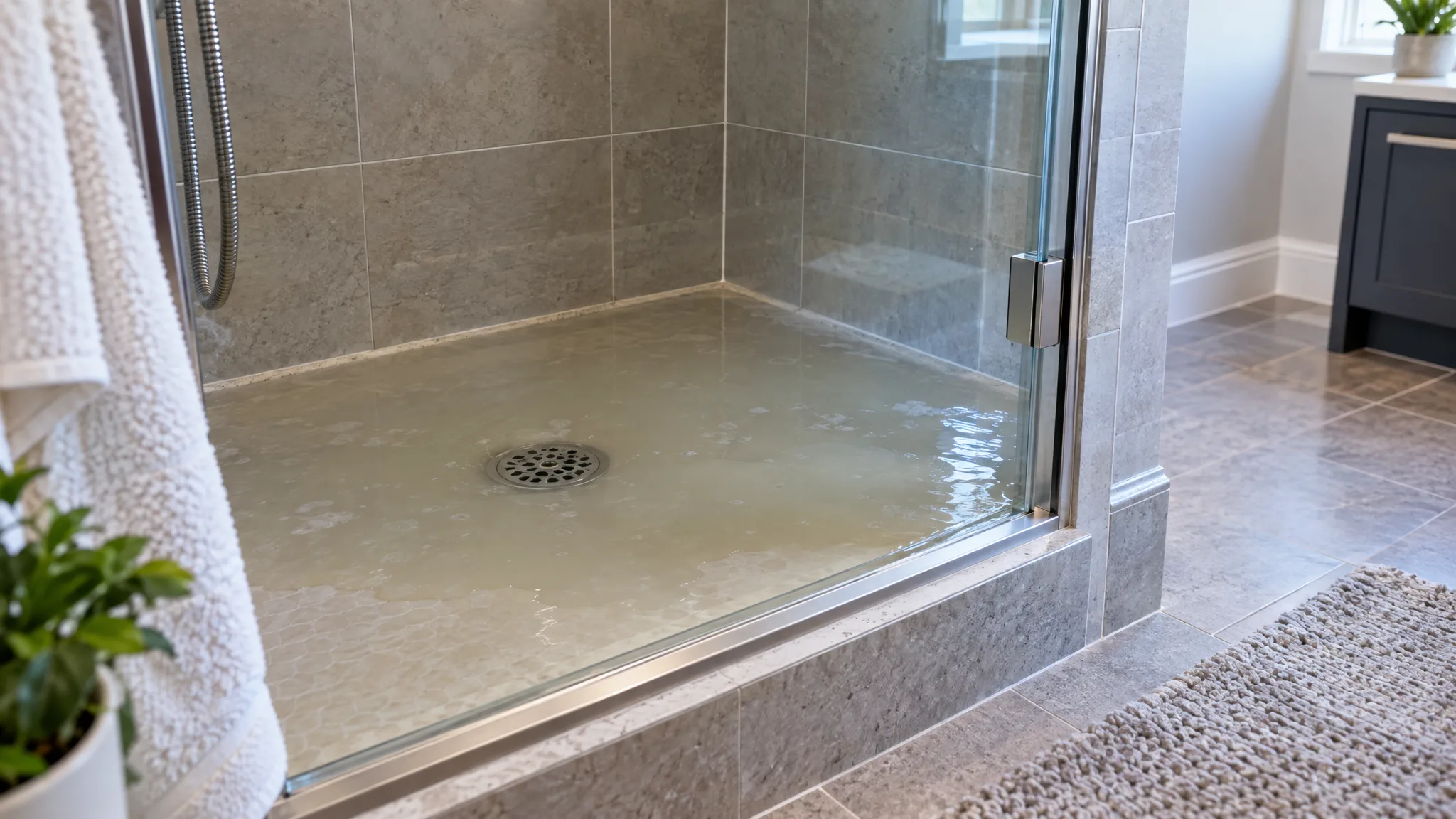
What the Symptoms Can Suggest: Shower Clog, Shared Drain, or Main Sewer Backup
Warning signs guide an investigation; they are not a confirmed diagnosis. Fixture connections, building layout, access points, and pipe condition all affect what a symptom means. Report events that already happened rather than reproducing the backup.
| Already observed | Possible explanation | Still needs confirmation |
|---|---|---|
| Water pooled only while the shower was running. | A restriction in the shower trap or nearby branch drain. | Whether the blockage is local and whether other piping is involved. |
| A toilet flush caused water to rise in the shower. | A restriction downstream of a connection shared by those fixtures. | The obstruction’s location, cause, and extent. |
| Several fixtures gurgled, drained slowly, or backed up. | A shared branch, building drain, or main sewer line blockage. | Whether the affected pipe is private, shared, or public. |
| A lower-level shower rose when an upstairs appliance discharged. | A restricted drainage route serving multiple fixtures. | Where those fixtures connect and whether the pipe is damaged. |
| Several apartments reported similar problems. | A shared building drain or farther-downstream restriction. | The repair location and responsibility for the work. |
| The backup began during heavy rain. | A possible wet-weather contribution to sewer flow or infiltration. | Whether rain is causally related rather than coincidental. |
A localized shower restriction
Hair, soap residue, and other material can restrict a shower drain. Water pooling during that shower’s use, without previously observed problems elsewhere, can fit a localized restriction.
Water rising through an unused shower deserves greater caution. If a toilet flush or laundry discharge preceded it, the obstruction may be beyond the shower assembly. The shower may be the easiest escape point rather than the source of the problem.
A shared bathroom or building drain problem
When toilet flushing backs up into a shower, wastewater may be unable to pass a restriction after the fixtures join. That observation does not identify whether the restriction is just beyond the bathroom or farther along the building drain.
This distinction matters in Atlanta’s converted houses, apartment buildings, and condominiums. A bathroom can connect to piping outside the unit, and residents on different floors may share a drainage route. A lower-floor resident may experience a backup even while using no water.
For example, a Midtown condo resident who notices shower water rising after upstairs activity should report the timing and unit location to management. The location helps coordinate access; it does not establish which neighbor, fixture, or pipe caused the obstruction.
A main sewer restriction or downstream problem
Multiple affected fixtures, recurring lower-level backups, and water entering while local use is stopped can justify investigation of a building drain or sewer connection. Possible causes include accumulated material, roots entering defective joints, damaged piping, or downstream sewer conditions.
The EPA’s explanation of sanitary sewer overflows describes how blockages, infrastructure problems, and excess flow can contribute to sewage releases. It also explains why these events present public-health concerns. That background supports prompt investigation, not a remote diagnosis of your property.
How Atlanta weather and housing conditions fit the investigation
Atlanta has both separate sewer infrastructure and combined sewer areas, where stormwater and wastewater share portions of the system. Heavy rainfall can therefore be relevant information, but the system serving your address must be established before drawing conclusions. Rain-related backups can also involve private-pipe defects that allow groundwater into drainage piping.
For an older Atlanta house with mature trees, ask whether prior records identify the sewer connection’s material and route. Tree roots are one possible finding, not an automatic explanation. Similarly, a recently renovated bathroom does not prove that the older downstream sewer connection was inspected or replaced.
Record whether the backup occurred during rain, after rain, or in dry weather. Give the plumber previous service reports if available. Evidence about the actual line is more useful than assumptions based on neighborhood age or landscaping.
What Not to Do Before Help Arrives
The safest preparation usually involves less plumbing activity. Attempts to make the water disappear can add wastewater, expose occupants to contamination, and complicate the technician’s work.
- Do not test other drains. A sink in another room or a toilet upstairs may feed the same restriction.
- Do not add chemical drain cleaner. It may remain in standing water and create splash or handling hazards without resolving a downstream obstruction.
- Do not mix products or add bleach. Disinfectant does not clear the blocked pipe, and mixing chemicals can create dangerous reactions.
- Do not plunge suspected sewage or operate a powered drain machine. Splashing, moving cables, and unknown pipe conditions create hazards.
- Do not remove a toilet or open a sewer cleanout. A backed-up line can release wastewater when an access point is opened.
- Do not tightly plug the shower drain. Closing one escape point does not remove the obstruction and may redirect the backup elsewhere.
- Do not use a household vacuum or fans on suspected sewage. Avoid spreading contamination or bringing electrical equipment near water.
- Do not lift a manhole cover or investigate a street overflow. Public sewer structures and confined spaces require authorized, equipped personnel.
If you have already used a drain product, tell the plumber its name, approximate quantity, and when it was added. Keep the container available in a dry location if safe. This information changes how the technician approaches standing water and drain access.
You can prepare safely by securing pets, gathering prior invoices, arranging building entry, and clearing an uncontaminated route to the bathroom. Do not carry wet furnishings or contaminated belongings through the home to make room.
Stopping the backup and restoring a sanitary room are separate tasks. A plumber may restore drainage without providing sewage remediation, drying, or building-material restoration. Ask who will assess contamination and when the area can safely return to use; do not assume a cleared drain makes affected surfaces safe.
Atlanta Homes, Condos, and Rentals: Who to Notify and What to Document
Effective sewer backup response in Atlanta depends on identifying both the building contact and the responsible sewer provider. An “Atlanta” mailing address does not necessarily mean the City of Atlanta operates the sewer serving that property.
Confirm the utility before assuming jurisdiction
The City of Atlanta spans parts of Fulton and DeKalb counties, while the wider metro area includes other municipal and county service arrangements. Neither the county name nor the postal city alone settles who should receive a sewer report. Check the sewer portion of your bill, property records, or building management’s utility information.
For City of Atlanta service questions, use the City of Atlanta Department of Watershed Management’s official website to locate its current customer-service and water/sewer emergency reporting instructions. Use the designated urgent reporting route for an active overflow; do not assume a general online inquiry receives emergency handling.
If another utility serves the address, use that provider’s official reporting instructions instead. Keep any incident reference and record when the report was made. Reporting a suspected public-system problem does not replace obtaining help for contamination or an active indoor backup.

For a single-family homeowner
Contact a qualified Atlanta plumber or drain specialist promptly for water coming up indoors. Tell the company whether the property uses public sewer or a septic system, if known. A septic-connected home may need an appropriate septic service provider rather than municipal sewer investigation.
Also notify the responsible utility if you observe wastewater around a street manhole, an apparent public overflow, or similar problems reported at nearby properties. Describe only what you can see from a safe distance. Neighbors reporting trouble is relevant evidence, but several homes can still have separate plumbing problems.
Do not assume every pipe outside the house is publicly maintained. Private sewer connections extend beyond interior walls, and responsibility must be established using the problem’s location and applicable utility rules. Ask the utility to clarify the maintenance boundary and ask the plumber to document where the restriction was found before assigning responsibility.
For tenants and condo owners
Notify the landlord, property manager, or association’s emergency maintenance contact immediately. Use clear wording: “Water is backing up through the shower drain, and it may be wastewater.” Include whether it is rising and whether other fixtures have already shown symptoms.
Ask management to coordinate any restrictions on water use in connected units, common-area access, and authorization for shared-pipe work. In a high-rise or controlled-access building, provide the contractor with entry instructions, loading or parking information, and the contact who can unlock service areas.
Do not operate common valves or authorize invasive work on shared piping without the appropriate approval. If the primary management contact does not respond, follow the property’s emergency escalation procedure and document your attempts. Immediate threats to life or electrical safety require emergency assistance rather than waiting for routine maintenance.
If sanitary facilities are unusable, ask management about safe alternatives or temporary arrangements. Lease terms, association documents, and the circumstances affect responsibility; this guide cannot determine who must pay for repairs or accommodation.
For landlords and property managers
Assign one coordinator for resident updates and contractor access. Record affected unit numbers, floors, and fixture locations. Ask occupants not to recreate the backup for a video. In a shared building, a clear no-use notice to potentially connected units may limit additional flow more effectively than closing one apartment’s supply.
Gather plumbing plans, cleanout locations, and previous drain-service records without opening piping. Tell the contractor about restricted access, occupied units, and any known electrical or contamination hazards. Arrange qualified remediation separately when needed.
After the immediate problem is resolved, connect prevention to the confirmed cause. Guidance on how to reduce repeat drain clogs in Atlanta apartment units can support resident education and maintenance planning. It should not replace investigation when a line repeatedly backs up despite appropriate use.
Document facts without delaying assistance
- When the water first appeared and whether it is still rising.
- Which fixtures were already observed to be affected.
- What fixture or appliance use preceded the backup.
- Visible water spread, debris, or odor noticed without close inspection.
- Photos from a dry area, including affected thresholds or adjacent rooms.
- Rain timing, previous backups, and recent plumbing work.
- Reports made to management, the plumber, utility, and insurer.
If property damage occurs, ask your insurer or agent about documentation requirements and whether sewer-backup coverage applies. Coverage is not automatic. Keep service reports and remediation records, but do not delay urgent safety measures while waiting for a coverage decision.
What a Plumber or Drain Specialist Will Check—and What Affects Cost
The first visit should establish the affected drainage route, address the immediate restriction where feasible, and explain what remains uncertain. Not every emergency plumber carries the same drain equipment, and not every drain-clearing company performs structural pipe repairs.
When contacting an emergency drain specialist in Atlanta, describe the backup before booking. Ask whether the company handles bathroom branches, shared building drains, and main sewer lines. Confirm whether its equipment and personnel fit your property type.
For additional provider-selection questions, see how emergency plumbers and drain specialists differ. That guide uses New Orleans examples, but its distinctions about equipment and service scope also apply when selecting Atlanta assistance.
What the diagnostic process may involve
- Reviewing the sequence. The technician asks which fixtures were involved, what preceded the backup, and whether rising continued after water use stopped.
- Assessing hazards. Wastewater, electrical concerns, chemical products, and building access affect how work can proceed.
- Identifying the drainage route. Fixture connections, available cleanouts, plans, and service history help determine where to investigate.
- Selecting a clearing approach. Cable equipment, jetting, or another method may be considered according to access, obstruction, and pipe condition.
- Deciding whether more inspection is needed. Camera or locating equipment may help explain recurrence, suspected defects, or uncertain routing.
- Checking drainage under controlled conditions. The professional decides when and how water can be introduced safely. Occupants should not conduct this test beforehand.
Clearing a line and explaining why it blocked are related but different tasks. A pipe may flow again while retaining a defect that requires follow-up. Ask the technician to separate confirmed findings, likely explanations, and unresolved questions.
When a camera inspection or repair recommendation makes sense
A sewer camera may help investigate recurring backups, roots, suspected structural damage, or an uncertain blockage location. It is not automatically necessary for every isolated shower restriction. Standing wastewater and debris can limit the view, so clearing may be needed first.
Ask whether a camera service includes a recording, location information, and a written explanation. A useful repair recommendation identifies the affected section and explains why the evidence supports that scope. Before approving excavation or replacement, ask about alternatives, access needs, permits where applicable, and restoration exclusions.
Do not assume that an emergency clearing visit requires immediate approval of every permanent repair proposal. Ask which measures are needed now to control the hazard and which decisions can follow a documented diagnosis.

Check Georgia licensing and the responsible professional
Georgia’s State Construction Industry Licensing Board includes the Division of Master and Journeyman Plumbers. The Georgia Secretary of State’s plumbing board page provides official licensing information. Ask for the responsible professional’s name, license number, and role in the proposed work.
Use the Georgia Secretary of State’s license-verification search to check the relevant license type and current status. Match the record to the person identified by the company rather than relying only on an advertisement that says “licensed.” Confirm which credentials apply when drain clearing expands into plumbing alteration, repair, or replacement.
Also ask about insurance and who will perform the work. License verification does not by itself confirm insurance coverage, equipment capability, availability, or a particular repair outcome. A directory listing is not a substitute for checking these details directly.
Confirm charges and approval points before booking
Costs depend on the actual work. After-hours attendance, difficult access, obstruction location, equipment, fixture removal, camera inspection, and repair scope can affect the total. Sewage remediation and restoration may require separate providers and estimates.
- What is the attendance or diagnostic fee, and what does it include?
- Is there an emergency or after-hours surcharge?
- Is drain clearing separate from the initial diagnosis?
- Does the quoted scope cover the suspected branch or main sewer line?
- What approval is required before jetting, camera work, or fixture removal?
- What is charged if the line cannot be cleared or access is unavailable?
- Will findings, exclusions, and further repair proposals be provided in writing?
- Are cleanup, drying, restoration, and follow-up inspection separate?
Request the initial scope and an approval point before additional work. Ask for an arrival estimate and how changes will be communicated, rather than treating “emergency service” as a guaranteed response time. No symptom-based article can establish your repair price or promise that one visit will resolve the underlying cause.
Shower Drain Backup FAQs
Can I use another toilet or run the washing machine if water is backing up into the shower?
No—not until a qualified professional determines which plumbing can be used safely. Fixtures in different rooms or on different floors can share the restricted line. A washer discharge or another flush can push more wastewater toward the shower. Do not use another drain as a test, even if it appeared normal earlier.
Will turning off the main water valve stop water coming up through the drain?
Not necessarily. The valve stops incoming supply water, not wastewater moving through sewer piping. Stored water, discharge from other units, or downstream flow can continue entering. Use a safe, familiar shutoff when needed to stop an uncontrolled supply source, but continue treating the drain backup as a separate problem.
Should I call an Atlanta plumber, my building manager, or the sewer utility first?
For an active indoor backup in a single-family home, arrange a qualified plumber or drain specialist promptly. In a rental or condo, notify emergency management immediately because shared piping and access may be involved. Also report apparent public overflows or broader neighborhood symptoms to the responsible utility. These contacts can happen in parallel; you do not need to prove responsibility first.
Does a shower drain backup always require a sewer camera inspection or pipe replacement?
No. Some restrictions can be cleared without replacement, and camera inspection should have a clear diagnostic purpose. Recurrence, suspected damage, or uncertain routing may justify it. Before approving replacement, ask for the findings, repair location, alternatives, and an explanation of why clearing alone is insufficient.
What affects the price of an emergency drain-clearing visit, and which fees should I confirm before booking?
Confirm the attendance or diagnostic fee, after-hours charges, clearing scope, and authorization process for additional work. Access, equipment, blockage location, inspection, and pipe condition affect cost. Ask what is owed if clearing is unsuccessful and whether sewage remediation or restoration needs a separate estimate.
If the water recedes, can I resume normal use?
Receding water can mean a partial restriction is draining slowly, not that the pipe is clear. Keep use stopped while obtaining professional guidance, especially after a toilet-triggered backup, multiple affected fixtures, or repeated incidents. Report the change in water level without trying to reproduce the event.
Does a backup during an Atlanta rainstorm mean the public sewer caused it?
No. Rain timing is relevant but not conclusive. The investigation may need to consider private-pipe infiltration, shared drainage, public-system conditions, or an unrelated obstruction. Record the timing and any safely observed outdoor overflow, then let the plumber and responsible utility establish the affected system.
Is the bathroom safe once the drain has been cleared?
Restored drainage does not remove contamination from floors, walls, furnishings, or concealed materials. Keep the area isolated until appropriate assessment and remediation are complete. Ask the plumbing provider what its service excludes and arrange qualified sewage cleanup rather than assuming ordinary household cleaning is sufficient.
Prepare Your Call and Arrange an Urgent Diagnosis
After stopping water use and isolating the affected area, prepare a brief factual handoff. You do not need a guessed cause or technical terminology. Start with the property type, affected fixtures, and whether water is still rising:
“Water is coming up through the shower drain at an Atlanta-area property. We have stopped using the plumbing. The level is currently rising, steady, or receding. These are the fixtures already affected, and this is what happened before the backup. We need an urgent drain diagnosis and instructions on keeping the property safe.”
Add the floor or unit, management contact where applicable, known utility or septic information, electrical concerns, and any drain products already used. Mention known cleanout locations without opening them. Ask about emergency availability, capability to clear the suspected drain type, and diagnostic fees before confirming service.
Plumber Hacks provides plumbing information and referral/directory resources; it does not dispatch technicians. Use the Atlanta plumber resources as a starting point, then confirm a provider’s credentials, availability, equipment, and terms directly. Inclusion in a resource page is not a guarantee of arrival time, pricing, or repair results.
The next step is a qualified diagnosis—not another flush. Keep the affected area closed off, tell the responding Atlanta plumber exactly which fixtures are involved and whether water continues rising, and arrange the drain investigation before additional use causes more exposure or property damage.


