
Water Around the Base of a Toilet in Omaha: What It May Mean and What to Do Next
Finding water around the base of a toilet is unsettling, especially when it is unclear whether the moisture is harmless condensation, a small clean-water leak, or water escaping from the toilet drain connection. For Omaha homeowners, condo owners, landlords, property managers, and renters, the right response starts with limiting damage and avoiding assumptions.
A puddle at the toilet base can come from several places: a sweating tank, a leaking toilet supply line, a loose shutoff valve connection, tank-to-bowl hardware, an overflow, or a failed toilet wax ring. The location of the water matters, but one symptom alone does not confirm the cause. This guide explains safe checks you can make, when to shut off the water, and when toilet leak repair in Omaha should be handled by a qualified plumber.
Start Here: Is Water at the Toilet Base an Emergency?
Not every damp area around a toilet requires an emergency response, but it should never be ignored. Water can travel beneath vinyl flooring, tile, grout lines, baseboards, and toilet flanges before visible damage appears. If the source is drain water or an overflowing toilet, there is also a sanitation concern.
First, look at the condition and timing of the water without putting your hands in it. Ask these questions:
- Did the moisture appear right after someone flushed?
- Is the toilet bowl unusually high, slow to drain, bubbling, or close to overflowing?
- Is water dripping from the tank, supply connection, or shutoff valve?
- Is the outside of the tank broadly wet with tiny droplets?
- Does the water have an odor, discoloration, or signs of toilet waste?
- Does the toilet rock, shift, or feel loose when used?
- Is flooring near the toilet soft, raised, stained, or separating at seams?
Stop using the toilet immediately if water appears at the base after flushing, the bowl is backing up, sewage may be present, the toilet is loose, or water is spreading into an adjoining room. Do not keep flushing to “test” a suspected wax-ring or drain-related leak. Each flush may release more water below the fixture and into the subfloor.
If the toilet is overflowing or the bowl level keeps rising, remove the tank lid and carefully push the rubber flapper closed if it is open. This can stop water from continuing to enter the bowl from the tank. Then turn the toilet shutoff valve clockwise, usually located on the wall or floor behind the toilet, until it stops. Do not force an old valve if it is seized or starts leaking more heavily.
For a clean-water drip from the supply line or tank, shutting off the toilet valve is still a sensible damage-control step. If the valve will not close, leaks at the valve itself, or water is flowing quickly, shut off the home’s main water supply if you can do so safely and arrange prompt plumbing help. If you need an urgent visit, this overview of how long emergency plumbing can take in Omaha can help you prepare for the next step.
How to Tell Condensation From an Active Toilet Leak
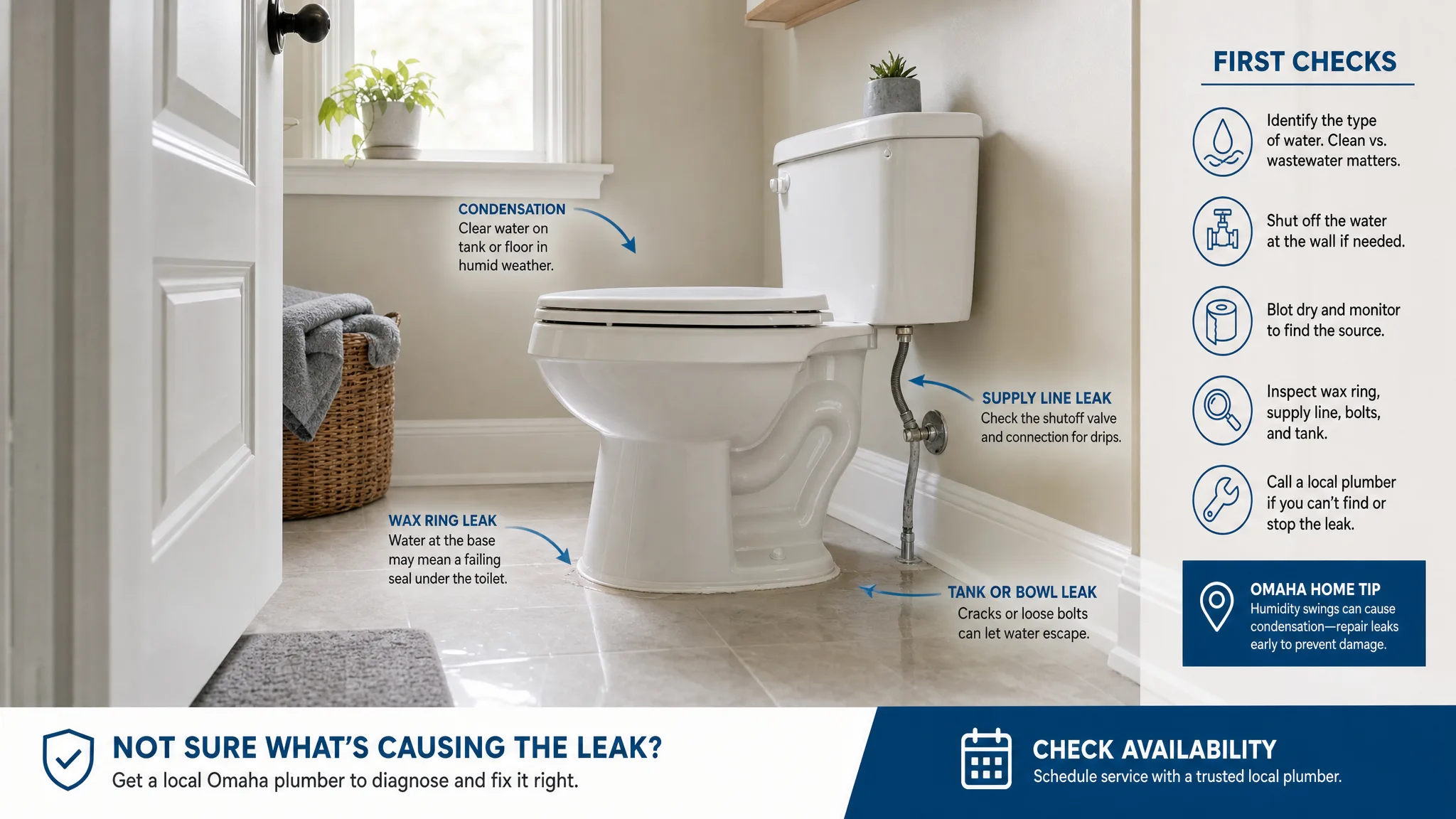
Omaha bathrooms can become humid after showers, and a toilet tank filled with cold water may develop condensation on its exterior. This is often called a “sweating” toilet. Condensation is generally clean water, but it can still cause flooring damage if it repeatedly drips onto the same area.
Signs the moisture may be toilet tank condensation
- The outside of the tank is damp across a broad area, rather than wet at one fitting or seam.
- Droplets form on the tank surface during humid weather or after showers.
- The floor becomes damp slowly, including near the back or sides of the toilet.
- The water does not appear specifically after flushing.
- The supply connection, shutoff valve, tank bolts, and base remain dry when wiped and observed.
Dry the exterior of the tank and the floor with towels. Then place dry paper towels under the supply connection and around the toilet base without pushing them into inaccessible gaps. Check again after the bathroom has been unused for a while, and again after a normal flush. If moisture returns to the tank’s outer surface but fittings remain dry, condensation is more likely.
Better bathroom ventilation, using an exhaust fan during showers, and addressing excess indoor humidity may reduce tank sweating. Still, condensation should not be assumed simply because a tank feels damp. A leaking tank bolt, supply fitting, fill valve, or cracked component can release water that runs down the tank and mimics condensation.
Signs it is more likely an active leak
An active leak tends to have a repeatable pattern. Water that appears only after flushing points toward a problem with the toilet’s seal to the drain, a crack, a tank-to-bowl connection, or an overflow-related event. Water forming at a single nut, valve, hose, or bolt points more toward a supply-side component.
If water has an unpleasant odor, contains debris, appears after flushing from the base, or is accompanied by a sewer smell, treat it as potentially wastewater-related. Keep people and pets away from the wet area, do not use that toilet, and clean only after stopping the source. A wax-ring problem is not always visibly dirty, but it is a drain-side seal issue and should not be treated as ordinary condensation.
The U.S. Environmental Protection Agency’s WaterSense leak guidance also emphasizes addressing household fixture leaks rather than allowing small losses to continue unnoticed. In a bathroom, the goal is not only conserving water; it is protecting the finished floor and the structure beneath it.
Wax Ring Leak Signs: Water Appears After Flushing
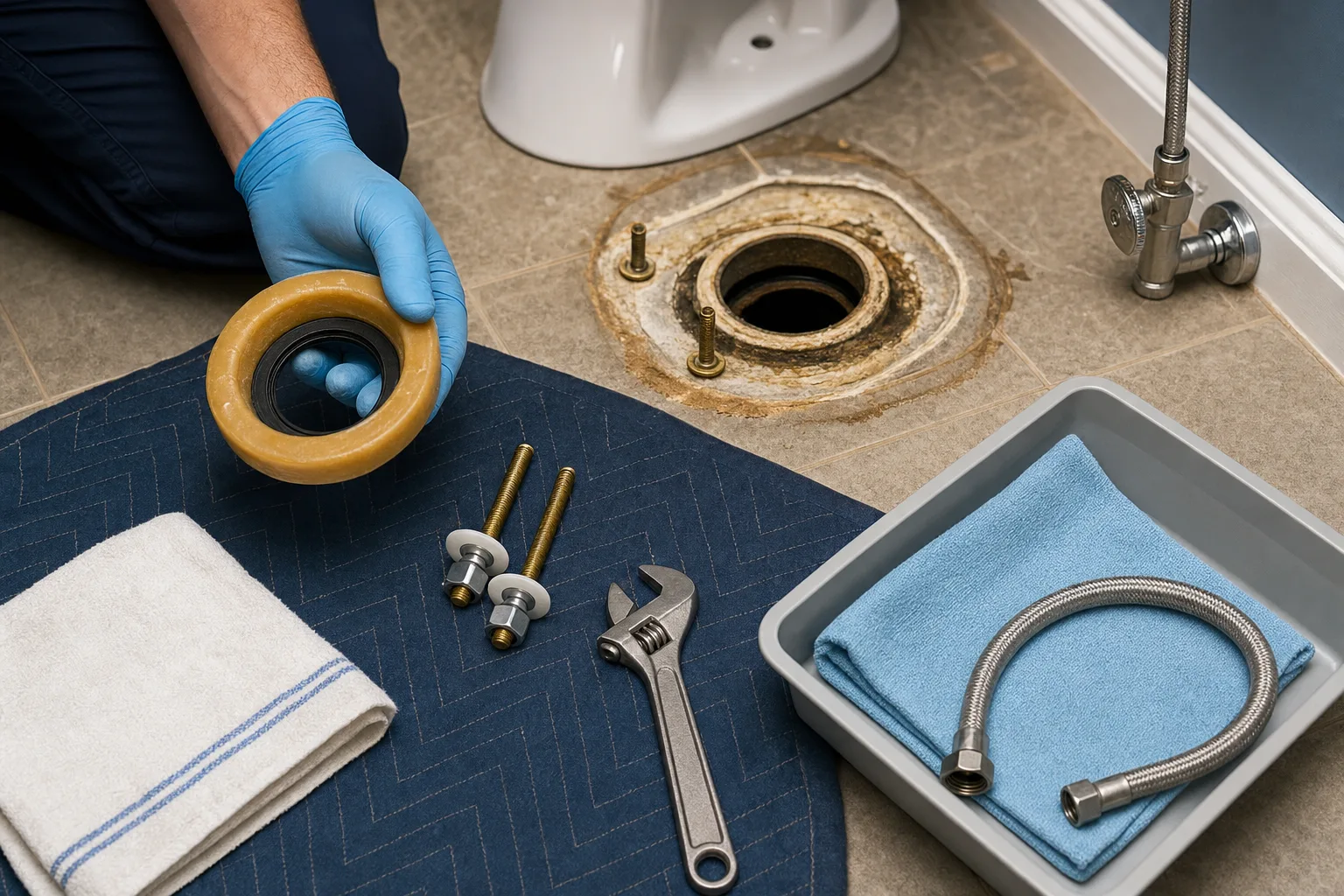
A toilet wax ring creates the seal between the bottom of the toilet and the drain opening in the floor. When that seal fails, water can escape beneath the toilet when the fixture is flushed. A toilet wax ring leak may be caused by a deteriorated seal, a loose or shifting toilet, improper prior installation, damaged mounting hardware, or a floor and flange condition that needs closer evaluation.
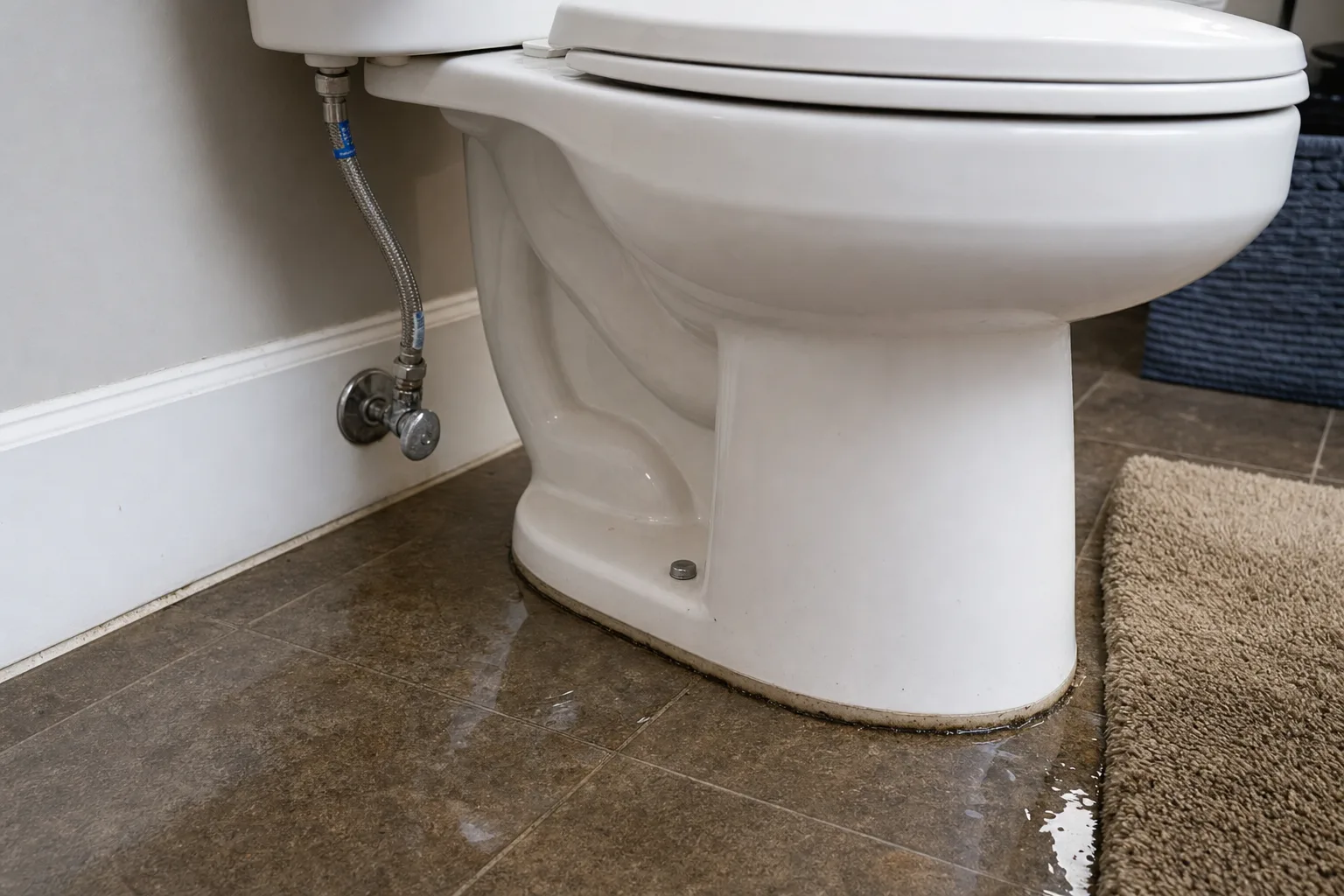
The most useful observable clue is timing: water at the base that returns after flushing is a reason to suspect the toilet-to-drain seal. It is not proof by itself. A tank leak can also be triggered by a flush, and a backup can force water from places it should not exit. That is why a proper toilet leak repair in Omaha begins with finding the actual source instead of replacing parts based on guesswork.
Common warning signs of a possible wax-ring leak
- Water emerges from the base of the toilet shortly after a flush.
- The bathroom develops a sewer-like odor near the fixture.
- The toilet rocks or shifts slightly instead of sitting firmly on the floor.
- Caulk, grout, flooring, or trim around the toilet shows staining or recurring dampness.
- There is discoloration on the ceiling below an upstairs bathroom.
- Flooring feels soft, spongy, raised, or unstable around the toilet.
- The leak started after the toilet was removed, replaced, bumped, or became loose.
A wax ring is inexpensive compared with the damage that ongoing moisture can cause, but the repair itself is not always a simple “replace the ring” task. The toilet may need to be removed, the mounting flange and bolts inspected, the floor condition checked, and the toilet reset securely. If water has reached a wood subfloor or caused flooring damage, replacing only the seal may not address the full problem.
For that reason, do not tighten toilet mounting nuts aggressively in an attempt to stop a suspected wax-ring leak. Excess tightening can crack the porcelain base. A toilet that moves is a warning sign, not an invitation to keep using it until it leaks more.
Supply Line, Shutoff Valve, and Tank Leaks to Check First
Before assuming the leak is below the toilet, inspect the visible clean-water connections. These areas can often be checked without disassembling anything. Use a flashlight and dry paper towels, and avoid kneeling in water that could be contaminated.
Toilet supply line leak
The supply line is the flexible tube or rigid pipe connecting the wall or floor valve to the underside of the toilet tank. Look for water on the line itself, droplets at either end, corrosion around fittings, or a damp spot directly beneath the connection. Dry the line, then flush once and watch for fresh moisture.
If the supply line is actively dripping, turn the toilet shutoff valve clockwise. Do not overtighten plastic nuts or repeatedly wrench connections in place. A line that is worn, kinked, corroded, or leaking may need replacement, but the surrounding valve and toilet connection should also be assessed.
Leaking toilet shutoff valve
The toilet shutoff valve is the small valve behind the toilet that allows the fixture’s water supply to be isolated. Moisture around the valve stem, handle, wall connection, or outlet nut may indicate a valve or connection issue. A valve can begin leaking when it is turned after sitting unused for a long period.
If the valve is leaking but will close, leave the toilet out of service until the leak can be evaluated. If the valve will not fully close, avoid using the toilet when no one is available to monitor it. A plumber can determine whether the issue is a supply connection, packing nut, valve failure, or a condition involving the pipe behind the wall.
Tank-to-bowl and tank component leaks
Water can also escape from underneath the tank, around bolts connecting the tank to the bowl, the fill valve shank, or cracks in porcelain. Wipe the underside and connections dry. Then place paper towels beneath each suspected point and flush once. Fresh water on a towel beneath a tank bolt or fitting helps narrow the area that needs attention.
Do not ignore water running down the rear of the bowl. It can travel along the porcelain and collect at the base, making a tank leak look like a toilet wax ring leak. This is one reason a visual inspection and controlled testing are more useful than simply looking at where the puddle settles.
For preventive checks after the immediate issue is resolved, review this five-minute monthly toilet supply line and tank leak check. A brief routine can help spot a slow drip before it reaches flooring or a lower-level ceiling.
What to Do Now to Limit Floor and Subfloor Damage
Once water is found, focus first on stopping use or shutting off water as appropriate, then on drying and documenting the area. Do not pull up flooring, remove the toilet, or open walls unless you understand the scope of the work and can do so safely. In condos and rental properties, there may also be building procedures, insurance reporting requirements, or responsibility questions that need prompt attention.
- Stop the source. Stop using the toilet if the moisture follows a flush, a backup is possible, or water may be wastewater. Turn off the toilet supply for a clean-water leak or uncontrolled filling problem.
- Protect people. Keep children, pets, and bare feet away from the wet area. If water may be contaminated, wear gloves for cleanup and wash hands afterward.
- Remove standing water. Use towels, a mop, or other appropriate absorbent materials. Do not use a household vacuum on water.
- Dry accessible surfaces. Wipe the toilet exterior, floor, baseboards, and nearby wall surfaces. Use bathroom ventilation and airflow after the active leak has been stopped.
- Check nearby rooms. Look below an upstairs bathroom, in a basement ceiling, or on the other side of a shared wall for staining, drips, or damp drywall.
- Document the conditions. Take photos before and after cleanup, especially in a rental, condominium, or managed property. Note whether the water appeared before or after flushing and whether the toilet moved.
- Notify the right party promptly. Tenants should report the issue to the landlord or property manager without delay. Condo owners should follow association or building procedures if water could affect a neighboring unit or common structure.
For a rental property, a tenant should not be expected to keep using a toilet that may be leaking wastewater into the floor. Landlords and managers should treat reports of post-flush base moisture, a loose toilet, or a possible backup as conditions needing timely evaluation. Keeping a written report of the time, location, visible conditions, and steps taken to limit damage is useful for everyone involved.
In an Omaha condo, plumbing access can be more complicated than in a detached home. A leak may affect a unit below, and the pipe or drain connection may involve areas governed by association rules. Report the problem early rather than waiting to see whether a small damp spot becomes a ceiling stain in another unit.
When a Toilet Leak Needs an Omaha Plumber
Some moisture can be traced to condensation and managed through drying and humidity control. But a toilet that leaks after flushing, shifts at the base, overflows, has a persistent supply-side drip, or leaves the source unclear needs a professional diagnostic approach.
Arrange service from a plumber Omaha property owners can rely on when any of the following applies:
- Water returns after you dry the area and observe one normal flush.
- The leak appears to come from under the toilet base.
- The toilet is loose, cracked, or difficult to stabilize.
- The floor feels soft or looks swollen, discolored, or damaged.
- There is a sewage odor, visible waste, or a suspected drain backup.
- The toilet bowl rises, drains slowly, gurgles, or repeatedly overflows.
- The shutoff valve cannot close, is leaking, or the supply line is actively dripping.
- Water has reached a ceiling, wall, neighboring condo unit, or lower-level room.
- A tenant, guest, or resident needs a safe working toilet and the affected fixture cannot be used.
A backup deserves additional caution. If one toilet overflow is accompanied by slow drains, gurgling fixtures, or water appearing in another bathroom, the issue may be beyond that one toilet. Read when one toilet overflow affects other bathrooms before deciding whether it is safe to use other fixtures. Do not run showers, washing machines, dishwashers, or additional toilets if there are signs wastewater is backing up through the drainage system.
When comparing providers, describe what you observed rather than naming the repair you think is needed. For example: “Water reappears at the front-right base after every flush; the tank and supply line were dry when checked; the toilet has slight movement.” This helps a plumber plan for a toilet leak inspection, while leaving room for an on-site diagnosis.
You can use Plumber Hacks to find a plumber in Omaha and request an estimate or check service availability. Ask whether the visit includes identifying the source, checking visible supply connections, evaluating whether the toilet needs to be removed, and explaining any floor or flange concerns found during the inspection.
What a Toilet Leak Repair Visit Usually Includes
A dependable diagnostic visit should begin with identifying whether the moisture is coming from the water supply side, the tank, the bowl, the toilet-to-drain seal, condensation, or a drain backup. No responsible plumber should claim the exact cause without inspecting the fixture and the conditions around it.
The scope may include:
- Asking when the water appears and whether it follows flushing, showering, humid conditions, or a backup.
- Inspecting the supply line, shutoff valve, fill valve connection, tank bolts, tank-to-bowl seal, and exterior porcelain.
- Testing the toilet carefully when it is safe to do so.
- Checking whether the toilet is loose and inspecting mounting hardware.
- Removing and resetting the toilet when a wax-ring, flange, or hidden base issue is suspected.
- Looking for visible signs of floor deterioration, moisture damage, or drain problems.
- Explaining whether repair of the toilet, valve, supply line, seal, drain, flooring, or related components is recommended.
The work required affects the estimate. A simple visible supply connection differs from a toilet removal and reset, a damaged flange, a deteriorated subfloor, a hidden crack, or a drainage backup requiring further investigation. In a rental or condo, access coordination, building rules, water-damage documentation, and potential impact on adjacent spaces can also affect how the repair is handled.
If the toilet needs to be removed, it is reasonable to ask what the plumber found beneath it, whether the floor appeared sound at the accessible area, and whether additional repair or a separate flooring professional may be needed. This is particularly important for a landlord or condo owner considering a wax-ring replacement. Replacing a seal without checking for visible floor damage can leave a larger moisture problem undiscovered.
Frequently Asked Questions About Toilet Leaks
How can I tell whether water around my toilet base is a bad wax ring?
A likely clue is water that appears around the base after flushing, especially if the tank and supply connections are dry. A loose toilet, sewer odor, recurring base moisture, and soft flooring add to the concern. However, these signs do not confirm a failed wax ring on their own. Water can travel down from the tank or result from a drain backup. Stop using the toilet if water returns after a flush and arrange an inspection rather than relying on repeated tests.
Should I stop using a toilet if water appears around the base after flushing?
Yes. Water appearing at the base after flushing can indicate a failed seal or another drain-side issue. Treat it as potentially contaminated, stop using that toilet, clean and dry accessible surfaces after the source is stopped, and have the cause evaluated. Continued flushing can send more water under the flooring.
Can toilet tank condensation create enough water to damage a bathroom floor?
Yes. Condensation is usually clean water, but frequent dripping over time can discolor finishes, affect grout or flooring seams, and contribute to damage beneath the toilet. Dry the tank and floor, confirm visible fittings are not leaking, and address bathroom humidity. If water returns in one concentrated location, appears after flushing, or the source remains uncertain, a plumber should inspect it.
What affects the cost of toilet leak repair in Omaha?
The needed repair depends on the actual source and extent of any related damage. Factors can include whether the issue is a supply line, shutoff valve, fill valve, tank bolt, cracked component, toilet reset, wax ring, flange, drain blockage, or damaged flooring. Access, whether the toilet must be removed, and whether the issue affects a rental unit or condominium can also matter. Request an estimate that identifies the proposed diagnostic and repair work rather than assuming every puddle requires the same service.
Can a landlord or condo owner replace a wax ring without checking for floor damage first?
It is unwise to assume the wax ring is the only issue without checking the accessible area beneath the toilet. If water has been leaking for an unknown period, the floor, mounting flange, fasteners, or subfloor may have been affected. A qualified plumber can inspect the visible condition when the toilet is removed and explain whether additional work may be needed. Condo owners should also follow building procedures if moisture could affect another unit or shared structure.
Arrange a Toilet Leak Inspection Before Hidden Damage Gets Worse
Water at the base of a toilet is not something to ignore just because it disappears after you wipe it up. A sweating tank can create clean-water moisture, but water that returns after a flush, appears near the toilet shutoff valve, runs down from the tank, or has an odor may point to a failed wax ring, supply connection, tank-to-bowl seal, loose toilet, or a drain and overflow issue. The right repair depends on where the water starts—not simply where it collects on the floor.
Take a few practical steps before arranging service. Dry the area completely, place a dry towel or paper around the toilet base and supply line, and avoid flushing repeatedly to “test” the problem. If water appears only after flushing, stop using that toilet until the source can be evaluated; this pattern can indicate a toilet wax ring leak or another drain-side problem that may be sending wastewater beneath the fixture. If the supply line, shutoff valve, or tank is actively dripping, turn off the toilet’s local water valve if it operates normally, then flush once to reduce the water in the tank. Do not force a stuck or corroded valve.
Use the toilet only when the moisture is clearly limited to harmless toilet tank condensation and there is no water returning from the base, no leak at a connection, and no soft flooring. If the floor feels spongy, tile shifts, caulk is separating, staining is visible from below, or sewage is present, keep people away from the affected area and treat the problem as more than a surface cleanup. Condo owners and tenants should also document the moisture and notify the responsible property manager or association promptly, since water can affect shared structures or neighboring units.
A plumber can inspect the toilet, supply line, shutoff valve, tank hardware, fixture stability, wax-ring area, and nearby drain conditions to identify the actual source before recommending repair. An on-site inspection is especially useful when several leak patterns overlap—for example, condensation on the tank combined with water around the base—or when prior tightening, recaulking, or cleanup has not stopped the water. Review this five-minute monthly toilet supply line and tank leak check to spot obvious clean-water leaks while you wait, but do not rely on a visual check alone to rule out a leak beneath the toilet.
If water returns after drying, the source is uncertain, or the toilet cannot be used without leaking, find a plumber in Omaha and request a toilet leak inspection. Explain whether the water appears before or after flushing, whether it is clean or discolored, where you first see it, and whether the floor has become soft. Those details help the plumber prioritize the visit and focus the diagnosis on the most likely cause before avoidable floor, subfloor, or ceiling damage spreads.


