
Philadelphia Vacation Plumbing Checklist for Rowhouses and Attached Homes
Before leaving a Philadelphia rowhouse, condo, rental, or attached property for a trip, take time to check the plumbing risks that can become much more serious when no one is home. A small drip under a sink, a weak washing-machine hose, a running toilet, or a shutoff valve that will not close can allow water to keep moving for hours or days without being noticed.
This Philadelphia vacation plumbing checklist is for homeowners, condo owners, landlords, rental-property owners, property managers, and multifamily operators. The goal is not to turn a pre-trip walk-through into a do-it-yourself repair project. It is to help you locate the water shutoff, spot visible warning signs, prepare for winter travel, and know when a plumber Philadelphia property owners can rely on should inspect or repair a concern before the building is left vacant.
A visual check, clearing access to a known valve, documenting conditions, and sharing emergency instructions with a trusted contact are generally homeowner-safe tasks. Forcing a corroded valve, working on a boiler, opening water-heater panels, investigating concealed moisture, or repairing piping should be handled by a plumbing professional. A checklist can reduce avoidable risk, but it cannot guarantee that every plumbing or water-damage event will be prevented.
Why Vacation Water Damage Can Escalate Quickly in Philadelphia Rowhouses
Philadelphia rowhouses often concentrate plumbing in narrow basements, utility rooms, rear additions, stacked bathrooms, kitchens, and finished lower levels. Water lines may travel behind walls, under floors, through cabinets, and alongside shared or closely adjoining walls. That layout can make the source of a leak difficult to see immediately.
For example, a slow drip from a kitchen supply connection may stay hidden inside a cabinet. A toilet fill valve that occasionally runs may continue cycling while the home is empty. A failed washing-machine hose can release a larger amount of water quickly. If water reaches a finished basement, shared wall, common hallway, lower unit, or electrical area, the visible damage may be far from the original plumbing failure.
Older Philadelphia homes also present a practical shutoff challenge. The main water shutoff valve may be unmarked, behind shelving, painted over, difficult to reach, corroded, stiff, or no longer able to stop water fully. In a renovated rowhouse, the original utility layout may have been altered by a finished basement, rear addition, laundry conversion, or apartment conversion. A valve that is hard to identify or operate is not a reliable emergency plan.
Not every damp basement wall or stain is automatically a plumbing leak. Some moisture can be related to rain, exterior drainage, humidity, or condensation. Still, fresh staining, recurring puddles, active drips, unexpected water use, or moisture that returns after drying should be taken seriously before a property is vacant. Leak detection and leak repair in Philadelphia often starts with separating an accessible fixture leak from moisture that may be coming from another source.
A calm urgency scale before you travel
- Monitor and document: An old, dry-looking stain that has not changed, minor condensation on a cold pipe, or an occasional faucet drip that is not actively running. Take a photo and note the location so a trusted contact can tell whether it changes.
- Schedule service before the trip when possible: A stiff or corroded shutoff valve, recurring toilet running, a slow drain that is getting worse, visible corrosion on a supply line, a recurring small water-heater puddle, or a valve you cannot confidently identify.
- Act promptly: Active dripping, water under an appliance, fresh ceiling staining, a growing wet spot, unexplained water-meter movement, a toilet overflow, or a wet area close to electrical equipment.
- Treat as urgent: Water flowing through a ceiling or wall, a burst pipe, substantial active leakage, sewage entering a living area, or water reaching outlets, electrical panels, or appliances. If it is safe, close the nearest known fixture shutoff or main water valve and seek urgent help.
When water is actively escaping and cannot be isolated, waiting until after a trip is rarely a sensible plan. For guidance on deciding what level of service may fit a burst-pipe problem, review emergency plumber versus general plumber for burst pipes in Philadelphia.
Before You Leave: Find and Label the Main Water Shutoff Valve
The main water shutoff valve location is one of the most useful details to know before travel. In many Philadelphia rowhouses, the customer-side main shutoff is located in the basement near the water meter or where the water service enters the building. It may be near the front foundation wall, in a utility area, beside exposed piping, or behind storage that has accumulated over time.
Do not assume every visible valve controls the entire property. Valves beneath sinks, behind toilets, at washing-machine hookups, and near water heaters usually control only an individual fixture or appliance. A whole-home main shutoff should control the domestic water supply serving the home, but property layouts and plumbing modifications vary. For locally relevant information about water service and customer-side responsibilities, consult the Philadelphia Water Department.
How to document an accessible shutoff safely
- Clear a safe path to the suspected main valve. Move boxes, stored materials, and loose items that could delay access during a leak.
- Use a flashlight to look at visible piping and identify where the incoming water line appears to enter the property. Do not crawl into unsafe spaces or work near standing water or electrical hazards.
- Take a wide photo showing the route to the valve and a close photo of the valve itself. A close-up alone may not help a tenant, neighbor, or emergency contact find it later.
- Write down the location in plain language, such as “basement, front wall, behind utility shelving.” Keep the note with your travel contacts and property information.
- Label the valve “Main Water Shutoff” only if you are confident it is the correct domestic-water valve. Do not label shared, boiler, sprinkler, or unknown valves based on a guess.
- If the valve is accessible, clearly identified, and appears to be in sound condition, consider a careful test well before departure. One person can briefly run a cold-water faucet while another closes the suspected main valve gently and confirms flow stops.
After a successful test, reopen the valve slowly and confirm that the fixture has normal flow again. Do not wait until the night before departure to test an older valve. If a valve sticks, leaks around the handle or stem, will not close fully, or will not reopen normally, it needs professional attention.
Do not force a stiff, heavily corroded, leaking, or unmarked valve. Applying more pressure can damage an aging valve or create a leak where there was none before. A plumber can assess accessible valves, identify which one serves the domestic supply, and explain whether repair or replacement is appropriate for the visible piping and layout.
Decide Whether to Shut Off Water Completely or Leave It On
Shutting off the main water before a trip can limit the amount of water available if an interior supply line, toilet valve, or appliance connection fails while the building is empty. It may be practical for a fully vacant single-family rowhouse with a tested valve and no system that depends on the domestic supply remaining on. It is not, however, a universal instruction.
The correct plan depends on who will be in the property, whether the building has a boiler or hydronic heating system, whether there are sprinkler or fire-protection components, whether plumbing is shared, and whether appliance manufacturers provide specific vacation instructions. A plumber can help explain the visible plumbing arrangement, but building-specific systems may also require direction from property management or the responsible heating or fire-protection professional.
When a whole-home water shutoff may be practical
A full shutoff may be worth considering when all occupants will be away, the valve has been tested and works properly, the home does not rely on the domestic supply for an affected system, and a trusted person can still check the property if needed. After a main-water shutoff, some owners briefly open a faucet to relieve ordinary pressure in the interior lines, then close it again. Do not leave a faucet running while the property is vacant.
Before changing water, power, or temperature settings at equipment, review the manufacturer instructions for the specific appliance installed. This is especially important for water heaters, boilers, automatic leak shutoffs, and appliances with water connections. Do not improvise with gas controls, electrical connections, pressure-relief components, or boiler valves.
When you should not shut off the whole property without guidance
- A tenant, family member, house sitter, or contractor remains in the property: They need water service. If there is a concern at one fixture, a fixture-level shutoff may be more appropriate than shutting down the entire property.
- The building has a boiler or hydronic heating system: Keep the heating system operating during freezing weather. Boiler makeup-water arrangements and controls vary, so do not close valves that may affect the system without qualified guidance.
- The property has a sprinkler or fire-protection system: Never close a valve serving fire protection, and do not assume a visible valve is unrelated to a shared safety system.
- You own a condo or unit in a multifamily building: You may have a unit shutoff rather than access to the building main. Closing the wrong valve can affect a neighboring unit or common plumbing.
- The valve is stiff, corroded, inaccessible, or leaking: Schedule an inspection rather than forcing it immediately before a trip.
If you cannot shut off the whole home, you still have useful leak-prevention steps. Repair active leaks before leaving, confirm that a trusted contact knows how to reach the property, and close known, accessible fixture valves only when you understand what they serve and they operate smoothly. Dedicated washing-machine valves may be an example. An unknown valve, shared valve, or valve that resists normal operation should be left alone until it can be assessed.
A Room-by-Room Plumbing Prep List for Kitchens, Baths, Basements, and Laundry Areas
A systematic walk-through is more useful than a quick glance. Start on the upper floor and work downward, or move room by room with a flashlight. Open cabinets, inspect around fixtures, and note anything that looks new or different. You are not trying to dismantle plumbing. You are looking for visible moisture, staining, corrosion, mineral deposits, odors, slow drainage, and damaged supply connections.
Kitchen checklist
- Open the cabinet below the sink and check the cabinet floor, drain trap, supply lines, shutoff valves, and visible connections for dampness.
- Run the faucet briefly and watch for drips at the faucet base, supply connections, drain, and disposal connection.
- Look for swelling cabinet material, a musty odor, stained shelving, rust, or white mineral buildup around valves and fittings.
- Inspect the dishwasher supply and drain connections if they are accessible. Moisture, corrosion, kinking, or poorly supported lines should be evaluated before travel.
- Do not put grease, fibrous food waste, or unsuitable material down the disposal shortly before leaving. Address a persistent slow kitchen drain rather than assuming it will stay stable while the property is unattended.
Bathroom checklist
- Check every toilet for unexplained refilling, continuous running, rocking at the base, damp flooring, or discoloration around the toilet footprint.
- Look at exposed toilet supply lines and fixture shutoffs for corrosion, active drips, kinks, or moisture.
- Open sink cabinets and inspect supply connections, drains, and cabinet bottoms for signs of water exposure.
- Look for new staining around tubs, showers, access panels, ceilings below bathrooms, and nearby baseboards.
- Test drains with a modest amount of water. If several fixtures are slow, gurgle, or make water rise in another fixture, the issue may be broader than a simple local clog.
A toilet that runs occasionally may seem minor, but it can indicate a fill-valve or flapper issue that continues while no one is present. A toilet that overflows, leaks from the base, or causes water to appear elsewhere should be addressed before travel. For sewage, drainage backup, or recurring overflow symptoms, do not rely on a chemical drain product as a substitute for diagnosis.
Basement and lower-level checklist
Basements in Philadelphia rowhouses often hold the main water entry, meter, shutoff valve, water heater, exposed piping, laundry equipment, and floor drains. They are also areas where water can remain hidden behind stored items. Check floors beneath plumbing, exposed joints, the water meter area, walls below bathrooms, and areas around water heaters or laundry connections.
Fresh drips, white mineral deposits, rust streaks, wet insulation, or a damp spot that returns after drying should not be ignored. Make sure stored belongings are not blocking the route to the main shutoff or hiding a developing leak. If your lower level has a sump pump, look at the visible power connection and surrounding area without disassembling the equipment. If there is a history of pump failures, water entry, or drain backups, resolve those concerns before an extended absence when possible.
Laundry-area checklist
Washing-machine hoses deserve particular attention because they remain pressurized when the machine is not in use unless their dedicated valves are closed. Look for cracking, bulging, corrosion at hose connections, dampness at the wall box, and hoses rubbing against sharp edges. If the washer will not be used and the dedicated hot and cold valves are known and working, closing them may reduce exposure from the washer connection.
Do not force seized laundry valves or disconnect hoses if you are uncertain about the connection. A plumber can assess suspect hoses, replace damaged valves or supply lines, and determine whether there is a concealed leak at the wall connection.
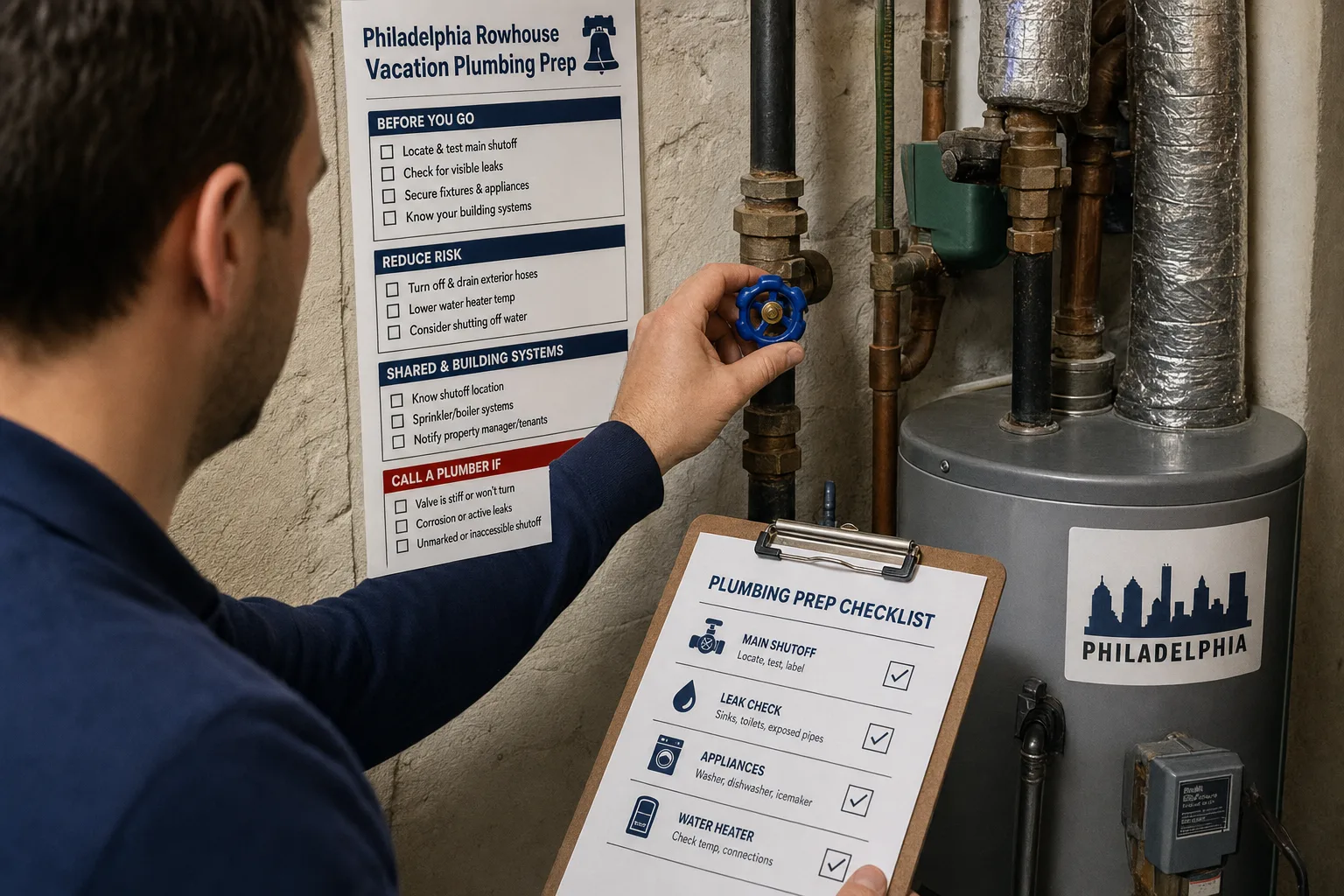
Check Water Heaters, Appliances, and Visible Supply Lines for Warning Signs
Water heaters, refrigerator lines, dishwashers, toilets, washing machines, and sink supply lines all deserve a close visual check. This is a visual inspection, not internal equipment service. Do not remove water-heater panels, alter gas components, adjust relief valves, or work on electrical wiring.
Water heater warning signs
- Water on the floor near the tank or water-heater connections
- Rust-colored streaks, mineral buildup, or visible corrosion around fittings
- Moisture around nearby piping or a discharge line with no clear explanation
- Unusual sounds, inconsistent hot water, or a recent loss of hot water
- A water heater located above a finished lower level, storage area, or another unit where a leak could spread before it is noticed
A small puddle near a water heater is not automatically harmless. It may be related to condensation, a leaking connection, a discharge issue, or the tank itself. The source needs to be identified before a property is left vacant. A plumber can inspect visible supply lines, fittings, the surrounding area, and known trouble spots, then explain the next repair step if one is needed.
If you are considering water-heater work before departure, see our overview of water heater repair costs in Philadelphia. The actual estimate can vary based on access, the condition found, the equipment involved, and whether the issue is limited to a visible connection or requires more involved repair.
Check other accessible supply lines throughout the property, including connections at sinks, toilets, refrigerators, dishwashers, and washing machines. Look for active moisture, corrosion, bulges, fraying, sharp bends, or lines under strain. Even a newer-looking braided hose should be checked for damage at the connectors and surrounding valve.
If you use leak sensors or an automatic water-shutoff device, follow the manufacturer instructions for testing. Confirm that alerts will reach the correct phone, property manager, or trusted local contact before you leave. Monitoring devices can provide useful awareness, but they do not replace repairing active leak signs or maintaining access to a functioning manual shutoff.
Extra Steps for Landlords, Vacant Rentals, and Multifamily Properties
A rental property plumbing checklist must account for access, occupants, authority to approve repairs, and shared building systems. A landlord may own the unit but not have immediate access. A property manager may coordinate entry but need approval before repair work begins. In a condo or multifamily building, a unit may connect to shared risers, common shutoffs, boiler equipment, or fire-protection systems.
For occupied rentals
- Give tenants a clear way to report active leaks, overflows, sewage odors, loss of water, ceiling stains, or visible moisture while you are traveling.
- Confirm whether the tenant knows the location of a unit-level shutoff or a fixture-level shutoff. Do not direct a tenant to operate an unknown building valve.
- Ask tenants to report warning signs before your trip, including toilet running, under-sink dampness, water-heater concerns, slow drains, and new stains.
- Make sure an authorized local contact can arrange access for an urgent repair, consistent with the lease and applicable requirements.
- Handle active leaks, ongoing overflows, or unresolved drainage backups before leaving whenever possible.
For vacant homes and empty units
- Confirm the shutoff plan before the property is empty. If a complete water shutoff is appropriate, test the valve early enough to address a problem if it does not work.
- Keep heat operating during cold weather. Do not shut off heating during freezing conditions.
- Arrange periodic property checks, particularly during longer trips, cold weather, or severe storms. The person checking should know the water shutoff location and who to call for help.
- Keep utility spaces accessible. A blocked basement, locked utility room, missing key, or cluttered valve area can delay a response.
- Take current photos of visible plumbing, the water heater, lower-level ceilings, and known stains. Documentation can help clarify what appears new if a problem is later discovered.
For condos and multifamily properties
Ask who controls the valves relevant to your unit: the owner, building management, a superintendent, an engineer, or another designated party. Confirm whether a planned shutdown requires notice to other residents. Never close a shared riser, domestic main, boiler feed, or fire-sprinkler valve based on an assumption.
If water appears through a shared wall, ceiling, or floor, document what is visible, protect the area if it is safe to do so, notify the appropriate building contact, and arrange plumbing assessment. A leak source may be inside your unit, above it, below it, or within common piping. The priority is to limit active water and communicate quickly rather than guess at the source.
How to Prepare for Winter Travel in Philadelphia
Winter travel adds frozen-pipe risk to the usual pre-trip plumbing routine. Philadelphia homes can have vulnerable plumbing near exterior walls, rear additions, basements, crawlspaces, utility rooms, and poorly insulated areas. In attached homes, exposure can differ from one side of the building to another, particularly around additions or rooms adjacent to unheated spaces.
Keep the heating system on and functioning normally when the property will be vacant in freezing weather. Do not turn off heat to save energy during a winter trip. If the property uses a boiler, do not alter boiler controls, safety components, or makeup-water arrangements unless a qualified professional familiar with the system has advised you to do so.
- Secure windows, basement openings, and exterior doors that could expose plumbing areas to cold air.
- Use appropriate pipe insulation on accessible vulnerable lines only when it can be installed without conflicting with equipment instructions or required clearances.
- Disconnect and drain exterior hoses where appropriate for your hose bib and normal winterization routine.
- Arrange a property check after unusually cold weather, especially if the building is empty.
- Watch for reduced water flow, frost on exposed piping, unusual sounds, or a cold area near plumbing that may suggest freezing.
Do not use an open flame to thaw a suspected frozen pipe. If water flow stops at a fixture, a pipe is visibly frozen, or a leak appears as temperatures rise, treat the issue as time-sensitive. A small crack can open further when ice thaws and water pressure returns.
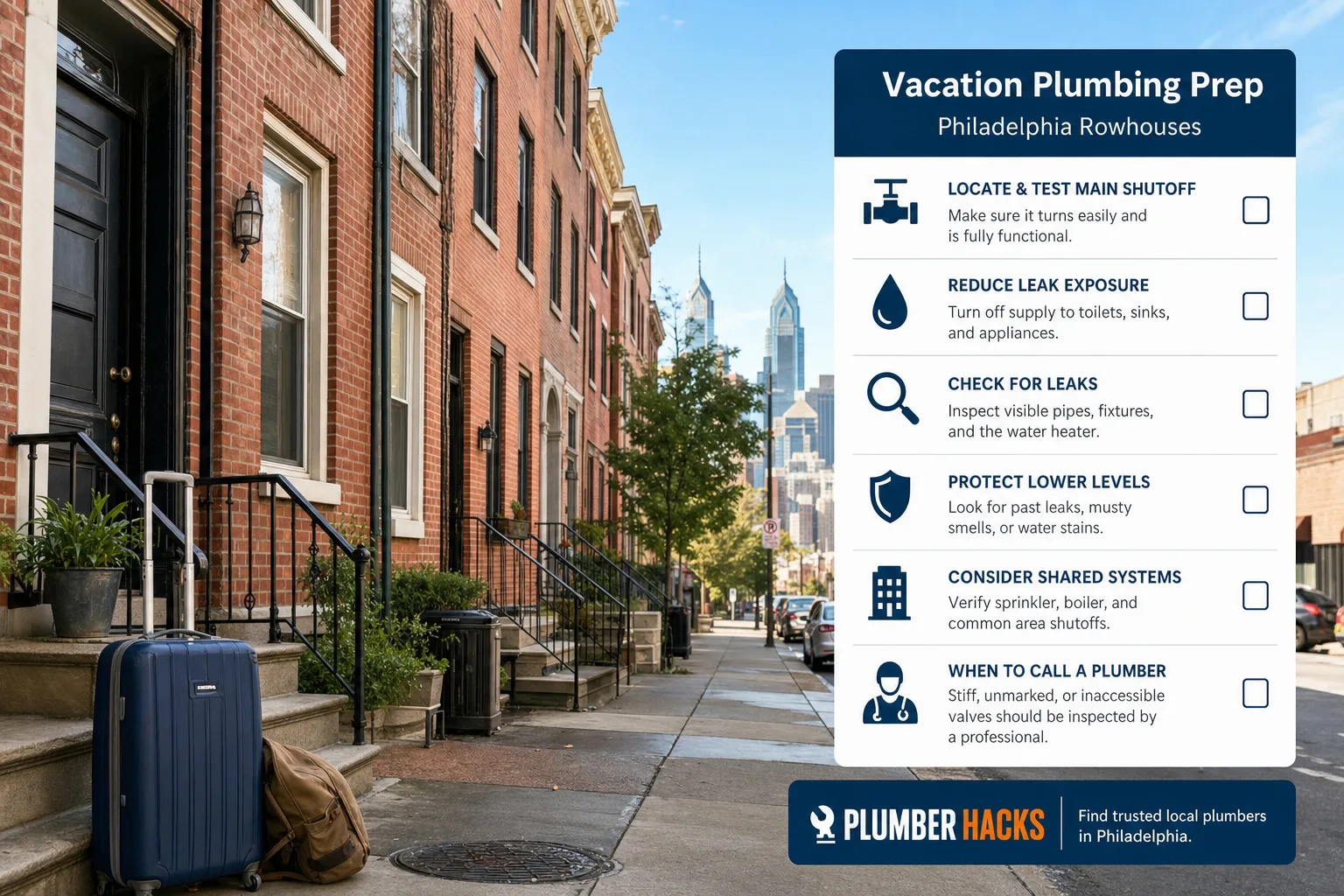
When a Philadelphia Plumber Should Inspect the Property Before Your Trip
You do not need professional service for every pre-travel walk-through. It is reasonable for homeowners and property staff to inspect visible plumbing, document the main water shutoff location, clear access, and report suspicious conditions. A plumber should be involved when the problem cannot be safely identified, tested, or repaired through a simple visual check.
Schedule a Philadelphia plumbing inspection, leak detection visit, or repair before leaving if any of the following apply:
- You cannot locate the main water shutoff valve, or access is blocked by finishes, storage, unsafe flooring, or standing water.
- The main or fixture shutoff valve is stiff, corroded, leaking, unmarked, or does not fully stop water during a careful test.
- You see active dripping, recurring moisture, ceiling stains, unexplained wet areas, or water-meter activity when water should not be in use.
- A toilet runs intermittently, rocks at the base, overflows, or repeatedly backs up.
- Several drains are slow, gurgle, or cause water to appear at another fixture.
- A washing-machine hose, dishwasher connection, refrigerator line, or visible supply line is wet, corroded, bulging, kinked, or damaged.
- The water heater has a puddle, visible corrosion, inconsistent performance, or an unexplained wet area nearby.
- The property will be vacant during freezing weather and you are concerned about exposed pipes, the heating system, or boiler-related plumbing.
- You manage a rental or multifamily property and need a clear access, shutoff, and urgent-response plan before leaving town.
When comparing providers, explain that the visit is for pre-trip leak prevention and shutoff valve guidance. Share the property type, whether anyone will remain in the building, the location of visible symptoms, whether water is actively leaking, and whether you have a boiler, sprinkler system, or shared plumbing. This gives the plumber useful context to determine whether the visit is likely to involve an accessible valve assessment, visible leak repair, water-heater concern, drain issue, or urgent response.
For more help evaluating providers, read how to choose a reliable emergency plumber in Philadelphia. You can also review Philadelphia plumber resources through Plumber Hacks to find and compare local options.
Frequently Asked Questions
Should I shut off the main water before leaving my Philadelphia rowhouse for vacation?
It may be practical if the entire rowhouse will be vacant, the main valve is known and working, and closing it will not affect a boiler, sprinkler system, shared building system, or someone who remains in the property. A working main shutoff can limit water flow if an interior supply line fails while no one is there. It should not replace repair of an active leak, and it is not a reason to force an old or corroded valve. If you are unsure what the valve serves, have a plumber inspect it before departure.
Where is the main water shutoff valve usually located in an older Philadelphia rowhouse?
It is often in the basement near the water meter or near the point where the service line enters the building, frequently toward the front of the property. However, finished basements, additions, conversions, and storage can make the valve difficult to find. Some older valves are unmarked, inaccessible, stiff, or no longer functional. If you cannot confidently identify the correct valve, do not guess or force it.
Can I turn off the water if my home has a boiler, sprinkler system, or a tenant still living there?
Do not shut off a whole-property valve until you understand what it serves. Tenants need water, and boiler, sprinkler, or shared-building systems may have requirements that make an unsupervised shutdown inappropriate. Never shut off fire-protection piping. Keep heat on in freezing weather. If one appliance or fixture has a known concern, an accessible fixture-level shutoff may be an option, but ask for professional guidance if the piping arrangement is unclear.
What plumbing issues should be repaired before leaving a property vacant?
Repair active leaks, unexplained fresh stains, failing shutoff valves, toilet overflows, recurring toilet running, drainage backups, corroded or wet appliance hoses, damaged visible supply lines, and water-heater puddles or visible leakage. Also address unexplained water-meter activity and frozen-pipe concerns before extended winter travel. A pre-trip checklist helps reduce risk, but it cannot eliminate every possible water problem.
How much does a pre-trip plumbing inspection or shutoff valve repair in Philadelphia usually cost?
The cost depends on access to the valve, property layout, the valve type and condition, whether repair or replacement is needed, and whether the inspection uncovers an active leak or another concern. A straightforward review of an accessible shutoff differs from work involving concealed piping, a water heater, multiple fixtures, or emergency conditions. Request an estimate that separates the inspection scope from recommended repair work so you can understand the available next steps.
Plan the Plumbing Response Before You Pack
A useful Philadelphia vacation plumbing plan is not about servicing every pipe yourself. It is about knowing the main water shutoff valve location, checking appliance hoses and visible supply lines, watching for active leak signs, keeping heat on during winter travel, and making sure a trusted contact can respond if something changes.
If you cannot locate or safely operate a shutoff valve, have active leak signs, or manage an empty rental, use Plumber Hacks to find, compare, or contact a dependable Philadelphia plumber for a pre-trip inspection, leak repair, or urgent service. A local plumber can assess accessible valves, visible supply lines, fixtures, water heaters, and known trouble spots before the property is left vacant, then explain the appropriate repair or response if a concern is found.


