
Emergency Plumbing Services in Austin: When to Call Now vs. Book a Same-Week Repair
A plumbing problem does not always require an after-hours response, but waiting on the wrong problem can allow water damage, sewage exposure, or a loss of essential water service to become much worse. The first question is not simply, “Which plumber near me should I call?” It is whether the symptom creates an immediate risk or can be safely contained until a scheduled appointment.
This Austin emergency plumbing triage guide is for homeowners, condo owners, tenants, landlords, and property managers who need to make a calm, practical decision. It explains what to do first, when to shut off water, when not to attempt a DIY repair, and how to decide between an emergency plumber, an Austin drain specialist, or a qualified same-week plumbing repair provider.
These guidelines cannot diagnose a plumbing system remotely. Conditions can change quickly, especially when water is moving through walls, ceilings, shared condo spaces, or drain lines. When safety is uncertain, treat the problem cautiously and explain the exact symptoms to a qualified local provider.
Emergency Plumbing vs. Same-Week Repair: The Quick Difference
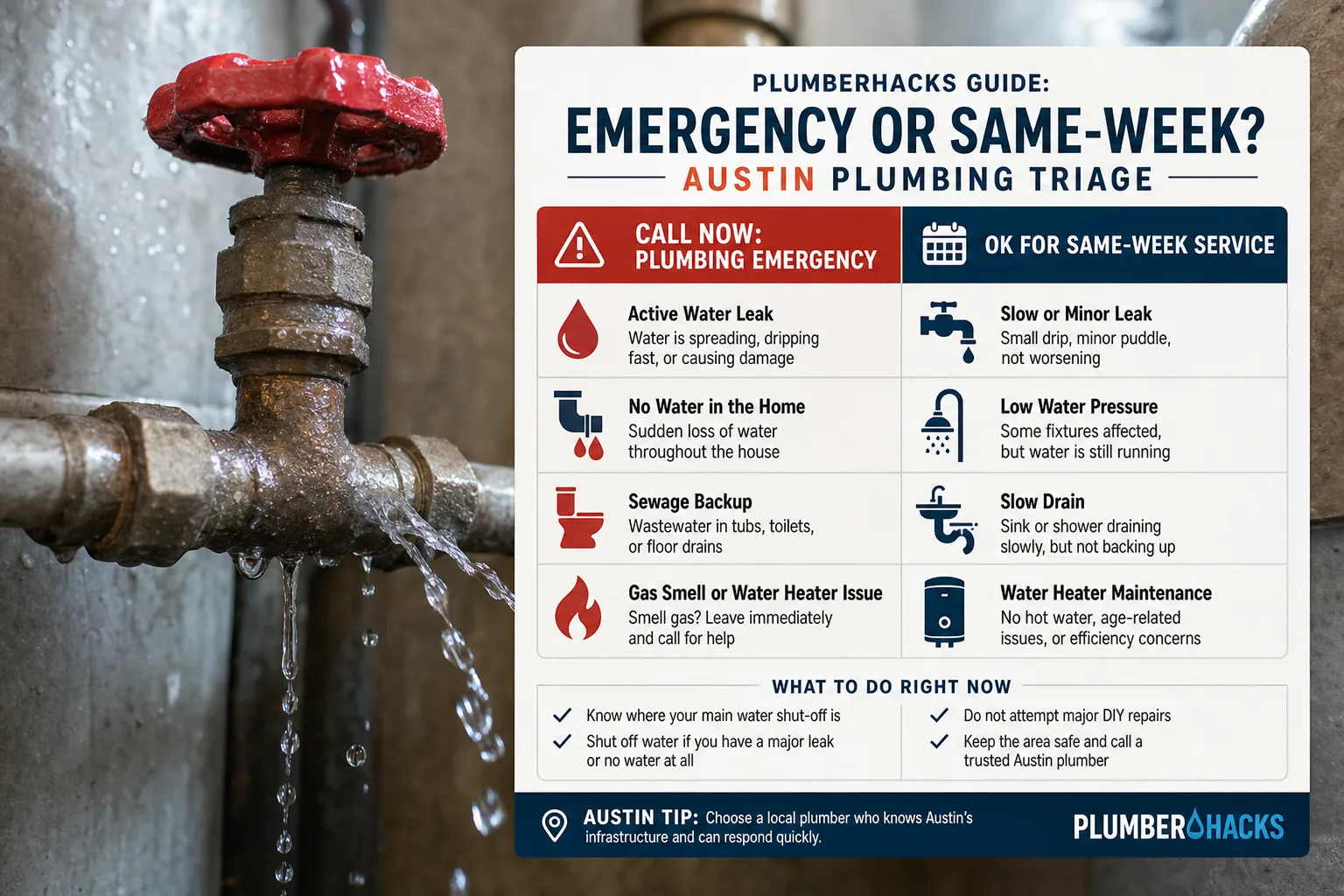
Emergency plumbing is about controlling an active risk that cannot safely wait. That may mean water is flooding an area, sewage is entering the living space, there is a suspected gas leak, or the property has lost essential water service without an obvious utility-side explanation.
Same-week plumbing repair is generally appropriate when the problem is stable, contained, and does not prevent safe use of the property. For example, a dripping faucet, an isolated sink clog, or a toilet that is out of service but has not overflowed may be inconvenient, but it may not require a late-night dispatch if the fixture can be safely isolated.
The most useful distinction is not how frustrating the problem feels. It is whether the issue is active, spreading, contaminated, unsafe, or essential-service related. A small leak above a ceiling can be more urgent than a larger drip contained beneath a sink. A slow drain can become urgent if multiple fixtures begin backing up. A lack of hot water is often a same-week repair issue, but it becomes urgent if it is paired with a gas smell, smoke, electrical concern, or active leaking.
| Symptom or Condition | Typical Urgency | Safe First Action | Best Type of Help |
|---|---|---|---|
| Water is actively flooding a room, ceiling, wall, cabinet, or crawlspace | Emergency | Shut off the nearest fixture valve or the main water supply if safe; stay clear of electrical hazards | Emergency plumber |
| A burst pipe, broken supply line, or failed valve continues releasing water | Emergency | Use the main water shutoff if a local valve does not stop the flow | Emergency plumber |
| Sewage, dark wastewater, or toilet waste backs up indoors | Emergency | Stop using all water and drains in the affected area; keep people and pets away | Emergency plumber or Austin drain specialist |
| You smell gas near a water heater, appliance, or gas piping | Emergency safety issue | Leave the area and follow gas-utility emergency instructions; call 911 when appropriate | Gas utility or emergency services first; qualified repair professional afterward |
| No water throughout the property, with no known utility interruption | Often urgent | Check whether nearby homes or units are affected; look for visible leaks without disturbing equipment | Emergency plumber or utility contact, depending on the cause |
| No hot water, but no leak, gas odor, smoke, or electrical concern | Usually same-week | Do not disassemble the water heater; note the symptoms and schedule service | Same-week water heater repair |
| One toilet is clogged but has not overflowed, and another bathroom is available | Usually same-week | Stop flushing; use a flange plunger only if the water level is below the rim | Same-week plumber or drain specialist |
| One sink or tub drains slowly, with no backup at other fixtures | Usually same-week | Limit use and avoid chemical drain cleaners | Same-week drain cleaning |
| A small fixture leak stops fully when the local shutoff is closed | Usually same-week | Leave the fixture off, dry the area, and document the leak | Same-week leak repair |
Use the table as a triage tool, not as a substitute for professional evaluation. If the water source cannot be isolated, if damage is spreading, or if there is sewage, gas, or electrical danger around water, the situation is no longer a routine scheduling decision.
Call an Emergency Plumber Now for These Warning Signs
An emergency plumber Austin residents call after hours is generally needed when there is active damage, contamination, a serious safety concern, or a loss of basic plumbing service that cannot reasonably wait. The word active matters: water is still escaping, wastewater is coming back into the property, or a hazard may be developing.
Active Flooding or a Leak You Cannot Stop
Call for urgent plumbing repair when water is spraying from a pipe, pouring from a supply line, running through a ceiling, collecting inside cabinets, or spreading across floors. A leak is also urgent when you cannot find a shutoff valve, a local valve does not stop the flow, or the main shutoff will not close.
Pay particular attention to water coming from ceilings, walls, floors, or areas behind appliances. The visible water may not be directly below the source. A shower drain, a hidden supply line, a toilet connection, or piping in an upstairs bathroom can allow water to travel before it appears downstairs.
Do not puncture a sagging ceiling to release water. Do not cut into walls, remove light fixtures, or investigate behind an electrical panel. Keep people out of the area beneath a wet or bulging ceiling, and avoid outlets, switches, cords, appliances, and power strips that may be exposed to water.
Sewage Backup or Wastewater Coming Indoors
A sewer or drain backup is an emergency when wastewater rises through a toilet, tub, shower, floor drain, or sink. Wastewater may be dark, foul-smelling, or visibly contaminated, but even clear-looking backup water should be treated cautiously if it is coming from a drain system.
Stop running water immediately. Do not flush toilets, take showers, run faucets, start laundry, or use the dishwasher. Every gallon sent into a blocked drain line can increase the backup at the lowest open fixture. In many Austin homes, that may be a first-floor tub, shower, toilet, or floor drain. In condos and multifamily properties, shared drain stacks can make communication with building management especially important.
Keep children and pets away from the affected area. Avoid trying to clear a suspected main-line blockage with a household plunger or chemical product. A drain specialist can assess whether the blockage appears confined to one fixture or involves a larger branch or main drain issue.
Gas Odor Near a Water Heater or Gas Appliance
If you smell gas or suspect a gas leak, treat the situation as a safety emergency rather than a routine plumbing call. Leave the area, avoid flames, do not smoke, and do not operate electrical switches or devices near the suspected leak. Follow the emergency guidance provided by the gas utility, and call 911 if there is immediate danger or if emergency responders direct you to do so.
Do not try to relight a pilot, tighten gas fittings, restart the water heater, or locate the source yourself. A plumber may be part of the eventual repair process, but searching for an after-hours plumber should never delay contacting the gas utility or emergency services when gas is involved.
No Water Throughout the Home, Unit, or Building
No water at every fixture can have several causes: a utility-side interruption, a closed or failed main valve, pressure equipment trouble, a building-wide issue, or a significant hidden leak. Start by determining the scope. Are nearby neighbors affected? Are common areas in a condo building affected? Has Austin Water posted a service interruption or advisory relevant to the area?
If the issue is isolated to your property and you hear water moving when all fixtures are off, see wet ground near the service area, notice unexplained pooling, or find water around plumbing equipment, contact a plumber promptly. Do not repeatedly operate shutoffs, pressure equipment, or water-heater controls in an attempt to restore service.
For rentals, widespread loss of water may require fast coordination among the tenant, owner, manager, HOA, and service provider. A tenant should report whether every fixture is affected, whether neighboring units have water, and whether any leak is visible. Owners and managers should avoid asking tenants to operate unfamiliar main valves or equipment.
Water Heater Leaks, Smoke, Scorching, or Electrical Concerns
A water heater leak needs attention because even a small amount of water can spread from a utility closet, garage, attic installation area, or interior mechanical space. A contained drip may allow a same-week appointment if the water supply can be safely isolated and no damage is spreading. An expanding puddle, active discharge, water near electrical components, or water escaping from a connection that cannot be shut off calls for a more urgent response.
If it is safe to do so, turn off the water supply to a leaking water heater. Do not dismantle a gas or electric water heater, remove panels, alter gas connections, or work around electrical wiring. No hot water alone is often not an emergency, but no hot water combined with a gas odor, smoke, scorching, arcing, or leaking changes the decision.
Problems That Can Usually Wait for a Same-Week Appointment
Choosing same-week plumbing repair is not ignoring the problem. It is a sensible option when the risk is contained, the affected fixture can be safely taken out of service, and the property still has essential water and drainage available. A scheduled appointment may also give you time to compare providers, clarify the expected scope, and ask how a diagnostic visit differs from the repair itself.
A Controlled Fixture Leak
A faucet drip, toilet tank seep, or leak under one sink can often wait if the fixture’s local shutoff stops the water completely and the area remains dry after isolation. Do not continue using the fixture. Dry the cabinet, floor, or surrounding surface, and place a towel or shallow container below the connection only as a short-term precaution.
A local shutoff valve is helpful only when it closes fully and does not itself leak. Do not force a stiff or corroded valve with tools. If the handle feels likely to break, if water leaks around the valve stem, or if the flow continues after closing it, treat the situation as more urgent.
Routine checks can help owners find weak supply lines and valves before they turn into late-night damage. This monthly toilet supply-line and shutoff-valve check offers a practical way to inspect common toilet leak points in Austin homes.
A Single Slow Drain or Minor Localized Clog
A slow kitchen sink, bathroom sink, shower, or tub drain often can wait for same-week service if the issue is limited to one fixture and wastewater is not backing up elsewhere. Limit use of the affected fixture, and do not keep adding water to “test” whether it has improved.
A plunger may help with a straightforward local clog when used correctly. Stop if water rises instead of draining. Skip chemical drain openers, especially if professional drain cleaning may be needed. Chemical products can create splash hazards, may damage certain materials, and can leave corrosive liquid in the line for the person servicing it. They also do not reliably address deeper or recurring blockages.
A Toilet Clog That Is Not Overflowing
A clogged toilet can often wait for a weekday appointment if the bowl is not overflowing, you stop flushing, and another bathroom is available. If the tank keeps refilling or you are concerned the bowl may rise again, close the toilet’s local supply valve. A flange plunger may clear a simple toilet clog, but do not repeatedly force the issue when the bowl is near the rim.
Watch for signs that the problem is not limited to the toilet. A toilet that gurgles when the shower runs, a tub that fills when the toilet flushes, or multiple fixtures draining slowly at once may point to a larger drain-line issue. Those symptoms may require an Austin drain specialist sooner than a routine local clog would.
No Hot Water Without Other Warning Signs
If there is no water around the heater, no smell of gas, no smoke, and no electrical concern, lack of hot water can usually be scheduled as a same-week water heater repair. Avoid repeatedly resetting breakers, relighting a pilot, opening access panels, or changing controls if you are not familiar with the equipment.
Instead, document useful symptoms: whether hot water is absent at every fixture or only one, whether it is intermittent, whether the unit makes unfamiliar sounds, and whether an error display is visible. These details can help a provider understand the problem without requiring you to take apart the unit.
Low Water Pressure at One Fixture
Low flow at one faucet or showerhead is commonly a same-week issue when other fixtures have normal pressure and there is no visible leaking. If you know how to remove and reinstall an easily accessible aerator or showerhead without forcing parts, you may inspect it for simple debris. If not, leave it alone and schedule service.
Sudden low pressure throughout the property is different. If every fixture is affected, if the change is abrupt, or if it occurs with wet areas, unusual sounds, or a water meter that appears to be moving while fixtures are off, arrange more prompt evaluation.
What to Do First: Shutoffs, Safety Steps, and Damage Control
The first few minutes of a plumbing emergency can limit damage. Focus on stopping the source when it is safe, protecting people, and making the site safer for a plumber. Do not turn a manageable problem into a larger one by attempting a repair beyond your experience.
Use the Right Water Shutoff
Many fixtures have local shutoff valves. Toilets commonly have a valve near the wall behind or beside the fixture. Sinks often have separate hot- and cold-water valves beneath the cabinet. When a leak is clearly confined to one fixture, closing the local valve is usually the least disruptive first step.
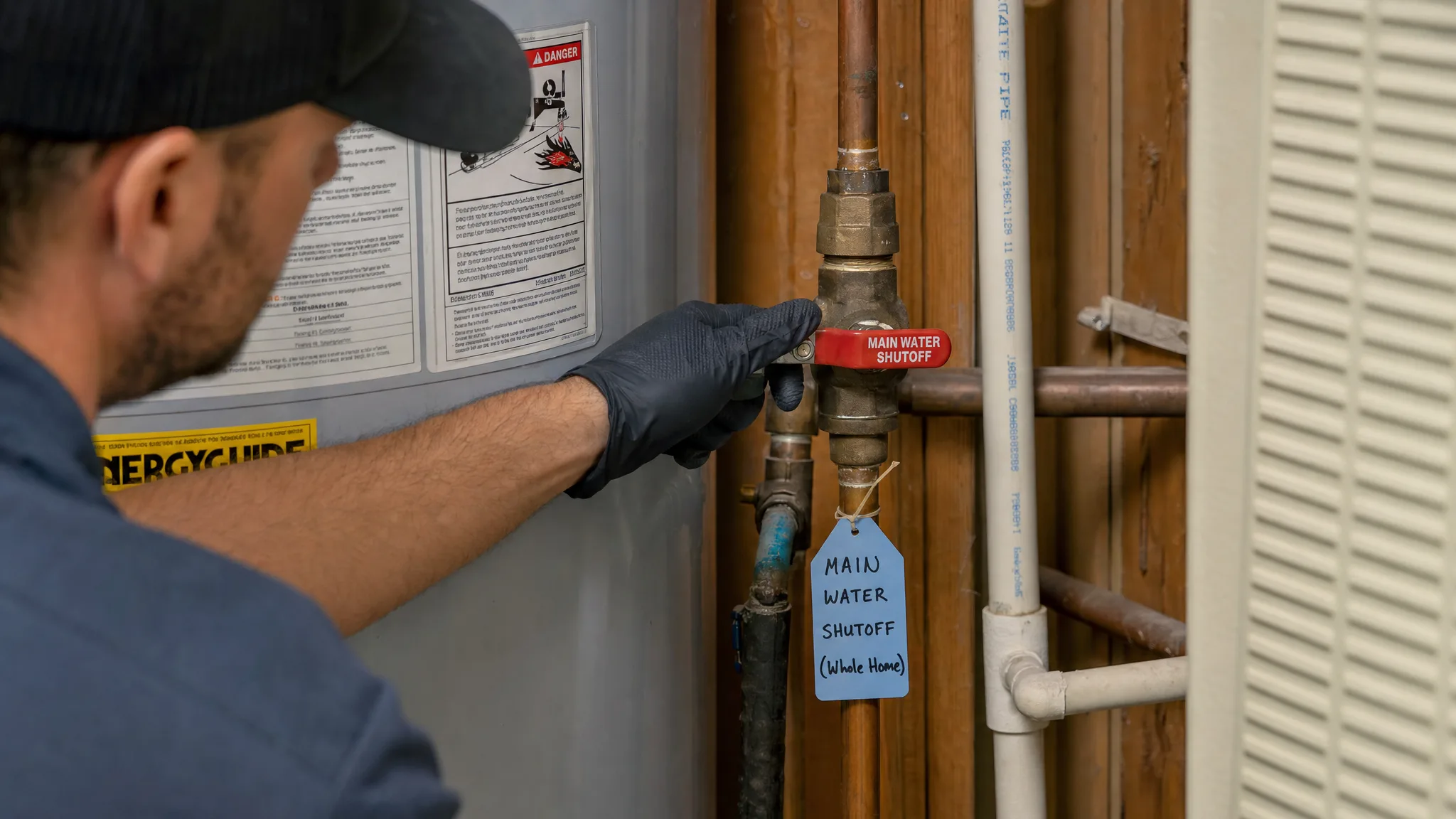
Use the home’s main water shutoff when water is coming from a pipe, when a fixture valve does not stop the leak, when the source is unclear, or when water is spreading quickly. In Austin homes, the main shutoff may be in a garage, utility area, exterior wall location, meter-related area, or another accessible service point. Its location varies by property.
Condo owners should ask their HOA or building management whether there is a unit-level shutoff and whether common-area or building valves may be operated only by authorized personnel. Turning off the wrong valve in a multifamily property can affect other residents or common systems.
Protect Electrical Safety Before Moving Belongings
If water is near outlets, appliances, exposed wiring, the electrical panel, power strips, or cords, do not step into standing water and do not touch electrical devices. Leave the area and seek emergency help if the conditions present an electrical hazard. If power can be turned off safely from a dry location, that may reduce risk, but do not take chances to reach a panel.
Once the leak has been reduced or stopped and the area is safe, move furniture, rugs, boxes, and belongings away from the water path. Use towels, buckets, and mops for cleanup only after addressing the active source. Take photos or short videos of the source, affected materials, and water level when practical. Documentation helps owners, tenants, managers, insurers, and repair providers understand what happened.
Stop Using Water During a Suspected Drain Backup
When wastewater is backing up, all water use can make the overflow worse. Stop laundry, dishwashing, showers, baths, sink use, and toilet flushing. Let everyone in the property know. In a rental, tenants should promptly notify the owner or manager and report the location of the backup, which fixtures are involved, and whether the wastewater is still rising.
Do not use a drain-cleaning chemical, run a snake into an unfamiliar drain system, or attempt to disassemble piping around contaminated water. Protecting health and preventing additional overflow should come before troubleshooting.

When Not to Attempt a DIY Repair
- There is a gas odor, smoke, scorching, or suspected electrical involvement.
- Water is entering a ceiling, wall cavity, electrical area, or shared condo space.
- Sewage or wastewater is backing up indoors.
- The repair would require cutting pipe, soldering, opening walls, or altering water-heater or gas connections.
- The main shutoff or fixture valve is damaged, stuck, or leaking.
- You do not know whether piping serves only your unit or several units.
- The issue may involve a buried line, slab leak, unexplained widespread low pressure, or a hidden source of water loss.
Temporary measures should remain temporary. Tape, improvised clamps, repeated plunging, or drain chemicals can hide a symptom without correcting the cause. They can also create more complicated conditions for the person who needs to inspect and repair the plumbing.
Common Austin Plumbing Scenarios and the Right Response
Austin properties include detached homes, older homes with varied plumbing layouts, condos with shared stacks, duplexes, and rental properties where the person discovering the problem may not be the person approving repair work. The right response depends on both the symptom and the property setup.
Scenario: A Supply Line Bursts Under a Bathroom Sink
Right response: If the leak is clearly under the sink, close the hot- and cold-water shutoff valves if they are accessible and safe to operate. If water continues, use the main water shutoff if you can do so safely. Remove stored items from the cabinet, dry the floor, and document the damage.
If the cabinet is filling quickly, water has reached adjacent rooms, the local valve does not work, or water is running behind the wall, call an emergency plumber. A contained leak that is fully stopped may be suitable for same-week repair, but the fixture should remain out of service.
Scenario: Toilet Water Rises Toward the Rim
Right response: Do not flush again. If you understand the toilet’s refill mechanism, you may be able to stop the tank from adding more water. Otherwise, close the local supply valve near the toilet. If the water recedes and the toilet is the only affected fixture, a same-week appointment may be reasonable if a careful plunger attempt does not resolve it.
If it overflows, if wastewater reaches the floor, or if other fixtures gurgle and back up, stop using water throughout the home and seek urgent drain assistance. The difference between a local toilet clog and a broader drain-line problem is important when choosing a provider.
Scenario: A Downstairs Ceiling Drips After an Upstairs Shower
Right response: Stop using the shower and nearby upstairs fixtures immediately. The source could be a supply connection, drain, fixture seal, overflow component, or another concealed issue. Continued testing can add more water to the ceiling cavity.
Keep the area below the drip clear. Do not place electrical equipment near the water. If the ceiling is sagging, the water flow is heavy, or electricity may be involved, treat it as an emergency. In a condo, notify building management promptly because water may travel into common areas or another unit. The location of visible damage does not always identify the source.
Scenario: The Kitchen Sink Is Slow and the Dishwasher Will Not Drain
Right response: Stop using the sink and dishwasher until the problem is evaluated. If the issue remains limited to the kitchen drain and there is no backup at other fixtures, a same-week drain cleaning appointment is often reasonable.
If water appears in another fixture, the sink fills during laundry or shower use, a floor drain backs up, or wastewater emerges elsewhere, the blockage may be more extensive. That is a reason to seek urgent help from an emergency plumber or drain specialist.
Scenario: No Hot Water on a Weekend
Right response: Look for visible water around the heater and be alert for any smell of gas. If the unit is leaking, isolate its water supply if safe and arrange urgent help. If you smell gas, leave the area and follow gas-utility or emergency-service guidance as appropriate.
Without those warning signs, no hot water can usually be scheduled for same-week water heater service. Record the unit type, whether every hot-water fixture is affected, whether an error display is visible, and whether the unit makes unusual noises. Do not open the unit to investigate.
Scenario: A Tenant Reports No Water in an Austin Rental
Right response: Confirm whether the issue affects all fixtures, whether nearby units or neighbors have water, and whether there is an active leak. Check whether a utility-side interruption may be involved. If the outage appears limited to the rental or building, arrange prompt professional evaluation.
The person handling the call should not ask a tenant to manipulate unfamiliar valves or equipment. Instead, gather clear information and establish access. For more preparation guidance, review how Austin rental owners can vet a plumber for tenant repair calls.
How to Describe the Problem When You Call a Plumber
A clear description helps a provider determine whether to arrange an emergency plumber, schedule a drain specialist, or book a same-week appointment. You do not need technical plumbing terms. Facts about what you see, hear, smell, and cannot safely use are more valuable than guesses about the cause.
Information That Changes the Urgency Decision
- What is happening now: dripping, spraying, overflowing, backing up, no water, no hot water, odor, or low pressure.
- Where it is happening: kitchen, upstairs bathroom, garage, utility closet, exterior wall, attic, crawlspace, or another location.
- Whether it is active: Is water still moving? Is the puddle larger than it was? Is wastewater still rising?
- How many fixtures are affected: one sink, one bathroom, several drains, the whole home, or neighboring condo units.
- What has already been done: local valve closed, main shutoff closed, all drain use stopped, bucket placed, or utility contacted.
- Safety conditions: gas smell, water near electrical equipment, ceiling bulge, sewage exposure, children, pets, or inaccessible areas.
- Property details: house, condo, duplex, rental, occupied or vacant property, and any HOA or management access requirements.
For example, “The upstairs hall bathroom toilet overflowed once, and now the downstairs tub gurgles when another toilet flushes. We stopped using water. Wastewater reached the bathroom floor, but there is no gas odor.” That description gives a provider useful triage information.
Questions to Ask Before Approving Service
For a stable same-week repair, ask what type of visit is being scheduled and whether diagnosis is expected before a repair recommendation. For urgent calls, ask whether the provider handles the specific symptom, such as a main drain backup, a burst supply line, a water-heater leak, or a concealed leak.
You can also ask how access is handled, whether the visit is intended to stabilize the immediate problem or complete the repair, and whether a larger follow-up repair may be needed. This is particularly useful for landlords, property managers, and condo owners who may need to coordinate access or communicate with another responsible party.
After-hours service may cost more than a planned weekday appointment because dispatch, staffing, timing, access conditions, and immediate-response requirements can differ. Actual charges depend on the provider, the problem, the repair scope, materials, and site conditions. Do not assume that an emergency dispatch arrangement includes every possible repair. Ask how the visit is structured before authorizing non-emergency work when you have the option to wait.
Choosing an Austin Emergency Plumber or Drain Specialist
The right provider depends on the failure mode. A burst supply line, failed shutoff, fixture leak, or water-heater leak is generally an emergency plumbing issue. Repeated drain backups, wastewater from multiple fixtures, or a suspected main-line blockage may call for a drain specialist with the appropriate equipment and drain-clearing experience.
Choose Based on the Problem, Not Only the Time of Day
When searching for a plumber near you, start with providers that clearly serve your Austin area and describe the type of help they offer. Look for practical information about emergency calls, drain cleaning, leak repair, water-heater work, and rental or multifamily access. A provider should be able to explain whether the symptoms you describe fit their scope and what information they need before arrival.
For larger repairs or major changes to plumbing systems, permits or inspections may apply depending on the work. Austin requirements can vary by project. A qualified provider should be able to explain whether the proposed work involves additional steps beyond immediate damage control.
Compare the Details That Matter When the Problem Is Stable
If you have stopped the leak, isolated the fixture, or otherwise made the situation safe, use the time to compare qualified same-week providers. Do not rely only on a generic statement that a company handles emergencies. Compare the service details that affect your decision:
- Whether the provider handles your specific issue, such as drain cleaning, leak repair, water-heater service, or fixture repair.
- Whether the request is for emergency dispatch, diagnosis, repair, or a combination of these.
- How the provider communicates the likely scope before work begins.
- Whether the estimate separates immediate stabilization from recommended follow-up work.
- Whether the provider can work with tenants, property managers, HOA requirements, or occupied-unit access.
- Whether after-hours conditions may affect what can be completed during the first visit.
For a more focused comparison process, use this guide to compare Austin plumber listings for an emergency provider. It can help you evaluate service fit, communication, availability questions, and repair scope without treating every plumbing problem as the same kind of call.
What Landlords, Managers, and Condo Owners Should Have Ready
For rental-property plumbing, faster decisions often depend on having basic details ready: the tenant’s contact information, a safe access plan, known shutoff locations, whether other units are affected, and authorization limits for emergency stabilization. Tenants should share photos only after immediate safety steps have been addressed.
For multifamily properties, notify the appropriate building contact early. A leak in one unit can appear in another unit, and a shared drain issue can affect multiple residents. Clear communication does not replace repair, but it can stop other occupants from using fixtures that could worsen the damage.
Frequently Asked Questions About Emergency Plumbing in Austin
What counts as a plumbing emergency in Austin?
A plumbing emergency generally involves active property damage, sewage entering the property, a suspected gas leak, serious electrical risk around water, or loss of essential water service that cannot safely wait. Examples include a burst pipe, water running through a ceiling, a toilet or drain backing up with wastewater, or a leak that cannot be shut off.
A contained drip, isolated slow drain, single non-overflowing toilet clog, or lack of hot water without a leak or safety concern can often be scheduled for same-week repair.
Should I call an emergency plumber for a leaking pipe if I can shut off the water?
If the local shutoff or main water valve stops the leak fully, the area is dry or stable, and there is no electrical or ceiling concern, a same-week repair may be appropriate. Leave the fixture off and document the leak.
Call an emergency plumber if the valve does not stop the flow, water has entered a wall or ceiling, the leak is spreading, the source is unclear, or you cannot safely isolate the water.
Is a clogged toilet an emergency, or can it wait until a weekday appointment?
A single clogged toilet can often wait if it has not overflowed, you stop flushing it, and another bathroom is available. It becomes urgent when it overflows, wastewater is present, or other fixtures gurgle, drain slowly, or back up at the same time.
Multiple affected fixtures may indicate a larger drain-line issue, which is a reason to stop using water and seek more immediate help.
When should I call a drain specialist instead of an emergency plumber?
A drain specialist is often the right fit when the central problem is a blocked or backed-up drain system: recurring clogs, several fixtures backing up, a toilet causing a tub or shower backup, or wastewater emerging from a floor drain.
If you are unsure, describe which fixtures are affected and what happens when water is used elsewhere in the property. A provider can help determine whether the situation appears to need general emergency plumbing, drain cleaning, or both.
Will an after-hours plumbing visit cost more than a same-week repair?
It may. After-hours work can involve different dispatch and staffing conditions than a planned weekday appointment. Cost can also depend on access, diagnostic work, materials, the source of the problem, and whether immediate stabilization is followed by a separate repair.
Ask how the visit is structured, what the provider expects to assess, and whether immediate damage control and permanent repair are being treated as separate steps. If the problem is stable, that information can help you compare same-week options thoughtfully.
Make the Next Decision Based on Risk
Use the emergency path when the issue involves active damage, sewage, gas, electrical danger around water, or loss of essential water service. Shut off water when it is safe and appropriate, stop using drains during a backup, and do not attempt a repair that could increase the danger or delay proper emergency response.
If the situation is stable, document the symptoms, isolate the affected fixture, and compare qualified same-week providers based on the actual repair need. To talk through which option fits your situation best, use the Plumber Hacks directory to find an Austin plumber through the PlumberHacks directory.
If active damage, sewage, gas, or loss of essential water service is involved, use the directory to find a dependable Austin emergency plumber or drain specialist without delay. If the problem is stable, document what you see and compare qualified same-week providers before choosing the repair approach that fits your property and situation.


