
Water Leak Emergency Response: How to Document a Wet Ceiling or Wall for a Philadelphia Plumber
A wet ceiling, spreading wall stain, or unexpected drip can be unsettling, especially in a Philadelphia rowhouse, condo, apartment, or rental property where plumbing may run through several connected spaces. Your first job is not to find the hidden source yourself. It is to protect people, reduce additional water exposure when safe, and collect clear evidence that helps a plumber diagnose the problem.
Photos and notes cannot confirm every hidden leak source. Water can travel along framing, pipes, floors, and walls before it becomes visible. Still, a short, organized record of where and when you saw the damage can help a plumber Philadelphia property owners contact ask better questions, plan access, and narrow down the likely cause.
Start With Safety: When to Shut Off Water and Leave the Area
Before taking photos or moving belongings, look for hazards. A wet ceiling water leak can involve more than cosmetic staining. Water may be near electrical wiring, light fixtures, outlets, or a ceiling that has become heavy and unstable.
Leave the room immediately if you see these warning signs
- A ceiling is sagging, bulging, bowed, cracked, or appears ready to release water.
- Water is dripping from a light fixture, recessed light, ceiling fan, outlet, switch, or electrical panel.
- You hear popping, buzzing, crackling, or smell burning near wet electrical components.
- Water is actively pouring through a ceiling, wall, floor, or fixture connection.
- A ceiling section has already fallen, or plaster, drywall, and debris are dropping.
- The water may be sewage or drainage backup rather than clean supply water.
Keep people and pets out of the affected area. Do not stand under a bulging ceiling, poke at it, cut it open, or try to drain it yourself. Avoid touching wet fixtures, switches, outlets, cords, or appliances. If it is safe to do so without entering the wet area, turn off power to the affected area at the electrical panel. If access would put you near water or electrical equipment, do not attempt it; seek appropriate emergency help.
When to shut off the water
If you have active water from a supply line, fixture, appliance hose, or visible pipe and can safely reach the nearby fixture shutoff, close that valve. For example, a leaking toilet supply line may have a small shutoff at the wall below the tank, while a sink often has valves in the cabinet.
Shut off the home’s main water supply when water is actively flowing and you cannot safely isolate the fixture, when a pipe may have burst, or when the leak appears to be getting worse. In a typical Philadelphia rowhouse, the main shutoff may be located near where the water service enters the building, often in a basement or utility area. Do not search through standing water, a flooded basement, or an unsafe area to find it.
Older shutoff valves can be stiff, corroded, or prone to failure when operated after years of disuse. Read more about why older water supply valves fail in Philadelphia rowhouses before treating an old valve as a reliable emergency control.
If there is no active flow, do not assume the issue is harmless. A slow leak behind a wall, a drain leak that occurs only during use, or water from an upstairs unit may continue to cause damage. Stop using the fixtures that may be connected to the wet area until a qualified professional can assess the situation.
What to Photograph Before You Move, Dry, or Remove Anything
When the area is safe to enter, take a few useful photos before moving furniture, placing towels, or starting limited drying. These images are for plumbing diagnosis: they show the location, pattern, and extent of visible water damage at the time you discovered it. Keep the camera or phone away from wet electrical areas, and never climb on furniture, ladders, or wet flooring to get a better angle.
Start with wide views, then take closer images. Turn on normal room lighting only if electrical conditions are safe. Use your phone’s date and time setting, or make a short note showing when the photos were taken.
Take these wide-area photos first
- The entire affected room from each doorway or safe corner.
- The wet ceiling, wall, floor, or baseboard in relation to doors, windows, and fixtures.
- The room directly above the damaged ceiling, if you can safely access it.
- Nearby bathrooms, kitchens, laundry areas, water heaters, radiators, or mechanical closets that may be relevant.
- Any visible water on flooring and the path it appears to be taking.
Then take close-up evidence
- The edge of the stain, damp drywall, peeling paint, bubbling finish, or wet trim.
- Active drips, a wet pipe connection, a leaking appliance hose, or water collecting below a fixture.
- The underside of a sink, toilet supply connection, tub access area, or washing machine connection only when dry enough and safe to approach.
- Water marks around a ceiling fixture without touching the fixture.
- Any visible crack, sag, or change in the ceiling material from a safe distance.
For ceiling leak photos for a plumber, include one photo that shows the full room and another that shows the affected spot clearly. A close-up without context can be hard to place. Conversely, a full-room photo may not show whether the stain has a defined edge, has spread, or is actively wet.
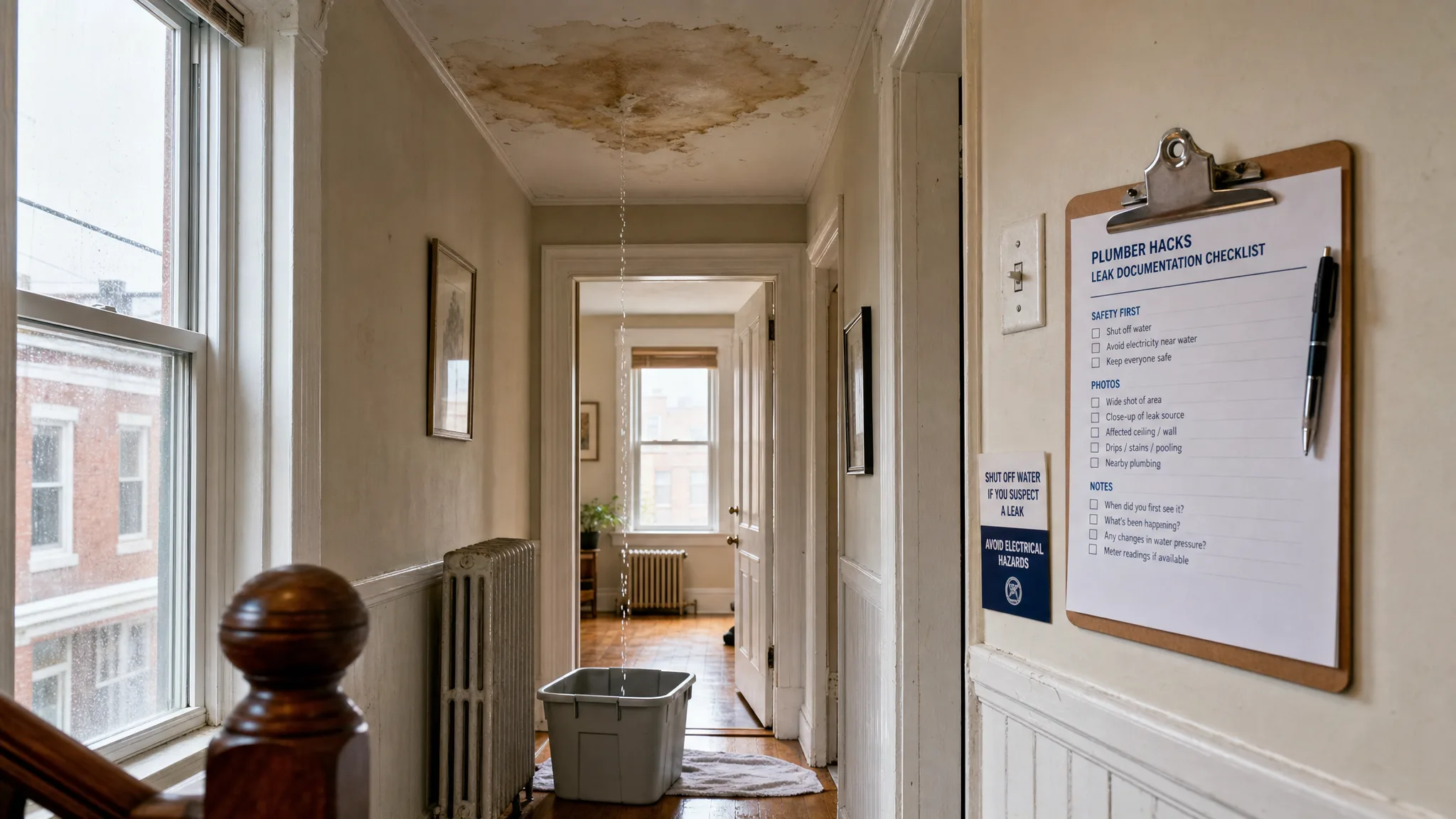
Do not remove ceiling material, open a wall, detach plumbing components, or dismantle cabinetry to create more evidence. That can create safety issues, spread contamination, and make it harder to determine the original water path.
A Room-by-Room Water Damage Documentation Checklist
A simple room list is one of the most useful forms of wall water damage documentation. Water may appear in one room while the plumbing source is above, beside, or some distance away. In attached Philadelphia homes, shared walls and stacked plumbing routes can make this especially confusing.
Use this checklist for every affected or nearby room
- Room and exact location: For example, “second-floor front bedroom, stain near the hallway-side ceiling corner” is more useful than “upstairs ceiling.”
- What you observed: Dampness, stain, drip, pooled water, bubbling paint, odor, warped flooring, or a sagging surface.
- Whether it is active: Note whether water was dripping, whether the surface felt damp without touching electrical areas, or whether the damage appeared dry but discolored.
- What is above, below, and beside it: Identify bathrooms, kitchens, laundry rooms, roof areas, neighboring units, utility spaces, or exterior walls.
- Nearby fixtures: List toilets, showers, tubs, sinks, dishwashers, refrigerators with water lines, washing machines, water heaters, or radiators.
- Water use before discovery: Record showers, toilet flushing, laundry, dishwasher operation, sink use, or other activity that occurred before the wet area was noticed.
- Changes over time: State whether the stain spread, dripping started or stopped, or a ceiling began to sag.
- Actions taken: Note whether a fixture valve or the main water supply was shut off, and which fixtures you stopped using.
Include undamaged adjacent areas when they help establish boundaries. For instance, if the ceiling stain ends at a hallway doorway or a wall is wet only below a bathroom supply line, that can be helpful context for a plumber. Do not assume it proves the source, but record what you can see.
Separate plumbing observations from other records
Documentation for a plumber has a focused purpose: helping identify the possible water source, water path, and urgency of repair. Keep your original photos and notes organized and avoid editing or marking over the only copy.
Property owners may also need separate records for a building manager, landlord, insurer, or restoration provider. Their requirements can differ from what a plumber needs for diagnosis. This article does not provide insurance-claim guidance, but the practical point is simple: preserve clear originals and make a separate copy of your plumber-focused notes rather than relying on memory later.
Details a Philadelphia Plumber Needs to Diagnose the Source
When you request help, be ready to describe the issue in a short timeline. An emergency plumber Philadelphia residents call may need to decide whether to bring leak-detection equipment, whether the issue may involve a drain line or pressurized supply line, and whether access to another unit or room is likely.
Share the following information:
- When you first noticed the water or stain and whether it followed a specific event, such as a shower, toilet flush, laundry cycle, or dishwasher run.
- Whether water is currently active, intermittent, or no longer visible.
- Whether the main water supply is on or off and which fixture shutoffs, if any, have been closed.
- The affected room and what sits directly above it, including another apartment or condo unit if applicable.
- Whether the water looks clear, cloudy, rusty, dark, or has an unusual odor. Do not touch unknown water to inspect it.
- Any plumbing work, appliance replacement, renovation, or recent drain backup that occurred before the leak.
- Whether the water appears only when a particular fixture is used.
- Whether other fixtures have low pressure, unusual sounds, slow drainage, backup, or visible leaks.
- Whether there is a ceiling bulge, water near electricity, or a structural concern that changes the urgency.
A plumber may ask you to run or avoid certain fixtures based on the information provided. Until then, do not repeatedly test a suspected fixture if doing so may add water to a hidden leak. If using the upstairs shower appears to trigger a drip through the kitchen ceiling, stop using that shower and report the pattern.
For help deciding what to look for in a provider, review how to choose a reliable emergency plumber in Philadelphia. When the situation is less clear than a visible pipe break, explain that you need diagnosis of a wet ceiling or wall rather than requesting a generic repair without details.
How to Record Timing, Water Use, and Changes in the Damage
Timing often matters as much as the appearance of the stain. A supply-line leak may continue even when no fixtures are used, while a drain, shower pan, tub overflow, or appliance discharge problem may appear only during a certain activity. These patterns are clues, not final answers.
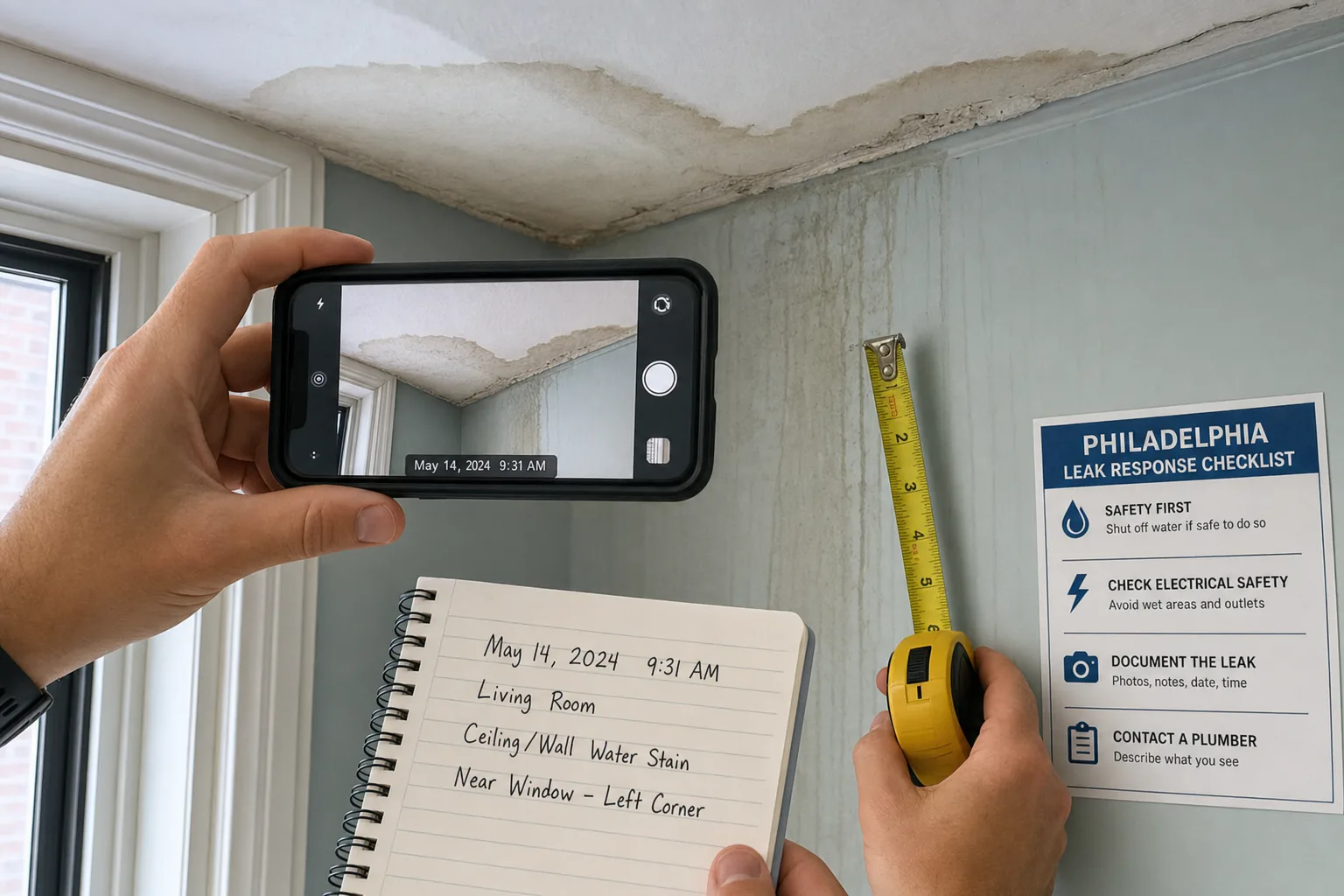
Make a brief timeline
Use your phone notes app or a piece of paper. Include the date, approximate time, observed change, and relevant water use. Keep it straightforward:
- “7:15 a.m.: Found a damp ring on first-floor dining room ceiling.”
- “7:30 a.m.: Dripping began after second-floor hall bathroom shower had been used.”
- “7:40 a.m.: Stopped use of hall bathroom and placed a container beneath drip.”
- “8:10 a.m.: Drip slowed, but stain edge looked larger than first photo.”
- “8:30 a.m.: Main water shut off because water continued to drip.”
Do not create a test routine that causes more damage. There is a meaningful difference between reporting normal fixture use that already occurred and repeatedly running water to see what happens. If the area has active leaking, a sagging ceiling, or any electrical concern, prioritize safety and professional assessment over further observation.
If you must leave the property after shutting off water, note the time you left and whether the leak was active at that point. For travel planning and prevention measures that can reduce future risks, see this guide to preventing vacation water damage in Philadelphia rowhouses.
Condo, Apartment, and Rowhouse Considerations in Philadelphia
Philadelphia properties often have plumbing layouts that complicate a leak response. In a rowhouse, a wet first-floor ceiling may be connected to a second-floor bathroom, a kitchen line that crosses the home, an old pipe route inside a wall, or another source. In a condo or apartment building, the likely source may be in a unit above, a shared riser, or a common area.
For condo owners and apartment residents
Report the issue promptly to the building manager, association, landlord, maintenance contact, or emergency building procedure required for your property. Give them the unit number, rooms affected, whether the water is active, whether there is a ceiling sag or electrical risk, and whether you have shut off water inside your unit.
Ask them to coordinate access to potentially affected units or common plumbing areas. Do not confront a neighbor or enter another unit to investigate. A building representative may need to determine who can authorize access and whether a shared system is involved.
If you are a tenant, report the issue in writing when possible after addressing immediate safety. Include your photos, the time discovered, and the fact that you have stopped using any fixture that seems connected. Continue to follow property-specific emergency instructions.
For landlords and property managers
Record the affected unit, reported time, resident observations, fixtures taken out of service, shutoff status, and all units that may share a wet wall, ceiling, or plumbing stack. Coordinate access carefully and make sure residents understand not to use potentially connected fixtures until the cause is evaluated.
For rowhouse owners, include information about any recent changes to bathrooms, kitchens, laundry connections, or water supply valves. Even if the current leak is not related, a plumber benefits from knowing what has changed and where access panels or prior repairs may exist.
When Photos Are Not Enough: Call a Plumber or Emergency Service
Photos are valuable context, but they do not replace an onsite diagnosis. Hidden plumbing leaks may require testing, moisture evaluation, inspection of accessible connections, or carefully planned access to reach the actual source. Do not delay because a drip has slowed or because a stain looks old; the water may still be entering a concealed space.
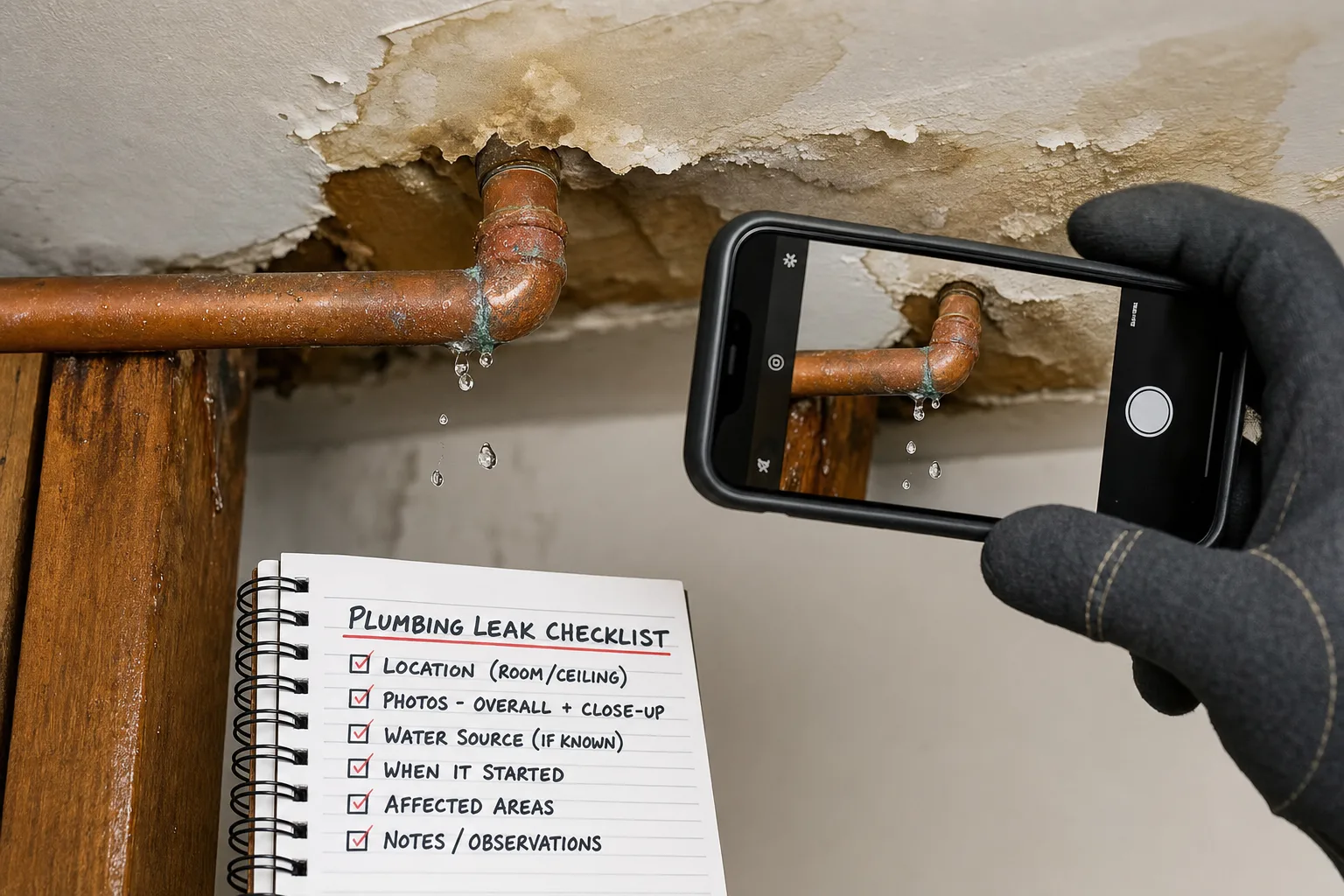
Arrange prompt plumbing assessment when you have:
- Active leaking, recurring dripping, or standing water.
- A wet ceiling below a bathroom, kitchen, laundry area, or water heater.
- A stain that is expanding, paint that is bubbling, or damp drywall and baseboards.
- Water that appears after a toilet flush, shower, bath, dishwasher, or laundry cycle.
- Water near electrical fixtures, a ceiling bulge, or visible ceiling damage.
- Possible drain backup, foul-smelling water, or water of unknown origin.
- A multi-unit situation where the source may be in a neighboring unit or shared plumbing system.
For an immediate threat involving electrical danger, a severely compromised ceiling, or water that creates an unsafe condition, leave the area and use the appropriate emergency response route for the hazard. For a plumbing source or suspected hidden leak, provide your documentation to a qualified plumber and explain the current safety conditions before the visit is scheduled.
Frequently Asked Questions
Should I photograph a wet ceiling or wall before trying to dry it?
Yes, if it is safe to enter the area. Take a few wide and close photos first, then take reasonable steps to protect belongings and contain drips without touching wet electrical fixtures or approaching a sagging ceiling. Do not delay safety actions just to take more pictures.
What photos and notes will a plumber need to find a leak behind a wall?
Show the full room, the precise wet area, nearby fixtures, the room above or beside the damage when accessible, and any active dripping or visible plumbing leak. Note when the problem started, what water-using fixtures ran beforehand, whether the main water is off, and whether the damage changes after normal fixture use. These details can help guide diagnosis, but photos alone may not identify the concealed source.
When is a wet ceiling unsafe or urgent enough to leave the room and call for help?
Leave the room when the ceiling bulges, sags, cracks, drops debris, or releases water; when water is near lights, fans, outlets, or wiring; or when there is an electrical smell or sound. Keep others away and do not try to puncture, brace, or dismantle the ceiling.
Do I need to shut off the water if I do not know where the leak is coming from?
If water is actively flowing, damage is worsening, or you suspect a pressurized pipe leak, shut off the main water only if it is safe to reach. If the leak happens only when a certain fixture is used, stop using that fixture while you seek diagnosis. In a condo or apartment, also report the issue right away because the source may be outside your unit.
What should Philadelphia condo owners or tenants report to building management?
Report the unit number, affected room, discovery time, whether water is active, any ceiling sag or electrical concern, fixtures recently used, and whether you shut off water in the unit. Send clear photos where permitted and state whether you believe another unit, common area, or shared plumbing route may be involved. Avoid assigning blame; report observable facts.
Take the Next Diagnostic Step Before the Damage Spreads
A calm Philadelphia leak response begins with safety: move away from compromised ceilings and wet electrical areas, stop the water when safely possible, and avoid using fixtures that may be feeding the leak. Then share your room-by-room photos, timing notes, water-use observations, and shutoff status with a dependable Philadelphia plumber or leak specialist.
When water is active, a ceiling is sagging, or multiple units may be affected, request diagnosis as soon as possible rather than waiting for visible damage to grow. Use the Plumber Philadelphia directory resources to find local help prepared to assess the probable source and discuss the appropriate repair path.


