
How to Arrange a Plumbing Visit for an Older Relative
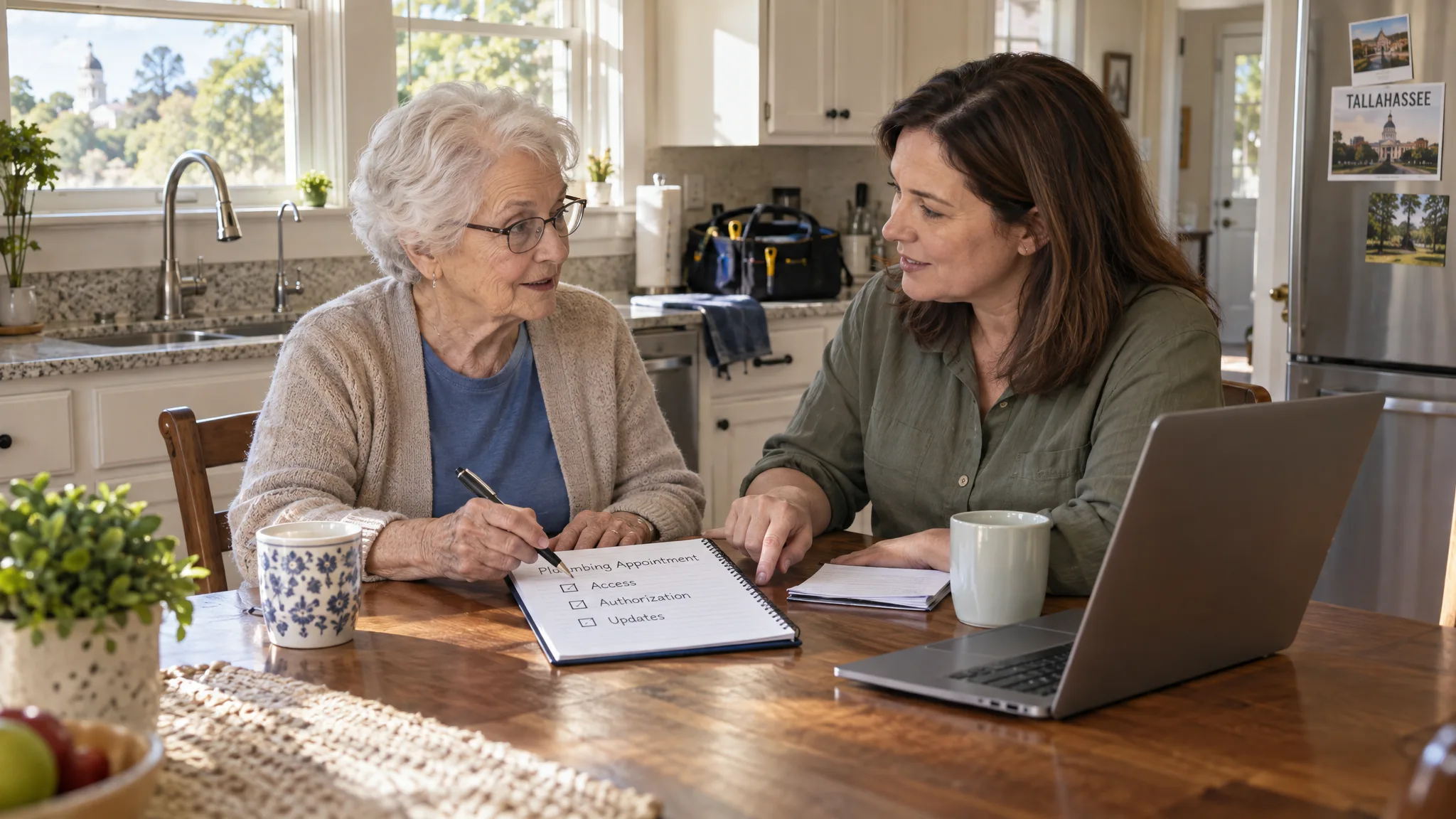
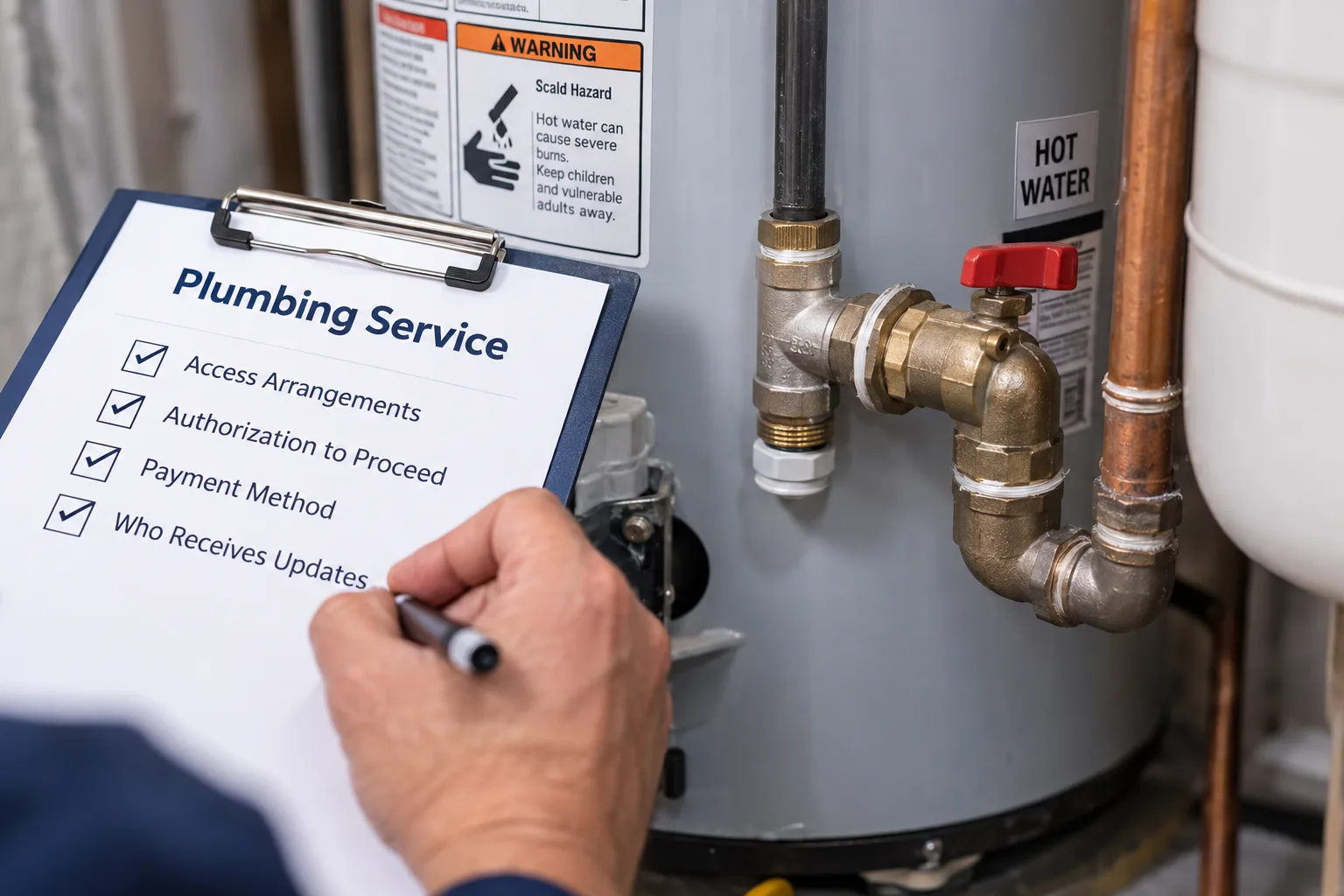
Before booking a plumber for an older relative, agree on who will provide entry, authorize diagnosis, approve repairs, pay, and receive updates. One person may handle several roles, but give the provider a clear plan rather than leaving those decisions for arrival day.
Treat your relative as the decision-maker unless another authorized arrangement has been established. Ask what help they want and what information they are comfortable sharing. When using PlumberHacks to find a provider, confirm the arrangements directly with the plumbing business; do not assume that an appointment request authorizes repairs.
What should we prepare together?
Write a short description of the problem based on observations, not a guessed diagnosis. Include the affected fixture or area, when the problem started, whether other fixtures are affected, and any attempted repairs or drain-cleaning products used.
If pictures are useful, review how to document visible water damage safely. Do not ask your relative to climb, move heavy objects, or enter an unsafe area for a photograph. Address active flooding or immediate safety concerns before preparing appointment notes.
How should we arrange entry?
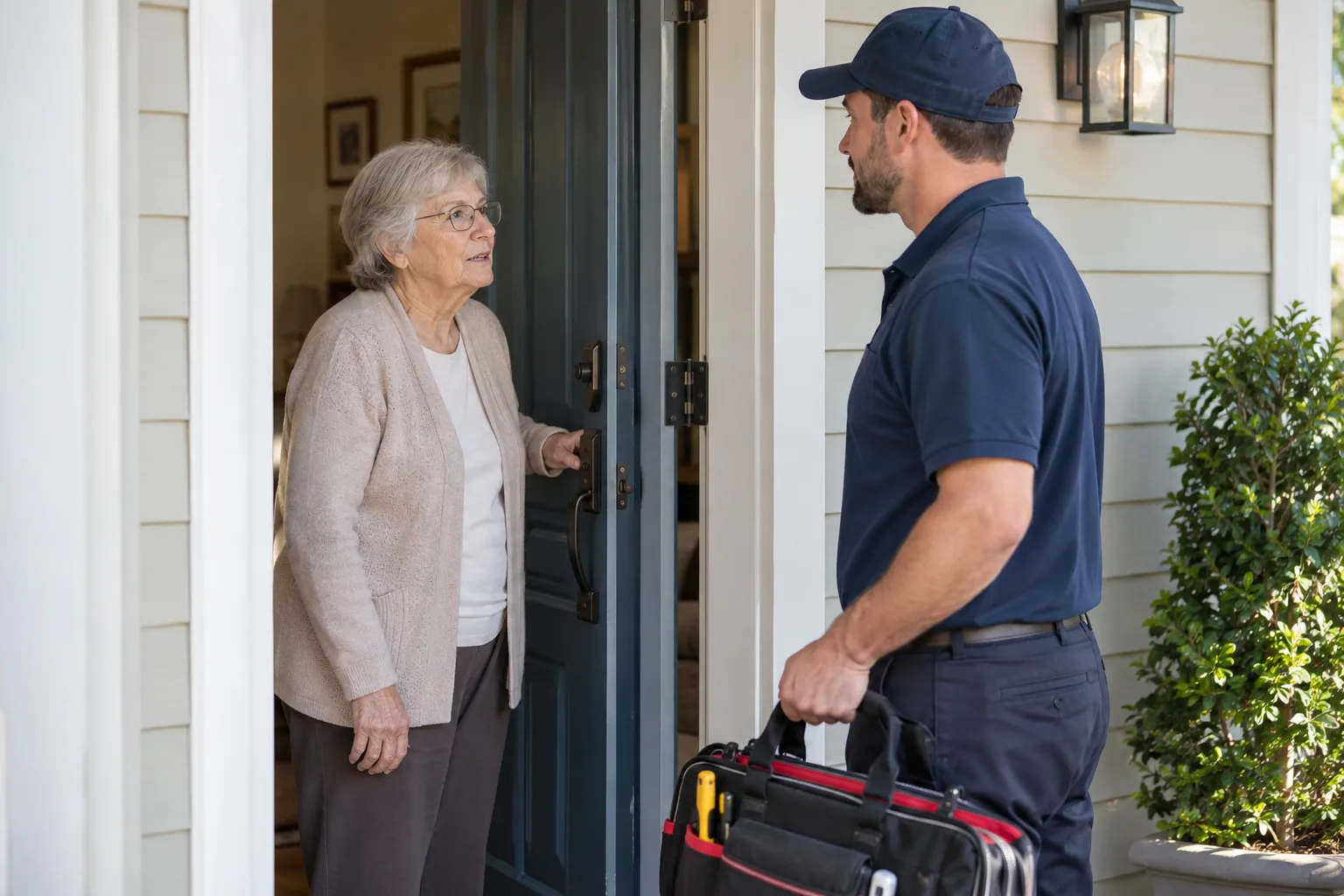
With the occupant’s consent, designate someone to answer the door. If you cannot attend, ask whether your relative wants a trusted person present; do not make unattended access the default.
Choose a provider that can accommodate the agreed arrangements. Before booking, ask:
- Can arrival notices go to the entry contact, and how will the occupant verify who is arriving?
- What happens if the entry contact does not answer?
- Can the provider accommodate requested communication needs, such as speaking directly with the occupant and allowing time for questions?
Share relevant building-access, parking, or pet instructions. Keep door codes, lockbox combinations, and key locations out of directory inquiries. Agree on a private way to share necessary access details with the confirmed provider.
What needs approval before work begins?
Separate the diagnostic visit from the repair decision. Confirm what the visit includes, its charges, and which proposed actions would need additional approval. For more detail, review what to clarify during a plumbing diagnostic visit.
Identify who should receive the written estimate and who will approve repairs. Request the findings, proposed work, repair options, exclusions, and total proposed charge before deciding. Confirm the payer and payment arrangements separately; do not assume the person paying is also the person approving work.
If you plan to act under an existing authorization arrangement, ask what documentation the provider needs. If your authority is unclear, resolve it with the appropriate professional rather than relying on your family relationship or property-management role.
Agree on a procedure if the approver cannot be reached. Ask whether the visit can pause after diagnosis until approval is obtained. Define any separately approved action to limit active damage rather than leaving an open-ended instruction to “do whatever is needed.”
How can we keep everyone informed remotely?
With your relative’s consent, designate one primary update recipient and a backup. Confirm which communication methods the provider supports and request updates when findings are ready, approval is needed, and the visit is complete. Keep your relative included in the way they prefer.
Send a brief appointment note to the confirmed provider with the entry contact, diagnostic authorizer, repair approver, estimate recipient, payer, update recipient, and agreed approval limits. Ask the provider to acknowledge the plan so you can resolve any gaps before the visit.
Before scheduling, ask: “Can you confirm our entry contact, repair approver, payer, update recipient, and procedure if the approver cannot be reached? What diagnostic work would we be authorizing, and how will you present repair options for separate approval?”


