Home Plumbing Maintenance: A Five-Minute Monthly Toilet Check for Austin Homes
A toilet can develop a small leak long before there is an obvious puddle, overflow, or major water-damage concern. For Austin homeowners, landlords, condo owners, and property managers, a brief monthly inspection is a practical way to notice moisture, corrosion, running water, or a stiff shutoff valve before the problem affects flooring, walls, or a unit below.
This is a simple visual and touch-free inspection routine, not a toilet repair guide. It cannot find every hidden leak, diagnose every drain issue, or replace a professional inspection. Its purpose is to help you spot changes, document them clearly, and decide whether to monitor the toilet, schedule toilet leak repair, or seek urgent plumbing help.
Why a Five-Minute Toilet Check Is Worth Doing Each Month
A toilet has several possible leak points in a compact area: the supply line from the wall, the shutoff valve, the connection under the tank, internal tank components, the bowl, and the seal at the floor. Water from one of these areas may begin as a small bead at a fitting, a recurring damp spot on the floor, or a sound of water refilling after the toilet should have stopped running.
Monthly plumbing maintenance is useful because it gives you a reference point. When you regularly look at the same connections and surfaces, it is easier to notice what is new. A faint rusty mark around a valve may be old. A fresh wet ring, growing mineral buildup, or new stain is more important because it suggests an active or developing problem.
This quick check can be especially useful in Austin rental homes, condos, apartments, and multifamily properties. A bathroom may not be used every day, a tenant may notice a symptom before an owner does, or a leak from one unit may affect a ceiling or wall in another. Early documentation can make it easier to communicate what was found, when it was found, and whether water was still active.
A five-minute inspection does not eliminate all plumbing risks, and it will not reveal every hidden leak inside a wall, beneath a floor, or under a slab. It can still help you catch visible warning signs such as:
- A toilet supply line leak near the wall valve or tank connection
- Corrosion, mineral deposits, or discoloration around a fitting
- Water appearing around the toilet base after flushing
- A toilet that continues running after the tank refills
- A cracked toilet tank, bowl, or lid
- A shutoff valve that is difficult to reach, visibly corroded, or stiff
- Soft flooring, loose tile, or recurring moisture around the toilet
The right response depends on what you see. A dry floor with old residue may only need observation and a later recheck. Active dripping, a cracked tank, repeated water at the base, a toilet overflow, or water reaching another area of the property deserves faster attention.
Before You Start: What to Bring and What Not to Force
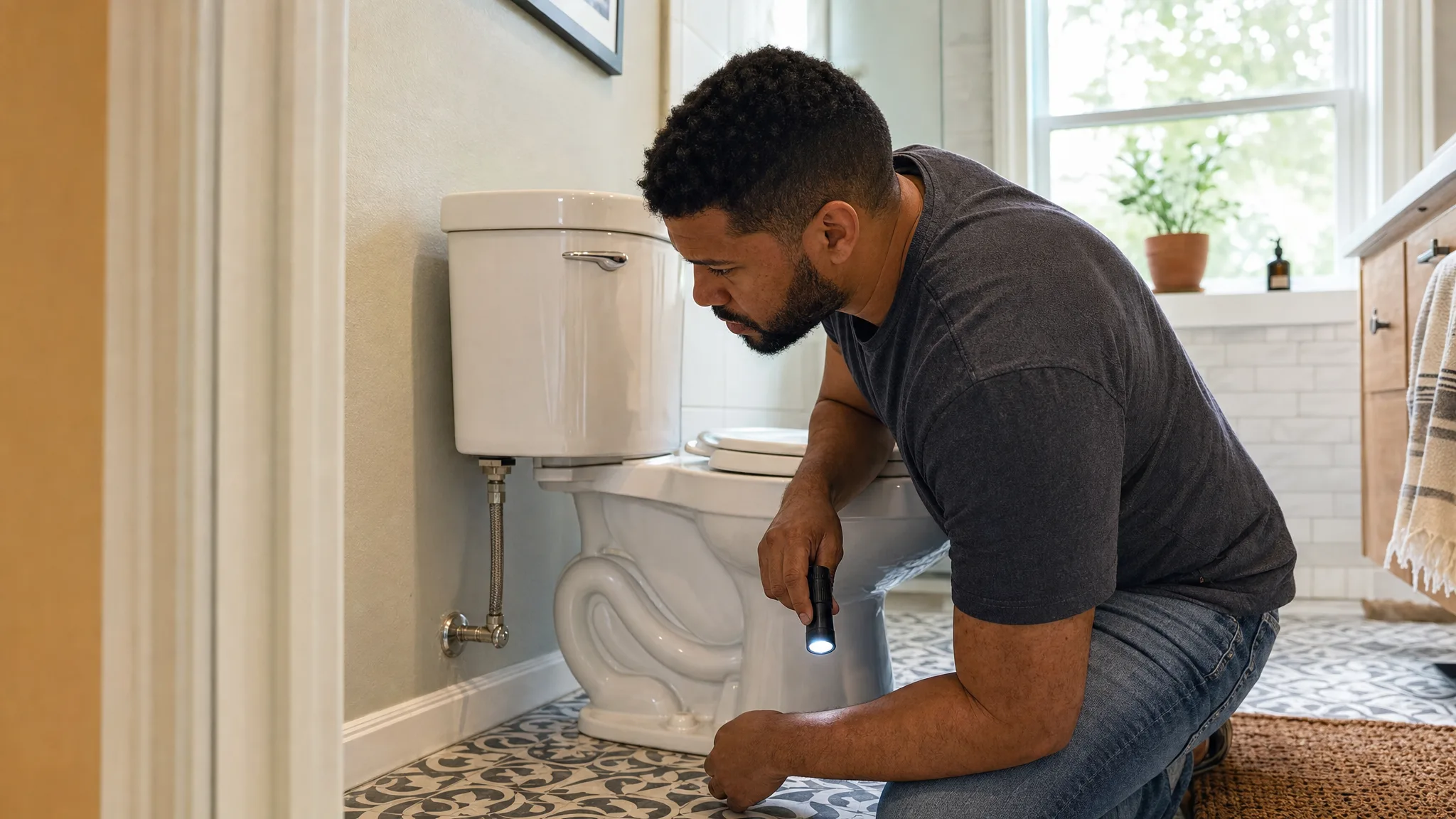
Choose a time when the bathroom floor is dry and the toilet is not actively being used. You do not need tools or repair supplies for this routine. A flashlight, a few dry paper towels, and a phone for photos are enough.
Keep this inspection observational
- Use a flashlight to look behind the toilet, beneath the tank, around the wall valve, and along the floor seam.
- Use a dry paper towel to gently blot accessible exterior surfaces if you see possible moisture.
- Take photos before wiping away residue, water marks, or staining.
- Listen after flushing to see whether water continues moving into the bowl after the tank should have refilled.
- Make a brief note of the bathroom location and the time you noticed the issue, particularly in a rental or condo property.
Do not use this monthly check as a reason to take apart the toilet, remove the tank, tighten fittings, replace a supply line, or remove the toilet from the floor. Over-tightening can damage fittings and seals. Moving aging components can also turn a slow leak into an active one.
Safety note: Do not force a corroded or seized shutoff valve. Do not use pliers, penetrating chemicals, or excessive hand pressure to make it turn. A valve that will not move is an important finding, but forcing it can create a larger leak or leave the toilet without a dependable local water shutoff.
Step 1: Check the Toilet Supply Line and Connection Points
The supply line carries clean water from the shutoff valve at the wall or floor to the underside of the toilet tank. Many Austin homes have flexible braided supply lines, although older properties may have another connection style. Start by looking closely rather than adjusting anything.
Inspect both ends of the supply line
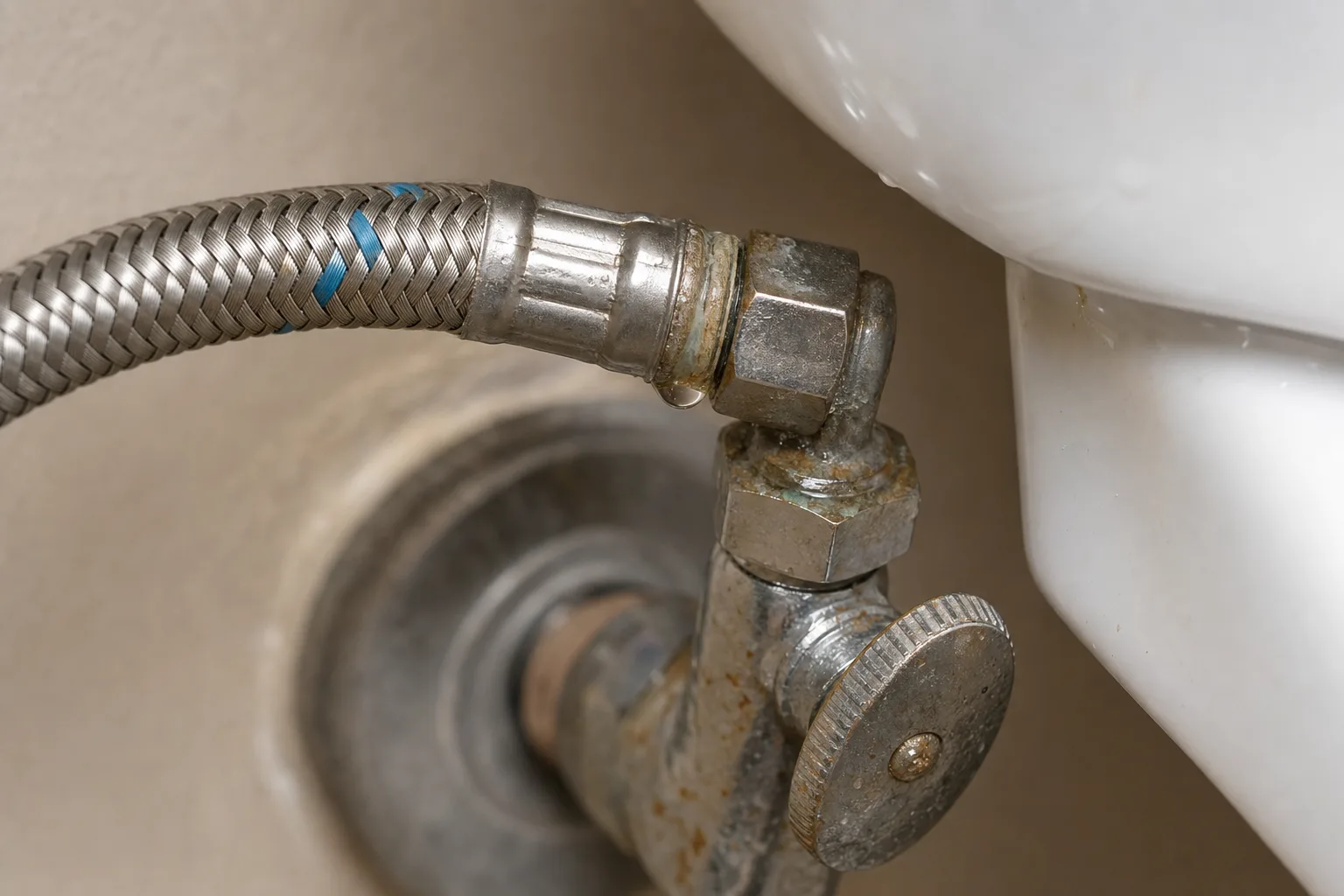
Use a flashlight to inspect the connection at the shutoff valve and the connection beneath the toilet tank. Look for clear droplets, a wet ring around the fitting, discoloration, or mineral buildup. White, greenish, orange, or rusty-looking residue can indicate that moisture has been present, even if the area is dry at the moment.
- Clear droplets or active dripping
- A recurring wet spot directly beneath a connection
- White, green, orange, or brown mineral residue around a fitting
- Corrosion on the valve body, nut, or supply-line end
- A bent, kinked, frayed, or visibly damaged flexible line
- Moisture on the wall, baseboard, cabinet side, or floor below the connection
If you see dampness, gently blot the outside of the accessible line or fitting with a dry paper towel. Do not twist the supply line or connection while doing this. If the towel is damp, take a photo, dry the area, and return later that day or the next morning. Moisture that returns in the same place is more concerning than a one-time damp surface.
How can you tell whether it is a leak or condensation?
Condensation is possible in humid bathrooms, especially on the outside of a cool toilet tank. It is often spread across a broader area rather than concentrated at one nut, valve, or joint. A tank may feel damp over much of its exterior, and moisture may appear on several nearby surfaces at once.
A connection leak is more likely when moisture begins repeatedly at a specific fitting, a drop forms below one connection, or mineral deposits are concentrated around one joint. A leak may also leave a defined trail down the supply line, wall, or tank connection.
Because condensation can still make a floor damp, do not dismiss recurring moisture simply because it seems widespread. Dry the visible surfaces, note where dampness begins, and check again after normal toilet use. If you cannot confidently tell where the water is coming from, a plumber can inspect the fixture and related connections without relying on guesswork.
Step 2: Test the Shutoff Valve Without Creating a Leak
The shutoff valve is usually located beside the toilet near the wall or floor. It is intended to stop water to that one fixture if a repair is needed or a leak develops. During monthly residential plumbing maintenance, the main goal is to confirm that the valve is visible, accessible, and dry.
Perform a visual toilet shutoff valve check
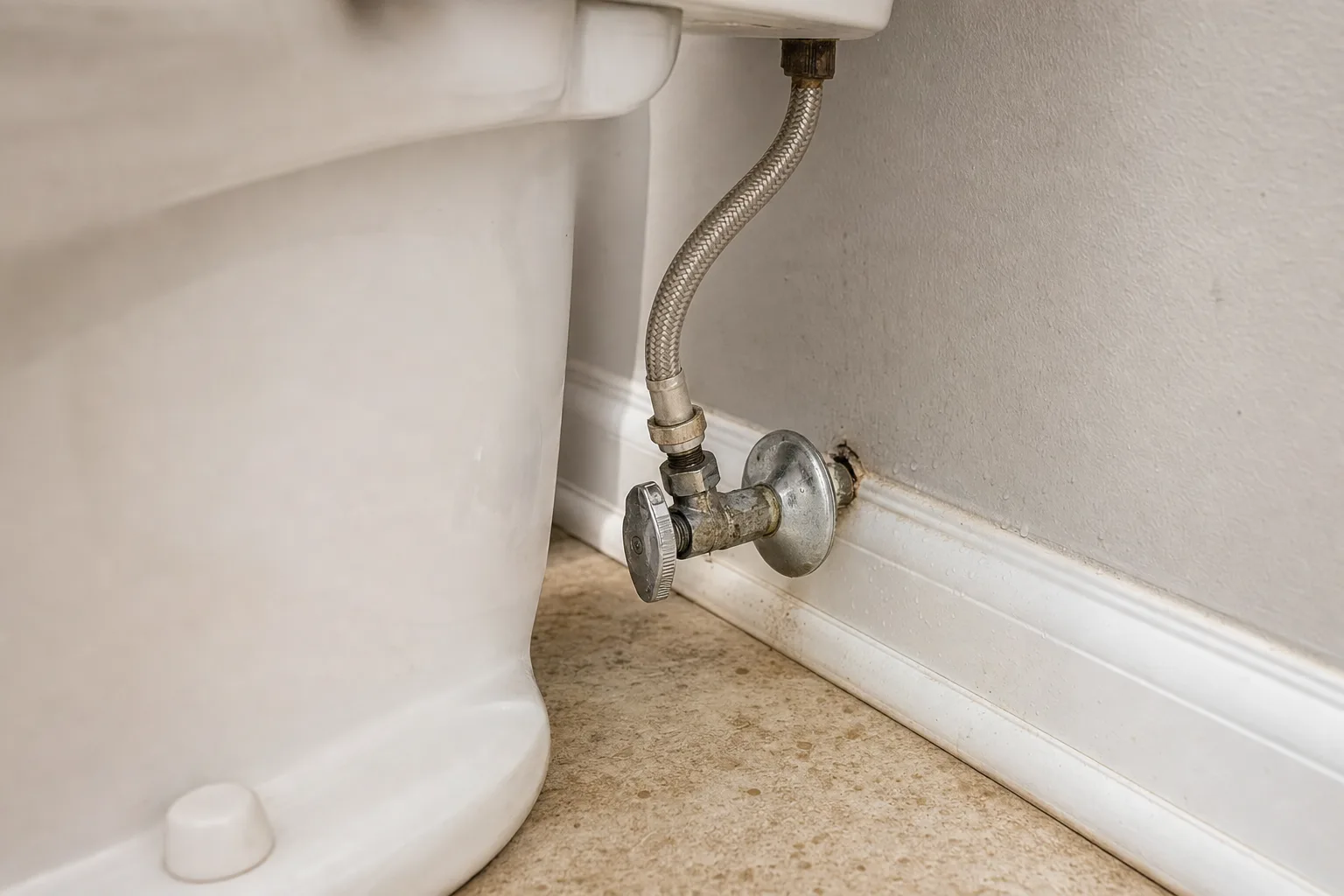
First, make sure stored items, a wastebasket, cleaning supplies, or bathroom furniture do not block access to the valve. In an emergency, a valve hidden behind clutter is less useful. Then inspect the valve body, handle, supply-line connection, wall area, and floor below it.
Watch for corrosion, crusted mineral deposits, moisture, water staining, or a handle that appears damaged. If the valve is dry, looks sound, and turns smoothly with only light hand pressure, you may move it a very small amount and return it to its original position while watching closely for drips.
There is no need to fully shut off and reopen the toilet valve every month. The purpose is not to “exercise” a questionable valve. It is to notice whether the valve appears capable of being used if necessary.
If the valve feels stuck, resists gentle pressure, is heavily corroded, or starts leaking when moved, stop immediately. Do not force it. Schedule an Austin plumber to evaluate the valve and supply connection. Replacing or repairing a corroded shutoff valve is not a task to improvise during a routine inspection.
Should a toilet shutoff valve be turned every month?
Not necessarily. A monthly visual check is generally the safer priority. A shutoff valve that has been untouched for a long time may be stiff, but trying to force an aging valve can damage its internal components or packing. If it does not turn easily by hand, leave it alone and arrange professional advice.
If you manage a rental property, note whether the valve is accessible and functioning rather than asking a tenant to force it. This protects the tenant, avoids creating a preventable leak, and gives the plumber useful information before the visit.
Step 3: Look for Tank, Bowl, and Floor Warning Signs
Next, inspect the toilet from the tank down to the floor. A problem inside the tank may waste water without leaving a visible puddle, while a leak at the base can damage flooring or affect a ceiling below before it becomes obvious.
Check the tank exterior and listen after flushing
Look along the tank sides, corners, bottom edge, and around the bolts that connect the tank to the bowl. Mineral trails, dampness near tank bolts, or a recurring wet spot on the rear ledge of the bowl can point to a toilet tank leak or a problem with tank hardware.
A visible crack in a tank is a serious warning sign. If possible, stop using that toilet and arrange prompt inspection or repair. Do not attempt to patch a cracked tank with tape, sealant, adhesive, or a temporary coating. The tank can continue leaking or fail further when it refills.
If the tank lid is stable and can be set down safely, you may carefully lift it to listen after flushing. Water that continues to run into the bowl after the tank should have refilled can indicate an internal issue, such as a worn flapper or fill-valve problem. This type of leak may not create a floor puddle, but it can increase water use over time.
For general local water-use and conservation information, Austin residents can review Austin Water conservation resources. A noticeable change in water use does not prove that a toilet is the cause, but a toilet that runs intermittently is worth documenting and scheduling for evaluation.
Inspect the bowl and floor around the toilet base
Look for cracks in the bowl, especially around the base and sides. Then inspect the floor around the toilet. A dry floor is reassuring, but it does not rule out every plumbing problem. Pay attention to water that appears after flushing, changes in flooring, or a toilet that moves when used.
- Water appearing around the base after a flush
- Soft, swollen, stained, or lifting flooring
- Darkened grout, loose tile, or recurring discoloration
- A damp bathroom floor that returns after drying
- A sewer odor near the base of the toilet
- A toilet that rocks, shifts, or feels loose when used
Do not repeatedly flush a toilet that leaks at the base, rocks, is cracked, or appears likely to overflow. Using it again to “test” the issue can release more water. Use another bathroom if available while you arrange an inspection.
What the Signs Mean: Monitor, Schedule Repair, or Call Urgently
A calm response starts with matching the symptom to the level of risk. The amount of water, the location of the water, whether it is still active, and whether another unit may be affected all matter.
Monitor and recheck
Monitoring may be reasonable when the floor is dry, there is no active dripping, and you found only a small amount of old mineral residue or possible condensation. Take a photo, dry the area, and look again after normal toilet use. If moisture returns, residue grows, or the area begins to stain, move from monitoring to scheduling an inspection.
Schedule a plumber
Schedule toilet leak repair when moisture returns after drying, a supply line or fitting shows corrosion, the shutoff valve is stiff, the toilet runs intermittently, or flooring shows early discoloration or softness. These are reasonable reasons to search for a plumber near me before a small issue has more time to spread.
A plumber can determine whether the issue involves the supply connection, shutoff valve, tank hardware, bowl, base seal area, drain connection, or another nearby plumbing problem. Photos and notes about when the water appears can help the plumber understand the reported symptom before and during the visit.
Call for urgent help
Seek urgent plumbing help when there is active dripping that cannot be contained, water spreading across the floor, a cracked tank, a toilet overflow, sewage backup, water near electrical equipment, or water reaching the ceiling or walls below. If a working fixture shutoff valve can be safely closed by hand without forcing it, closing it may limit water flow. If the fixture shutoff is unavailable or will not turn during a significant leak, the main water shutoff may be necessary.
For a drain-related overflow or backup, do not keep flushing to test whether the toilet will clear. A recurring backup can point to a larger drain obstruction, and use of nearby fixtures may worsen the overflow.
Austin Rental and Condo Considerations
For Austin rental homes, apartments, condos, and multifamily properties, documentation is part of sensible maintenance. A small toilet leak can become harder to manage if no one records what was seen, when it started, whether the toilet was still used, or whether another unit was affected.
What to document before arranging toilet repair
Take dated photos or short videos of the supply line, shutoff valve, tank exterior, floor around the base, and any visible stains. Record the bathroom location and the timing of the issue. For a tenant report, it is useful to note whether the moisture appears before flushing, after flushing, or while the toilet is not being used.
- The unit address and exact bathroom location
- The date and time the moisture, drip, or running sound was noticed
- Whether water appears before or after flushing
- Whether the toilet is usable without leaking or overflowing
- Whether water has reached flooring, walls, a ceiling below, or another unit
- Whether the shutoff valve is accessible, dry, stiff, or visibly corroded
- Any building, association, lease, or maintenance-reporting procedure already followed
Tenants should notify the landlord or property manager promptly through the reporting process in their lease, especially if moisture is active or water has reached the floor. Owners and managers should avoid asking occupants to force a valve or perform repairs beyond safe observation.
For a broader turnover routine, see this quarterly plumbing check for Austin rental homes. Property owners comparing help for tenant repair calls can also review how Austin rental owners can vet a plumber for tenant repair calls for practical considerations such as access coordination, communication, repair scope, and documentation.
Condo owners should also review their association or building procedures. Depending on the building and source of the water, responsibility may involve the unit owner, property manager, a shared plumbing line, or a neighboring unit. Report active leaks promptly, preserve photos, and avoid removing fixtures or opening walls without the appropriate authorization.
Frequently Asked Questions About Monthly Toilet Inspections
How can I tell whether a toilet supply line is leaking or just has condensation on it?
Dry the accessible exterior of the line and fittings with a paper towel, then recheck later. Moisture that repeatedly begins at one nut, valve, or connection is more consistent with a leak. Moisture across a broad tank surface may be condensation, but recurring dampness still needs attention if it reaches the floor, creates staining, or cannot be traced confidently.
Should I turn the toilet shutoff valve every month, and what if it is stuck?
No. A monthly visual toilet shutoff valve check is usually the safer priority. If a valve turns easily by hand and appears to be in good condition, a slight movement may be acceptable. If it is stuck, corroded, or begins to leak when moved, stop and schedule a plumber. Never force it with tools.
Can a toilet tank leak increase my water bill even when there is no puddle on the floor?
Yes. A toilet can lose water internally when water moves from the tank into the bowl after flushing. This may produce refill sounds without creating an external puddle. An intermittently running toilet or unexplained increase in water use is a reason to arrange an inspection.
When is a leaking toilet an urgent plumbing call rather than a routine repair?
It is urgent when water is actively dripping or spreading, the toilet is overflowing, the tank is cracked, sewage is backing up, or water is reaching flooring, walls, electrical equipment, or the ceiling below. A small recurring damp spot may allow time for a scheduled repair, but it should not be ignored.
What should Austin landlords or condo owners document before arranging a toilet repair?
Document the exact location, date, visible moisture, active dripping, photos of the supply line and valve, floor condition, whether the toilet runs after flushing, and whether another unit may be affected. Include access details and any building or lease reporting requirements. This gives the plumber and relevant property stakeholders a clearer starting point.
Make the Monthly Check a Practical Habit
A five-minute toilet inspection will not prevent every leak or reveal every hidden plumbing issue. It can help you recognize changes early: a damp connection, fresh corrosion, a running tank, a stiff shutoff valve, or water at the base of the toilet. Keep the routine observational, document what you find, and avoid turning a manageable repair into a larger leak by forcing aging parts.
If the valve will not turn, moisture returns after drying, the tank is cracked, or water is reaching the floor or ceiling below, do you need a direct next step? Use Plumber Hacks to find and compare a dependable Austin plumber for an inspection or repair.